Ghost towns capture the imagination because they hold traces of lives that once unfolded in them. Empty streets, weathered storefronts and half-collapsed houses tell stories of mining booms, shifting trade routes, economic decline, conflict and environmental change. Some are preserved as historic parks where visitors can walk through buildings that have been stabilized rather than restored. Others are ruins that remain unsafe, and some are closed altogether. Visiting one well requires understanding what kind of place it is, what rules apply and how to behave in a setting that often carries real historical weight.
This guide describes the main types of ghost town, how to approach them safely and respectfully, and what to check before traveling. It does not list particular sites as must-see destinations, because conditions and access arrangements change over time.
Types of Ghost Towns
Ghost towns fall into several broad categories. Former mining settlements are among the most common, particularly in arid regions where extraction once supported busy communities. Some are now managed as historic parks, where buildings have been stabilized to preserve their appearance. Others are abandoned villages in the countryside, often in mountainous or remote areas where populations declined as young people moved to cities. A third group includes sites linked to war, disaster or displacement, which are better understood as memorials than as curiosities.
The distinction matters because it shapes behavior. A preserved mining camp may invite a relaxed walk, while a memorial village calls for quiet reflection and restraint.
Preserved Sites and Historic Parks
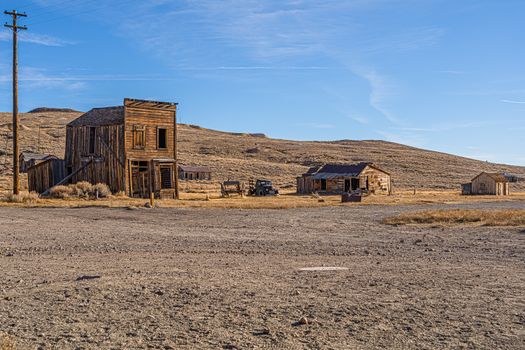
Several well-known preserved sites offer structured visits. Bodie State Historic Park in California is maintained in a state of arrested decay, meaning that buildings are kept from further collapse without being repainted or rebuilt. Visitors can usually walk through the main streets and view interiors through windows or during open hours, with rules that protect the structures. Kolmanskop in Namibia is a former diamond-mining town that has been partly reclaimed by the desert. Access is typically arranged through guided tours or permits, and the sand-filled buildings are fragile and potentially unsafe.
In Italy, the hilltop town of Craco in Basilicata has been largely abandoned for decades. Its medieval streets and houses are visible from afar, but access has at times been restricted for safety reasons, so current rules should be checked before any planned visit.
Sites That Deserve Particular Respect
Some abandoned places commemorate tragedy. Oradour-sur-Glane in France is a village that was destroyed in 1944 and left as a memorial. Visitors walk through its ruins to learn about the events that took place there, and the site expects quiet, attentive behavior. Photographing these places as backdrops for novelty images is considered inappropriate by many visitors and by the people who maintain the memorial.
Sites within restricted zones, such as parts of the Chernobyl exclusion zone, are accessible only under strict regulations, typically through licensed tours and permits. Access rules can change, and entering areas without authorization is illegal and dangerous.
Safety and Access Rules
Ruins can be structurally unsound, with unstable floors, loose masonry, collapsing roofs and hidden hazards such as old wells, mine shafts or unexploded ordnance in some regions. Never enter buildings that are fenced off or marked as unsafe. Stay on established paths, avoid climbing on walls and keep children close. Some mining areas contain old shafts or contaminated ground, and signs should always be followed.
Access rules vary widely. Some sites are free to enter during daylight, others charge admission, and certain areas are reserved for guided groups. Private land is common around abandoned villages, so check whether a route crosses property owned by others and whether permission is needed. Carry a charged phone, water and sun protection, especially in desert or high-altitude settings where help may be far away.
Respectful Exploration
Ghost towns are often places where real people lived, worked and died. Behave in a way that honors that history. Do not remove objects, even small items that appear to be lost, since many sites are protected heritage. Avoid graffiti and damage to structures. Keep noise to a reasonable level, particularly at memorial sites. Photography is usually permitted at preserved parks, but it may be restricted inside buildings or at memorials, so follow posted signs.
Guided visits can add depth. A knowledgeable guide can explain the economic and social context of the town, the reasons it was abandoned and the work involved in stabilizing it. Guided tours also tend to keep groups on safe routes and can give access to areas that are otherwise closed.
Practical Tips
Check official park or municipal websites for current opening times, closures and tour requirements before traveling. Wear sturdy footwear and carry water, snacks and a hat, since many sites have no shade or services. Let someone know your route and expected return time if you are visiting remote areas. Consider a guided tour where it is available, especially for sites with complex access rules. Finally, keep expectations realistic: many ghost towns are quiet and modest in scale, and their value lies in the history they convey rather than in dramatic ruins.
Ghost towns offer a window into the past that can be both fascinating and sobering. Choosing sites with clear access arrangements, respecting the people whose history they hold and taking safety seriously make these visits more meaningful for everyone involved.