The Dawn Over the Vltava: My Wake-Up Call
I stepped off the night train in Prague at 5:15 AM. The air didn't smell like the sterile, diesel-heavy platforms of London or Frankfurt. It smelled of damp river stone, chimney cakes (trdelník) being prepped for the morning rush, and a faint, metallic tang of ancient iron. As I crossed the Charles Bridge, the silhouettes of 30 Baroque statues emerged from the mist like stone sentinels.
In that moment, the "Western is Best" narrative I’d been fed by travel brochures crumbled. I realized that for every Notre Dame, there is a St. Vitus; for every Haussmann boulevard in Paris, there is a Secessionist masterpiece in Budapest. We’ve been looking the wrong way. It’s time to look East.
1. Prague: The Gothic Giant That Outshines Paris
While Paris is the city of light, Prague is the city of shadows and spires. If you want Gothic architecture that feels visceral rather than museum-curated, Prague is the gold standard.
The Rivalry:
St. Vitus Cathedral vs. Notre Dame.
While Notre Dame is iconic, St. Vitus—perched inside the Prague Castle complex—is a masterclass in architectural endurance. It took nearly 600 years to finish. The result is a dizzying blend of Gothic, Renaissance, and Baroque. Look for the Mucha stained glass window; the way the light hits those Art Nouveau colors at 10 AM will make you forget every other cathedral you’ve ever seen.
Pro-Tip:
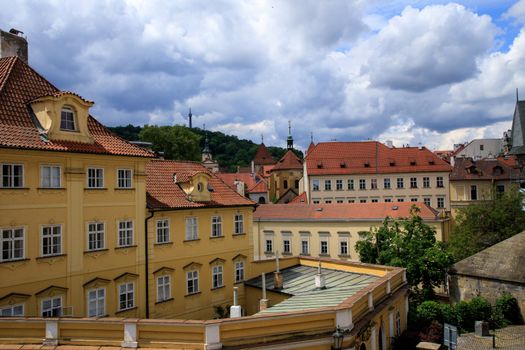
Don't just walk the Royal Way. Head to the Vrtba Garden. It’s a hidden Baroque terraced garden that offers the most symmetrical, Wes Anderson-esque views of the city’s red-tiled roofs. The entrance is behind an unassuming gate on Karmelitská street.
2. Budapest: The Gilded Grandeur of the Danube
Budapest is what happens when the Austro-Hungarian Empire decides to out-flex the British Empire.
The Rivalry:
The Hungarian Parliament Building vs. The Palace of Westminster.
Westminster is legendary, but the Hungarian Parliament is a Neo-Gothic fever dream. It uses 40 kilograms of 24-karat gold and features 365 spires—one for every day of the year.
But the real architectural soul of Budapest lies in its Art Nouveau (Secessionist) movement. The Gresham Palace and the Applied Arts Museum (with its green and gold Zsolnay tile roof) look like they were spun from sugar and emeralds.
Pro-Tip:
Skip the crowded Széchenyi Baths for a morning at Gellért Baths. The turquoise mosaics and stained-glass ceilings are the peak of Secessionist luxury. Go at 8:00 AM on a Tuesday to have the "cathedral of water" almost to yourself.
3. Riga: The Art Nouveau Capital You’re Missing
Most travelers head to Brussels or Nancy for Art Nouveau. That is a tactical error. Riga, Latvia, has the highest concentration of Art Nouveau (Jugendstil) architecture in the world. Over one-third of the city center is built in this style.
The Rivalry:
Riga’s Quiet Center vs. Brussels’ Horta Museum.
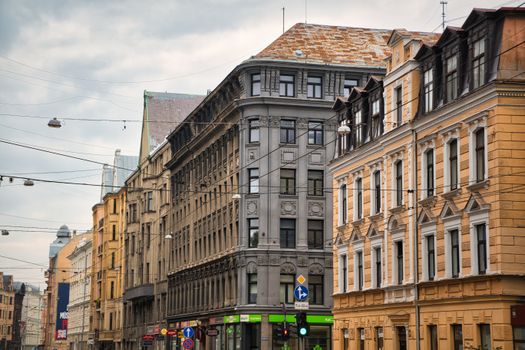
Walking down Alberta Iela is like walking through an open-air gallery of the subconscious. Faces (mascarons), dragons, and floral motifs scream from the facades. These buildings weren't just apartments; they were statements of Latvian identity against Imperial Russian rule.
Pro-Tip:
Look for the "Blue House" at Alberta Iela 13. The screaming faces on the top floor were designed by Mikhail Eisenstein (father of the famous film director). Use a zoom lens; the best details are near the roofline.
4. Tallinn: The Medieval Fortress Disney Can’t Replicate
If you find Rothenburg ob der Tauber too "theme park," Tallinn’s Old Town is the antidote. It is one of the best-preserved Hanseatic town centers in the world.
The Rivalry:
Tallinn Old Town vs. Carcassonne.
While Carcassonne was heavily restored in the 19th century, Tallinn feels lived-in and rugged. The limestone walls, the "Fat Margaret" bastion, and the red-capped towers of the city wall are the real deal.
Pro-Tip:
Head to Kohtuotsa viewing platform at sunset. You’ll get the classic "The Times we had" wall shot, but the real magic is watching the shadows of the Oleviste Church steeple stretch across the Gulf of Finland.
5. Bucharest: The "Little Paris" Meets the Titan
Bucharest is a city of jarring, brilliant contrasts. One moment you are on a boulevard that looks exactly like the Champs-Élysées, and the next, you are staring at the second-largest administrative building in the world.
The Rivalry:
The Palace of the Parliament vs. The Pentagon.
It is the heaviest building on Earth. Built by Nicolae Ceaușescu, it’s a polarizing behemoth of marble, crystal chandeliers, and velvet. It’s "Brutalist-Neoclassical" on a scale that defies logic.
Contrast this with the Stavropoleos Monastery, a tiny Eastern Orthodox gem built in the Brâncovenesc style. It features intricate stone carvings and frescoes that make the grandest Western cathedrals feel impersonal.
Pro-Tip:
The hidden entrance to the Pasajul Victoria (the umbrella street) is great for Instagram, but for real architecture, find the Macca-Vilacrosse Passage. It’s a yellow-glass-roofed arcade that feels like 19th-century Cairo met 19th-century Paris.
6. Krakow: The Renaissance Jewel That Survived
While much of Central Europe was leveled in WWII, Krakow’s Old Town remained intact. It is a time capsule of the Polish Golden Age.
The Rivalry:
Wawel Castle vs. The Loire Valley Chateaux.
Wawel is a mashup. You have a Romanesque rotunda sitting next to a Gothic cathedral, which is attached to a Renaissance courtyard. The Sigismund Chapel, with its golden dome, is often cited by architects as the "purest" example of Renaissance architecture north of the Alps.
Pro-Tip:
Visit the Rynek Underground. It’s a high-tech archaeological museum situated four meters below the main market square. You can see the original medieval merchant stalls preserved in situ.
7. Kyiv & Lviv: The Ukrainian Baroque (The Future of Travel)
Note: While travel is currently restricted, no architectural guide to the East is complete without acknowledging Ukraine's contribution.
The Rivalry:
St. Sophia’s Cathedral vs. St. Peter’s Basilica.
The "Ukrainian Baroque" style is characterized by pear-shaped golden domes and white-and-green facades. St. Sophia’s in Kyiv, with its 11th-century mosaics, represents a bridge between Byzantium and the West that you simply won't find in Italy or France.
---
Quick Facts: Logistics & Budget
| City | Est. Daily Budget ($) | Best Time to Visit | Architectural Style |
| :--- | :--- | :--- | :--- |
| Prague | $70 - $110 | May or September | Gothic / Baroque |
| Budapest | $60 - $90 | April - June | Art Nouveau / Neo-Gothic |
| Riga | $50 - $80 | June - August | Art Nouveau (Jugendstil) |
| Tallinn | $65 - $95 | Late August | Medieval / Hanseatic |
| Bucharest | $45 - $75 | September - October | Brâncovenesc / Brutalist |
| Krakow | $55 - $85 | May - June | Renaissance / Gothic |
The Verdict: Why It Matters
Western architecture is about the "Grand Statement." Eastern European architecture is about survival and synthesis. It is the physical manifestation of cultures that have been at the crossroads of empires for two millennia.
When you look at a building in Prague or Riga, you aren't just looking at stone; you're looking at a defiance of gravity and history. These cities don't just rival the West—they offer a deeper, more complex story for those willing to look past the Iron Curtain stereotypes.