The Moment the East Stole the Spotlight
I stepped off the overnight train onto the rain-slicked platform of Riga Central Station at 6:15 AM, as the cool Baltic fog began to lift. The scent of fresh cardamom buns from a nearby bakery mingled with the damp stone smell of damp historic masonry. I turned down Elizabeth Street, looked up, and stopped dead in my tracks.
Standing above me was a three-story plaster face—a screaming, winged sphinx framed by electric-blue tiles, exaggerated peacocks, and sculpted wrought-iron flora. It wasn't Paris. It wasn't Brussels. It was Latvia in midsummer, completely devoid of tourist crowds, and dramatically superior to anything I’d queued for in Western Europe the previous season.
For decades, grand architectural grand tours sent travelers on a predictable loop: Rome’s Colosseum, Paris’s Haussmann boulevards, Barcelona’s Sagrada Família, and Vienna’s Ringstraße. But by mid-2026, over-tourism, skyrocketing hotel rates, and suffocating summer heatwaves have pushed savvy cultural travelers to re-evaluate their blueprints.
Eastern Europe isn't merely an affordable alternative; it harbors architectural movements so bold, eclectic, and meticulously preserved that they surpass their Western counterparts. If you are planning an architectural pilgrimage, here is why Eastern European architecture rivaling Western in July 2026 is the ultimate move for your summer itinerary.
---
1. Riga, Latvia: The World Capital of High Art Nouveau
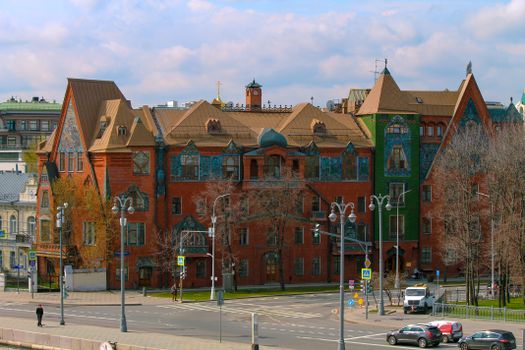
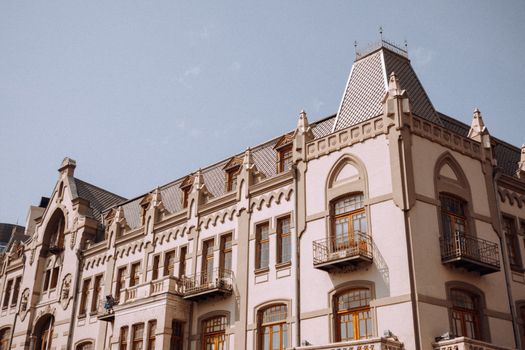
While travelers fight shoulder-to-shoulder on the streets of Paris to catch a glimpse of Hector Guimard’s metro entrances, Riga quiet enjoys status as the highest concentration of Art Nouveau (Jugendstil) architecture anywhere on the planet. Over one-third of central Riga is built in this flamboyant style, constructed during the city’s economic golden age between 1899 and 1914.
```
+-----------------------------------------------------------------------+
| RIGA ART NOUVEAU AT A GLANCE |
| Key Architect: Mikhail Eisenstein |
| Defining Style: Eclectic / Decorative Jugendstil |
| Must-Visit Street: Alberta Iela (Albert Street) |
| Pro-Tip: Look UP—most sculptural details sit above the second floor. |
+-----------------------------------------------------------------------+
```
The Mastermind: Mikhail Eisenstein
The father of Riga’s wildest facades was civil engineer Mikhail Eisenstein (father of film director Sergei Eisenstein). His work on Alberta Iela is pure architectural opera. Look closely at Alberta Iela 2A: two giant plaster sphinxes guard the door, while blue glass bricks catch the low Baltic morning sun, illuminating terrifying mask motifs that symbolize human anxiety at the turn of the 20th century.
National Romanticism
Beyond Eisenstein's dramatic flair, explore Ejzenšteina iela and Brīvības iela to discover Riga’s National Romanticism—a heavier, granite-clad style incorporating Latvian folklore imagery, steep roofs, and pine-cone carvings designed by local architects like Eižens Laube.
- Pro-Tip: Skip the main Art Nouveau Museum gift shop. Walk into the apartment building at Alberta Iela 12 at 8:30 AM before the tour groups arrive. Pay €3 to climb the astounding spiral staircase—a magnificent vertical helicoid painted with native Latvian flora—without waiting in line.
---
2. Budapest, Hungary: Secessionist Genius & Zsolnay Roofing
Vienna has Otto Wagner, but Budapest took the Secessionist movement and infused it with eastern mythology, vibrant ceramics, and sheer structural audacity. While Western capitals relied on limestone and granite, Hungarian architects embraced colorful weather-resistant tiles from the famous Zsolnay factory in Pécs.
Ödön Lechner’s Masterpieces
Ödön Lechner, often called "The Hungarian Gaudí," sought to create a uniquely national architectural language. His crowning achievement, the Geological Institute (Stefánia út 14), features a roof made entirely of iridescent turquoise and gold Zsolnay tiles, topped with statues of Atlas holding up the globe.
```
/ \ / \
/ \ / \ Zsolnay Tile Roof Patterns:
/_____\ /_____\ Persian & Hungarian folk-art
| _ | [|||] | _ | motifs fired with iridescent
| | | | | | | | | | Eosin glaze.
```
When criticized because these intricate roof patterns could only be seen by birds, Lechner famously replied, "The birds deserve to see something beautiful, too."
The Hungarian Parliament vs. Westminster Palace
London’s Palace of Westminster gets all the press, but Budapest’s Parliament Building (Országház) on the banks of the Danube is grander in both scale and symmetry. Designed by Imre Steindl and completed in 1904, this Neo-Gothic juggernaut uses 40 kilograms of 22-karat gold for interior detailing and features 365 spires—one for every day of the year.
- Pro-Tip: For the best architectural photo shot without crowds, cross the Danube to the Víziváros district at twilight. Set up your tripod on the steps of Batthyány tér. The light reflects off the Danube, illuminating the warm yellow limestone and green Zsolnay roof ridges perfectly around 9:15 PM in July.
---
3. Ljubljana, Slovenia: Jože Plečnik’s Urban Sanctuary
Barcelona has Antoni Gaudí, but Slovenia’s capital city was single-handedly sculpted by a single visionary: Jože Plečnik. After shaping Prague Castle and working alongside Otto Wagner in Vienna, Plečnik returned to Ljubljana in the 1920s with a mission: transform a modest provincial town into a modern Athens.
The Human-Scale Metropolis
Plečnik didn't just build individual structures; he carved out the city’s soul using recycled Roman stones, custom concrete pillars, red bricks, and cypress trees.
- The Triple Bridge (Tromostovje): Plečnik took an old stone bridge from 1842 and added two flanking pedestrian bridges at angled diagonals, adding Venetian balustrades and lamps to create an ethereal urban funnel.
- National and University Library: The facade is a masterclass in texture—built from raw concrete blocks interspersed with rough red bricks and reclaimed local stone, symbolizing the intellectual light rising from crude stone.
```
[ Plečnik's Texture Matrix ]
+---------------------------------------+
| [Rough Red Brick] [Chiselled Stone] |
| [Recycled Roman] [Smooth Concrete] |
+---------------------------------------+
--> Designed to catch light at shifting sun angles.
```
Why it Beats Western Public Spaces
Unlike Western European cities where historic centers are dominated by vehicle traffic and high-end retail chains, Plečnik designed Ljubljana for pedestrians, greenery, and contemplation. The entire embankment along the Ljubljanica River functions as a continuous, open-air living room.
- Pro-Tip: Head to the Križanke Outdoor Theatre via the side entrance on Zoisova Cesta. Look for the small brass bell hidden on the wooden archway. Ringing it grants access to the courtyard, where Plečnik set ancient Roman tombstones into stucco walls like hanging art.
---
4. Kraków, Poland: Renaissance Courtyards & Stained Glass Drama
Florence may be the birthplace of the Renaissance, but Kraków preserved its architecture untouched through centuries of European conflict, creating a time capsule of Gothic, Renaissance, and Mannerist craftsmanship.
Wawel Castle: Italian Craftsmanship with Polish Soul
When fire damaged the royal residence on Wawel Hill in 1499, King Sigismund I summoned Italian architects Francesco Fiorentino and Bartolommeo Berrecci. The result was the Wawel Castle Arcaded Courtyard—a stunning three-tier Italianate courtyard featuring unusually tall, slender columns on the top floor that feel weightless compared to their Florentine counterparts.
```
=== WAWEL ARCADE ELEVATION ===
[Tier 3] | | | | | | (Extra-tall Tuscan columns)
[Tier 2] |=|==|=|==|=| (Ionic Arcades)
[Tier 1] |===|===|===| (Doric Base)
```
St. Mary’s Basilica & Stanisław Wyspiański
Step inside St. Mary’s Basilica in the Main Market Square (Rynek Główny). While Western Gothic cathedrals favor cool greys and soaring clear stone, Wyspiański repainted this interior in 1890 with intense lapis lazuli blues, gold leaf stars, and Art Nouveau floral murals.
- Pro-Tip: Avoid the main line at the front entrance of St. Mary's. Walk around to the southern side (Plac Mariacki) at 11:45 AM. Buy a ticket for the side door entrance specifically to watch the opening of the Veit Stoss Altarpiece at precisely 11:50 AM—the largest Gothic wooden altarpiece in the world.
---
5. Bucharest, Romania: The Interwar "Little Paris" & Brâncovenesc Fusion
In the 1920s, Bucharest earned the moniker "Little Paris of the East" due to its wide tree-lined boulevards, French-trained architects, and Belle Époque mansions. But look beneath the surface, and you’ll discover an architectural style completely unique to Romania: The Brâncovenesc (Wallachian Renaissance) Style.
The Brâncovenesc Aesthetic
Developed in the late 17th century under Prince Constantin Brâncoveanu, this style merges Eastern Byzantine, Ottoman, and Western Venetian Renaissance elements. Expect intricate stone carvings of vine leaves, twisted columns, carved loggias, and delicate tile work.
Essential Bucharest Architectural Stops:
1. Stavropoleos Monastery Courtyard: A miniature sanctuary featuring carved oak doors, Ottoman-influenced stone balustrades, and intricate frescoes.
2. The CEC Palace: Designed by French architect Paul Gottereau, featuring a massive glass and metal dome that rivals the Grand Palais in Paris.
3. Villa Minovici: The ultimate expression of Neo-Brâncovenesc architecture, complete with traditional Romanian porch arches (tdora) and handmade kiln tiles.
```
+-----------------------------------------------------------------+
| BUCHAREST STYLE COMPARISON |
| Western Equivalent: Haussmann Paris / Venetian Renaissance |
| Eastern Superiority: Fusion of Byzantine motifs + Ottoman stone |
| Secret Spot: Macca-Vilacrosse Arcade (yellow-tinted glass street)|
+-----------------------------------------------------------------+
```
- Pro-Tip: To view the private Belle Époque mansions normally closed to the public, walk through the Cotroceni neighborhood on a Sunday morning. The residential streets are shaded by hundred-year-old linden trees, and local pop-up cafes open in the garden courtyards of 19th-century villas.
---
6. Sighișoara & Biertan, Romania: Saxon Gothic Fortresses
While Carcassonne in France is heavily restored and swarming with gift shops, the Saxon fortified towns of Transylvania offer authentic, preserved medieval Gothic architecture operating as living communities.
Sighișoara Citadel
Recognized as a UNESCO World Heritage site, Sighișoara is one of the few inhabited medieval citadels in Europe. The city's Clock Tower (Turnul cu Ceas), built in the 14th century, features a complex clock mechanism with wooden figurines representing Roman gods that rotate at midnight.
Biertan Fortified Church
Located just 30 kilometers away, Biertan represents the pinnacle of Transylvanian Saxon Gothic architecture. Perched high on a hill surrounded by vineyards, this church features three concentric ring walls, six defense towers, and a famous sacristy door built in 1515 with an incredible 19-lock mechanism operated by a single key turn.
```
/ \ [BIERTAN FORTRESS]
/ \ - 3 Concentric Defensive Walls
/=====\ - 19-Lock Medieval Vault Door
/ | | \ - Intact 16th Century Guild Towers
| |___| |
```
- Pro-Tip: Climb the Scholars' Covered Stairs (Scara Școlarilor) in Sighișoara at dusk. The 175-step wooden tunnel filters the setting sun, leading to the Church on the Hill and a peaceful, ancient Saxon cemetery shadowed by massive oak trees.
---
Logistics & Budget Master Matrix (July 2026)
Planning a multi-country architectural route through Eastern Europe is drastically simpler and more affordable than traversing the Western transit corridors. Below is a realistic breakdown for July 2026:
| City | Architectural Highlight | Estimated Daily Budget (Hotel + Meals) | Entry Fees (Avg.) | How to Get There (2026 Transit) |
| :--- | :--- | :--- | :--- | :--- |
| Riga | Art Nouveau / Jugendstil | $90 - $130 | €3 - €8 | AirBaltic direct hub / Rail Baltica connection |
| Budapest | Secessionist & Neo-Gothic | $110 - $160 | €8 - €18 | Direct RailJet express from Vienna (2.5 hrs) |
| Ljubljana| Jože Plečnik Urbanism | $100 - $150 | Free - €7 | Nightjet sleeper sleeper car from Munich/Venice |
| Kraków | Renaissance & Polish Gothic| $85 - $125 | €4 - €12 | PKP Intercity Express train from Warsaw (2 hrs) |
| Bucharest| Neo-Brâncovenesc & Interwar| $75 - $115 | €3 - €10 | Direct flights via Tarom; CFR Călători regional train |
---
Strategic Pro-Tips for Architectural Photography in July 2026
To capture these monumental structures without light interference or overcrowding, use these field strategies:
- Master the High-Latitude Light: Cities like Riga and Kraków enjoy extremely long twilight hours in July. Golden hour extends well past 9:00 PM, providing extended shoot windows with soft, warm light hitting northern facades.
- Pack a Shift Lens or Use Correction Software: Eastern European streets are tight and historical facades are towering. Bring a dedicated wide-angle tilt-shift lens (or use perspective correction in Lightroom) to prevent convergence on tall Art Nouveau towers like those on Riga's Alberta Iela.
- Use the "Blue Hour" for Roof Tiles: Iridescent Zsolnay ceramic tiles (Budapest) and copper roof vaults (Kraków) look flat at noon. Shoot them 20 minutes after sunset during "Blue Hour"—the contrast between deep blue skies and illuminated yellow sandstone creates high visual impact.
- Accessing Locked Courtyards: Many of Bucharest’s and Kraków’s best archways are secured by digital keypad locks. Don't force doors open; politely wait near the entrances around 8:00 AM when postal workers and local residents step out, and ask: "Scuzați-mă, pot să fac o fotografie?" (Romanian) or "Przepraszam, czy mogę zrobić zdjęcie?" (Polish). Nine times out of ten, you'll be welcomed inside.
---
The Verdict: Redefining the Grand Tour for 2026
Western Europe’s historic cities will always hold value, but their architectural treasures are often obscured by long lines, velvet ropes, and commercialized tourism.
By redirecting your journey toward Eastern Europe in July 2026, you aren't settling for second best. You are stepping directly into a world of vibrant Secessionist roofs, intimate Renaissance courtyards, quiet Art Nouveau streets, and revolutionary urban spaces.
Pack your camera, bypass the Western queues, and experience Europe’s true architectural golden age where it shines brightest—in the East.
*