Headlines love to claim that one city or another is the "next Asia" according to some mysterious ranking, but the real picture is more interesting than any list. A European city feels Asian for specific, traceable reasons: a port that traded with the East, a migration wave that built a community, a garden designed by a master, or an empire that once stretched across continents. When you understand the reason, you can choose a city with confidence and know what you will actually find there.
Rather than ranking cities, this guide is organised by theme. Each section explains one source of Asian influence and gives you places where it shows up clearly. A note on evidence: there is no single reliable statistic that measures how "Asian" a city feels, so treat any chart that claims to do so with caution. Use the reasons below, and check local tourism sites for current events and details.
Theme one: communities and their food
The strongest and most dependable influence comes from people who settled, opened businesses and raised families. Their cooking is the easiest way into a culture.
London, United Kingdom
London is a patchwork of South Asian, East Asian and Southeast Asian communities. Brick Lane and the surrounding streets are linked to the Bangladeshi community, with curry houses, sweet shops and bakeries. Southall in west London is known for Punjabi food, markets and gold jewellers. Chinatown near Leicester Square is the best-known Chinese district, although many Londoners eat Chinese food in other areas of the city as well.
The practical advice is to avoid choosing a restaurant just because it has the brightest sign. Walk a few streets away from the busiest corners, look for places with a steady local clientele, and ask what the kitchen does best.
Liverpool, United Kingdom
Liverpool is home to one of the oldest Chinese communities in Europe, rooted in the city's history as a major port. The Chinese Arch on Nelson Street is a striking landmark. The area offers restaurants, bakeries and supermarkets, and the city's maritime museums help explain how the community took shape. Liverpool is a good choice if you want a smaller, less overwhelming city with a story.
Manchester, United Kingdom
Manchester's Curry Mile in Rusholme is famous for South Asian restaurants, sweet shops and late-night cafes, and its Chinatown is one of the larger ones in the country. Together they make an easy food-focused weekend.
Theme two: colonial and trade history
Some influence comes from empires and trading companies rather than from modern migration. It shows up in cooking, architecture and museums.
Amsterdam and the Dutch cities
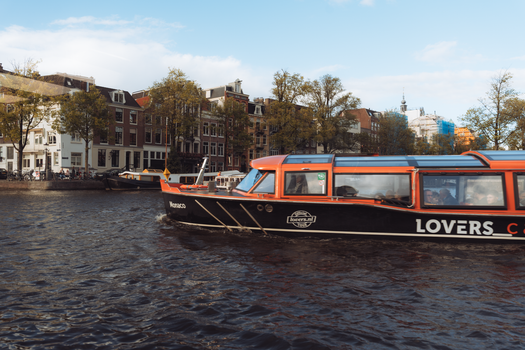
The Dutch trading companies were active in Asia for centuries, and the legacy is easy to taste. Indonesian restaurants serve rijsttafel and dishes like satay and rendang, which are part of everyday Dutch eating. You can pair a meal with a visit to a museum that tells the history of the trade, including its difficult colonial aspects. Seeing both the food and the context gives you a fuller picture than either alone.
Lisbon and Porto
Portugal's early sea routes to India, China and Japan left traces in ceramics, vocabulary, cooking and museum collections. It is an understated influence, best enjoyed slowly, with a museum visit and a meal in one of the city's multicultural neighbourhoods.
Marseille, France
Marseille is a Mediterranean port that has long received people and goods from North Africa and the wider world, and it has a strong Vietnamese and Comorian presence as well. The city is an excellent place to eat widely and cheaply, with markets close to the old port.
Theme three: Ottoman and Silk Road architecture
Southeastern Europe carries centuries of Ottoman history, which tied the region to Anatolia, Persia and beyond. The result is a landscape of bazaars, mosques, bridges and hammams.
Sarajevo, Bosnia and Herzegovina
The old bazaar quarter of Baščaršija has copper workshops, tea houses and cobbled lanes lined with small shops. Coffee is served in a traditional pot with sugar cubes, and the ritual is as important as the drink. Alongside this you will see Austro-Hungarian buildings, which makes Sarajevo a rare city where the East and West meet on a single street. It is also a place with a recent painful history, so visit museums with respect.
Plovdiv, Bulgaria, and Skopje, North Macedonia
Both cities have old Ottoman quarters, and both reward a slow walk through their lanes. Skopje's old bazaar is one of the largest surviving in the Balkans, and Plovdiv's old town mixes Roman ruins with nineteenth-century houses.
Istanbul, Turkey
Istanbul is the obvious anchor for this theme, and parts of the city lie in Asia itself. A ferry across the Bosphorus is a simple way to feel the geography.
Theme four: gardens and design
Some of the most peaceful Asian touches in Europe are gardens, created by designers who admired Japanese and Chinese traditions.
- Hamburg, Germany. The Planten un Blomen park contains a Japanese garden with a tea house, a good spot for a quiet break.
- Leiden, Netherlands. The city is linked to early European study of Japan, and its museums and gardens reflect that history.
- London, United Kingdom. Kyoto Garden in Holland Park is a small, tranquil space, and the Kew Gardens site includes a Japanese gateway and landscape.
- Düsseldorf, Germany. The Japanese garden by the Rhine and the nearby Japanese quarter pair nicely.
Gardens are best in spring for blossom and in autumn for colour. Opening times vary seasonally, so confirm them before you set off.
Theme five: festivals and seasonal events
Events give you a reason to choose a particular week. Look for these types of celebrations, and always confirm the dates, since many follow a lunar calendar or change yearly.
- Lunar New Year. Parades, dragon dances and food stalls appear in London, Paris, Amsterdam and many other cities in late winter.
- Cherry blossom viewing. Parks in several German and Dutch cities celebrate spring blossom, and some arrange picnics and events.
- Diwali and Holi. Cities with large South Asian communities, such as London and Leicester, hold festivals of lights and colour.
- Cultural days. Some cities, including Düsseldorf, host events that celebrate Japanese culture, with food, performances and demonstrations.
How to match a theme to a trip
Think about what you most enjoy and match it to the theme.
- Food lover: London, Manchester or Paris for variety, with Amsterdam for Indonesian food.
- History lover: Lisbon, Amsterdam or Sarajevo, with museum visits at the centre.
- Wanderer and photographer: Istanbul, Skopje or Plovdiv for old quarters and bazaars.
- Quiet-seeker: Hamburg or Leiden for gardens and calm.
- Festival fan: Choose a city with a big Lunar New Year or Diwali celebration and build the trip around it.
A sample long weekend
Here is one example, built around the food-and-history theme in the Netherlands.
- Day one: Arrive in Amsterdam, visit a museum of colonial trade history, and have an Indonesian rijsttafel dinner.
- Day two: Take a train to Leiden for the museum and gardens, then return for a lazy evening.
- Day three: Visit a market for fresh snacks, explore a neighbourhood on foot, then catch your onward transport.
Trains in the Netherlands are frequent and the cities are close together, which makes the plan realistic. Check schedules and ticket options in advance.
Respect and context
Many of these places carry complicated histories, including colonialism and migration under hardship. Good museums will tell you honestly. Approach with curiosity, listen to the stories, and support businesses run by the communities themselves.
Frequently asked questions
Is there an official ranking of the most Asian cities in Europe?
No. Claims of rankings usually combine very different measures, and none is authoritative. A theme-based approach is more useful.
Which city is best for authentic food at a modest price?
Cities with long-established communities, such as London, Manchester and Paris, have a wide spread of cheap and excellent options. Prices change, so look at recent menus.
Do I need special documents to visit these places?
Requirements depend on your nationality and the destination. Check official government sources before booking, particularly for non-EU destinations like the United Kingdom, Bosnia and Herzegovina or Turkey.
Is it respectful to visit religious sites as a tourist?
Usually yes, if you follow the rules. Dress modestly, remove shoes where asked, stay quiet and ask before taking photos.
Summary
A European city feels Asian for concrete reasons: communities, trade, empire, design or celebration. Pick the theme that appeals to you, choose a city where that theme is strong, and plan around local events and opening hours that you verify yourself. You will come home with a richer understanding of how Europe and Asia have always been connected.