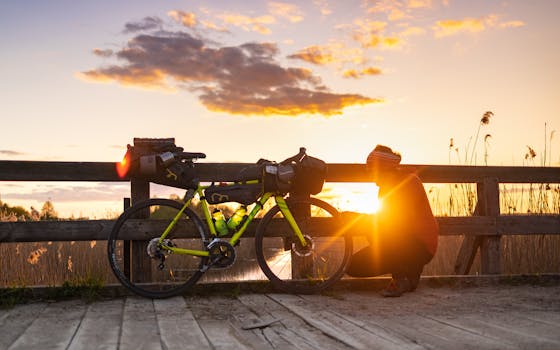
I stepped off the regional train in Coyhaique, and the air hit me like a cold slap of glacial runoff and woodsmoke. My hands were stained with black chain grease, my knees were stiff from a thirty-hour transit, and my steel-framed touring rig was still partially zipped into its battered cardboard box. Around me, the Chilean Patagonia wind—the viento blanco—howled through the corrugated tin roofs of the station. It smelled of damp southern beech forests, wet gravel, and the roasting lamb from a nearby quincho.
That was the exact moment I realized why we do this.
We don't ride loaded bicycles across continents to save money, nor do we do it to set speed records. We do it because when you cross a mountain range under your own steam, you earn every single inch of the descent. You smell the wild mint before you see it; you feel the temperature drop ten degrees as you plunge into a river canyon; you hear the gravel crunching under your tires like a steady, meditative heartbeat.
If you are itching to throw your leg over a loaded touring bike and disappear into the wild, these five epic routes are calling your name right now.
---
1. The Carretera Austral (Ruta 7), Chile
### The Vibe: Wild, Untamed Patagonian Frontier
This is the holy grail of gravel bike touring. Stretching over 1,200 kilometers from Puerto Montt to Villa O'Higgins, the Carretera Austral cuts through the heart of Chilean Patagonia. It is a dizzying montage of hanging glaciers, turquoise rivers, and temperate rainforests.
```
[Puerto Montt] ---> [Chaitén] ---> [Coyhaique] ---> [Villa O'Higgins]
| | | |
(The Start) (Volcanoes) (Midway Hub) (The End of the Road)
```
The Route Specifics
The road surface is a chaotic mix of washboard gravel (ripio), slick mud, and occasional stretches of pristine asphalt. You will climb over steep mountain passes like the Portezuelo Queulat—a series of switchbacks cut directly into a cliffside beneath a roaring waterfall—and cross fjords on creaking wooden ferries.
- Distance: 1,240 km (770 miles)
- Suggested Time: 20 to 30 days
- Terrain: 60% gravel, 40% paved. High physical difficulty due to relentless wind and steep, short climbs (gradients up to 14%).
Local Secret & Insider Pro-Tips
* The Food Stop: When you roll into the tiny hamlet of Villa Amengual, skip the formal restaurants. Look for a small, unpainted wooden shack behind the Copec fuel station. An elderly woman named Maria sells fresh, hot tortas fritas (fried dough) dusted with sugar for pennies. It is the ultimate high-calorie cyclist fuel.
* Pro-Tip: Do not rely on Google Maps for ferry schedules between Hornopirén and Caleta Gonzalo. They change based on the season and tide. Book your tickets at least two weeks in advance through the Somarco website, especially if you are traveling between December and February.
---
2. The Shimanami Kaido, Japan
### The Vibe: High-Tech Infrastructure Meets Feudal Island Life
If Patagonia is a rugged test of survival, the Shimanami Kaido is a masterclass in civil engineering and cultural immersion. This route hops across six islands in the Seto Inland Sea, connected by a series of massive, elegant suspension bridges that feature dedicated, separate lanes for cyclists and pedestrians.
The Route Specifics
You will ride along a perfectly painted blue line that guides you from Onomichi on the Honshu mainland to Imabari on Shikoku island. The route winds through quiet citrus orchards, past ancient Shinto shrines, and along sleepy fishing villages that smell of dried squid and fermented soy.
- Distance: 70 km (43 miles)
- Suggested Time: 1 to 2 days (do it in two days to explore the side islands)
- Terrain: 100% paved, exceptionally smooth. Low difficulty, making it perfect for beginners or credit-card tourers.
Local Secret & Insider Pro-Tips
* The Food Stop: On Ikuchijima Island, detour off the main blue line to visit Gelateria Monamour. They serve a legendary lemon gelato made from citrus grown on the hillside directly behind the shop. The tartness cuts through the humidity like nothing else.
* Pro-Tip: Start your ride from Onomichi before 7:30 AM. Stop at the local 7-Eleven to stock up on onigiri (rice balls wrapped in seaweed) and hot canned coffee from the vending machines. The bridges can get crowded with casual day-trippers by mid-morning; an early start guarantees you have the soaring bridge spans entirely to yourself.
---
3. The Westfjords Way (Vestfjarðaleiðin), Iceland
### The Vibe: Volcanic Solitude at the Edge of the Arctic Circle
Iceland’s Ring Road has become victim to its own popularity, packed with rental campervans and tour buses. If you want the raw, desolate, otherworldly Iceland of your dreams, head northwest to the Westfjords.
The Route Specifics
This route clings to the edges of dramatic, flat-topped fjords, climbing over steep, unpaved mountain passes where the snow lingers well into July. You will ride past black sand beaches, roaring geothermal vents, and cliffs teeming with thousands of puffins.
- Distance: 950 km (590 miles)
- Suggested Time: 10 to 14 days
- Terrain: 70% paved, 30% rough gravel. High difficulty due to extreme weather, intense headwinds, and remote stretches with no services for 80+ kilometers.
Local Secret & Insider Pro-Tips
* The Food Stop: In the tiny town of Þingeyri, stop at Simbahöllin, a cozy cafe housed in a restored 1915 merchant shop. Order their Belgian waffles topped with homemade rhubarb jam and whipped cream. It is a legendary gathering spot for trans-Icelandic cyclists.
* Pro-Tip: Pack a lightweight, collapsible nylon bucket or bag. The Westfjords are dotted with natural geothermal hot springs (heitir pottar) that aren't on any tourist maps. One of the best, Hellulaug, is hidden right on the shoreline of Breiðafjörður, tucked behind a rocky outcrop just off Route 60. It is free, completely natural, and offers a 40°C soak with views of the ocean.
---
4. The Great Divide Mountain Bike Route (GDMBR), USA & Canada
### The Vibe: The Ultimate Off-Grid Continental Test
This is the longest off-pavement route in the world, tracing the spine of the Rocky Mountains from Banff, Alberta, all the way to the Mexican border in Antelope Wells, New Mexico. It is an epic journey through wild grizzly country, high-altitude alpine meadows, and sun-baked desert basins.
```
[Banff, Canada] ---> [Montana Wilderness] ---> [Wyoming Basins] ---> [New Mexico Desert]
| | | |
(Glacial Peaks) (Grizzly Country) (Arid Solitude) (The Border Finish)
```
The Route Specifics
The GDMBR is not singletrack; it consists primarily of dirt fire roads, forest service tracks, and abandoned mining paths. You will cross the Continental Divide 30 times, reaching altitudes of over 11,900 feet (3,600 meters) in Colorado.
- Distance: 4,418 km (2,745 miles)
- Suggested Time: 30 to 45 days
- Terrain: 90% unpaved (dirt, gravel, sand), 10% paved. Extreme physical and mental difficulty.
Local Secret & Insider Pro-Tips
* The Food Stop: When crossing Montana, make a mandatory stop in the tiny town of Ovando. Go to the Blackfoot Angler fly shop. The owner, John, is a patron saint of Great Divide cyclists and lets riders camp in a retrofitted sheep wagon or a vintage teepee behind the shop.
* Pro-Tip: Your biggest enemy on this route isn't the climbs—it's the "peanut butter mud" of Wyoming and New Mexico. When it rains, the dry clay turns into a thick, wheel-locking paste that can snap a rear derailleur in seconds. Carry a plastic putty knife in your frame bag specifically to scrape mud off your tires and fork arches.
---
5. The Dolomites Loop, Italy
### The Vibe: High-Altitude Drama and Michelin-Starred Refueling
If your idea of bike touring involves conquering legendary mountain passes by day and eating world-class handmade pasta by night, the Italian Dolomites are your playground. This loop takes you up and over the giant limestone monoliths of northeastern Italy.
The Route Specifics
You will tackle legendary Giro d’Italia climbs like the Passo Giau, Passo Gardena, and Passo Sella. The roads are impeccably engineered asphalt switchbacks that cling to sheer rock faces. The descents are fast, technical, and utterly exhilarating.
- Distance: 350 km (217 miles)
- Suggested Time: 4 to 6 days
- Terrain: 100% paved. High physical difficulty due to sheer vertical gain (often exceeding 2,000 meters of climbing per day).
Local Secret & Insider Pro-Tips
* The Food Stop: Skip the valley-floor restaurants. Instead, climb up to the Rifugio Averau, located at 2,413 meters near the Cinque Torri. Sit on the outdoor terrace and order the Casunziei ampezzani—half-moon pasta pockets stuffed with beetroot and tossed in melted butter and poppy seeds.
* Pro-Tip: Avoid riding this route in August at all costs. The roads become choked with slow-moving campervans and aggressive sports cars. Instead, plan your ride for the second half of September. The air is crisp, the larch forests turn a brilliant golden hue, and the summer traffic completely vanishes.
---
The Master Logistics & Budget Guide
To help you choose your next adventure, here is a direct comparison of the logistics, costs, and gear profiles for these five routes:
| Route | Best Riding Window | Est. Daily Cost (USD) | Recommended Bike Type | Key Gear Item | How to Get There |
| :--- | :--- | :--- | :--- | :--- | :--- |
| Carretera Austral | Dec – March | $25 – $40 (Camping) | Rigid Steel Touring / Gravel | Heavy-duty waterproof panniers | Fly to Santiago (SCL), then domestic flight to Puerto Montt (PMC). |
| Shimanami Kaido | Oct – Nov & April – May | $70 – $120 (Guesthouses) | Road / Light Gravel | Lightweight frame bags | Shinkansen (bullet train) from Osaka or Hiroshima to Onomichi Station. |
| Westfjords Way | late June – early Sept | $40 – $70 (Camping) | Gravel Bike (45mm+ tires) | Windproof/waterproof breathable hardshell jacket | Fly to Reykjavik (KEF), then local bus or domestic flight to Ísafjörður. |
| Great Divide (GDMBR) | July – Sept | $30 – $50 (Wild Camping) | Hardtail Mountain Bike | Bear-proof food sack & water filter | Fly to Calgary (YYC), take a shuttle to Banff to start. |
| Dolomites Loop | June & September | $90 – $150 (Refuges/Hotels) | Lightweight Road / Gravel | Ultralight saddle bag | Fly to Venice (VCE) or Munich (MUC), then take a train to Bolzano. |
---
The Universal Bike Touring Packing Manifesto
Regardless of which route you choose, packing too much gear is the single most common mistake made by rookie tourers. Every extra pound feels like a personal insult when you are grinding up a 10% grade.
The "Golden Rules" of Packing:
1. The Multi-Use Rule: If an item doesn't serve at least two distinct purposes, leave it at home. (Example: Merino wool t-shirt = riding jersey + sleeping shirt + casual dinner wear).
2. Ditch the Cotton: Cotton holds moisture, chafes, and takes days to dry. Stick exclusively to merino wool and high-quality synthetics.
3. Invest in Your Sleep System: A cold, sleepless night guarantees a miserable ride the next day. Do not skimp on your sleeping pad (look for an R-value of 3 or higher) or your sleeping bag.
---
The Final Spin
There is a unique magic that happens around day three of a bike tour. Your legs stop aching, your mind stops racing about unread emails, and your world shrinks to a few basic, beautiful priorities: Where is the next hill? Where can I find clean water? What am I going to eat for dinner?
The landscapes featured in this guide are epic, yes. But the true beauty of bike touring isn't just the destination—it's the slow, deliberate, and deeply human way you experience the spaces in between. Pack your bags, tune your gears, and go ride. The road is waiting.
---