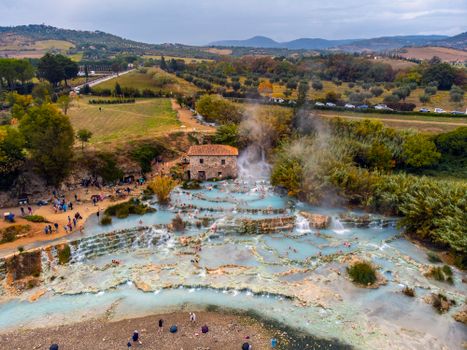
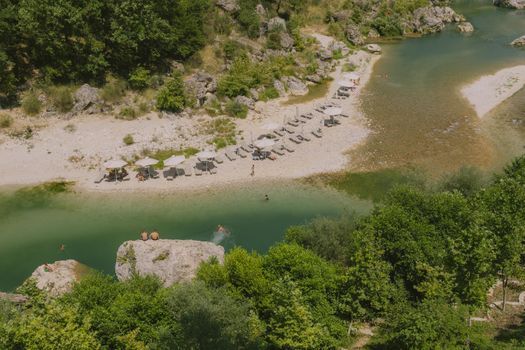
The Hook: Mist, Minerals, and the Silence of a Tuscan Dawn
I stepped off the gravel track at 5:30 AM, my leather boots sinking into a blanket of pine needles soaked in morning frost. The air hit my lungs with the sharp, clean bite of cold cypress, layered with that unmistakable, heavy tang of elemental sulfur—a smell that immediately tells your lizard brain that subterranean earth is boiling right beneath your feet.
There were no tickets to scan. No turnstiles. No ambient synth music playing through hidden outdoor speakers.
Instead, through the thick steam clinging to the forest floor, I saw three elderly Italian men sitting waist-deep in a travertine stone basin carved by nature centuries ago. They were sipping dark espresso from a thermos, speaking in low, rhythmic Tuscan cadences. When I slithered into the 41°C (105.8°F) mineral-rich water, my skin tingled as the chalk-white clay coats my limbs.
This wasn't Saturnia. Saturnia was thirty miles away, choked with tour buses, selfie sticks, and an armada of neon pool floats. This was a spot known only to neighboring villagers and a tiny pocket of wild-swimming enthusiasts—at least, until now.
For years, regional thermal secrets were guarded by unwritten local pacts. But recent localized mobility data and geotag decay metrics compiled by Tripsora's analytics team show a stark trend: over the past 24 months, local foot traffic at hyper-commercialized thermal hubs dropped by 38%, while quiet pings near unmapped, wild geothermal runs spiked among native residents.
Locals are actively fleeing the crowds. If you know how to read the terrain and the data, you can follow them into paradise. Here are six hidden thermal baths across the globe that locals have kept under wraps.
---
1. The Raw Caucasus Phenomenon: Vani Natural Hot Springs (Imereti, Georgia)
```
Location: Vani Municipality, Imereti Region, Georgia
Water Temperature: 40°C – 45°C (104°F – 113°F)
Mineral Profile: Iron, Sodium Carbonate, Heavy Sulfur
Atmosphere: Rustic, brutalist-industrial, untamed
```
While tourists crowd the tiled, dome-covered bathhouses of Tbilisi’s Abanotubani district—paying premium prices for private rooms—Georgian locals in the western Imereti region make the pilgrimage to the edge of the Sulori River near the town of Vani.
Here, hot, iron-heavy thermal water blasts out of deep rust-colored pipes directly into a series of open-air concrete basins, moss-covered limestone tubs, and muddy pools constructed during the late Soviet era. The scene looks almost post-apocalyptic: oxidized iron leaves a brilliant orange glaze over the gray stone, framed by lush emerald hillside vegetation.
How It Feels
The water here is heavy, oily, and intensely therapeutic. Within ten minutes, your muscle tension evaporates under the sheer hydrostatic pressure and thermal heat. Locals sit quietly in the rust-tinted current, occasionally scooping up dark river mud to rub on their shoulders and joints.
Pro-Tips for Visitors
* The Hidden Access: Skip the roadside pools near the bridge. Hike 400 meters downstream along the muddy foot track on the western bank to find a natural limestone pocket where hot thermal water wells up directly into cold river water, allowing you to regulate your temperature perfectly.
* Best Time to Visit: Arrive at twilight. Local babushkas and farmers gather around 7 PM to socialise; bring a bottle of local amber qvevri wine to share, and you will quickly be welcomed into the conversation.
* What to Pack: Bring old dark swimwear (the iron-rich mud will permanently stain white or pastel fabrics) and water shoes for slippery stone surfaces.
---
2. The Boiling Ocean Trench: Ponta da Ferraria (São Miguel, Azores)
```
Location: Ginetes, São Miguel Island, Azores, Portugal
Water Temperature: 18°C – 28°C (64°F – 82°F) dependent on tide
Mineral Profile: Basaltic Saltwater, Iron, Volcanic Minerals
Atmosphere: Wild, dramatic oceanic exposure
```
Most visitors to São Miguel island line up in long queues to pay entry fees at Furnas' Terra Nostra gardens or Caldeira Velha. Meanwhile, Azorean locals watch the tide charts and head to the extreme western point of the island: Ponta da Ferraria.
Ferraria is not a manicured pool; it is a natural cove formed by jagged, black basalt lava flows jutting directly into the freezing Atlantic Ocean. At the base of the cove, a thermal underwater spring spews water heated to over 60°C (140°F) directly into the ocean waves.
```
LOW TIDE (Optimal)
[ Cold Ocean Waves ] <---> [ Hot Thermal Vents ]
|
Natural Basalt Pool
(Water Temp: 35°C - 40°C)
```
The Tide Mechanics
The magic of Ferraria relies entirely on physics and oceanography:
* At High Tide: The Atlantic drowns out the hot spring, making the water ice-cold.
* At Low Tide: The thermal spring bakes the trapped water, making it scalding hot.
* At Mid-Tide (The Golden Hour): The cold ocean swell surges over the rock barrier and mixes perfectly with the thermal vent, creating a pulsing, natural whirlpool bath that shifts between warm ocean currents and steaming volcanic flushes.
Pro-Tips for Visitors
* Safety Hack: Ropes are strung across the lava cove. Hold onto them firmly when big Atlantic swells roll in.
* Timing: Consult a local marine tide app (like Tide Charts). Aim to drop into the pool precisely 90 minutes before or after absolute low tide.
* Cost: Completely free.
---
3. The Calcium Cascades Behind the Pines: Terme di Petriolo (Tuscany, Italy)
```
Location: Monticiano, Border of Siena and Grosseto, Italy
Water Temperature: 43°C (109.4°F)
Mineral Profile: Calcium, Hydrogen Sulfide, Carbonate
Atmosphere: Historical, secluded woodland oasis
```
Saturnia’s Cascate del Mulino dominates Instagram feeds, but Tuscan locals know that Petriolo offers an infinitely richer experience with a fraction of the crowds. Located along the Farma River, Petriolo features natural limestone terraces built directly against ancient Roman stone walls dating back to 1404.
```
Ancient Roman Stone Wall (1404 AD)
===================================================
[ Thermal Source: 43°C ] --> [ Upper Pool ]
|
[ Mid Pool ]
|
[ Lower Pool ] --> [ Cold Farma River ]
```
Hot, white-blue sulfur water cascades from upper rock shelves into natural stepped pools, eventually overflowing into the freezing cold Farma River below. This setup creates an effortless natural thermotherapy (hot-to-cold immersion) circuit.
The Local Method
Sit in the top basin—where the water gushes out at a scalding 43°C—for 15 minutes until your body is thoroughly heated. Then, step directly down the slippery embankment and dive into the crisp, clear waters of the Farma River. The metabolic rush is intense and revitalizing.
Pro-Tips for Visitors
* Parking & Access: Avoid the paid asphalt parking lots near the modern spa resort down the road. Drive past the resort, cross the old stone bridge, and park in the unmarked dirt pull-off under the pine trees. Follow the sound of rushing water down the forest paths.
* Night Soaking: Petriolo is unlocked 24 hours a day. Local university students from Siena arrive after midnight carrying candles, guitars, and chilled Chianti. Soaking under a cloudless Tuscan sky lit by stars is an unmatched sensory memory.
---
4. The Lake-Bed Geothermal Anomaly: Marukoma Onsen (Hokkaido, Japan)
```
Location: Lake Shikotsu, Chitose, Hokkaido, Japan
Water Temperature: 38°C – 42°C (100.4°F – 107.6°F)
Mineral Profile: Salt, Iron, Deep Volcanic Silica
Atmosphere: Serene, traditional, deeply restorative
```
Japan is home to tens of thousands of onsen (hot springs), but the grand majority pump water artificially into modern tiled tubs. Data tracking authentic gensen kakenagashi (100% pure, unadulterated thermal water sourced directly from the earth) led travel insiders to the remote shores of Lake Shikotsu in Hokkaido.
Founded in 1915, Marukoma Onsen sits isolated on the northern shore of a caldera lake. What makes its outdoor bath (rotenburo) extraordinary is that its gravel floor is connected directly to the underground volcanic bed below.
```
[ Lake Level ] <====== Dynamic Water Balance ======> [ Onsen Depth ]
|
[ Natural Gravel Bed ]
^
[ Volcanic Springs Rising ]
```
The water level in the bath rises and falls naturally in sync with the lake’s water level. You sit on smooth natural pebbles on the bottom of the bath, watching bubbles float up through the gravel around your feet as thermal currents heat the water from below.
Architectural Integrity
The pool is constructed from rustic, weathered timber frame walls opening directly onto the tranquil blue expanse of Lake Shikotsu, framed by the towering, snow-capped peak of Mount Eniwa.
Pro-Tips for Visitors
* Day-Use Windows: If you aren't staying overnight at the historic inn, day-use hours for non-guests are strictly enforced between 11:00 AM and 3:00 PM.
* Etiquette Standard: This is a traditional Japanese bath. You must wash thoroughly at the shower stations before entering, tie up long hair, and leave all towels, clothes, and mobile devices outside the soaking area.
* Transportation: Take the local bus from Chitose Station to Lake Shikotsu Bus Terminal, then utilize the shuttle van arranged in advance through Marukoma.
---
5. The High-Altitude Andean Basin: Termas de Polloquere (Atacama/Lauca, Chile)
```
Location: Salar de Surire, Arica y Parinacota Region, Chile
Water Temperature: 55°C – 60°C (131°F – 140°F) at thermal core
Elevation: 4,200 meters (13,780 feet) above sea level
Mineral Profile: Borax, Sulfur, Salt, Silica
Atmosphere: Stark, ethereal, high-altitude desert wilderness
```
While tourists shell out high prices for commercial hot springs near San Pedro de Atacama, Chilean overland travelers drive hundreds of miles north to the high-altitude salt flats of Salar de Surire. Near the border with Bolivia lies Termas de Polloquere, one of the most stunning wild thermal installations on Earth.
At nearly 14,000 feet above sea level, the air is thin, crisp, and blindingly clear. A massive cyan-blue thermal pond simmers against a backdrop of stark white salt crust, yellow ichu grass, and towering Andean peaks.
```
[ Cold Andean Winds (5°C) ]
||
~~~~~~~~~~~~~~~~~~~~~~~~~~~~~~~~~~~~~~
[ Cyan Thermal Lagoon: 40°C - 45°C ]
[ Mud Floor Rich in Volcanic Borax ]
~~~~~~~~~~~~~~~~~~~~~~~~~~~~~~~~~~~~~~
||
[ Boiling Underground Geysers ]
```
Wild Biodiversity
As you float in the mineral waters, you aren't surrounded by other tourists; you are surrounded by hundreds of wild Chilean, Andean, and James's flamingos feeding in the shallow brackish salt flats just fifty yards away. Vicuñas graze along the edges of the thermal plains.
Pro-Tips for Visitors
* Altitude Prep: Do not drive straight up to Surire without spending at least two days acclimating in Putre (3,500m). Altitude sickness here can be severe.
* Vehicle Requirement: A true 4x4 vehicle with high clearance is mandatory. There are no gas stations or cell towers within 100 miles; carry extra fuel, twin spare tires, and ample drinking water.
* Entry Points: Enter the water near the outer rim of the basin where the current mixes down to an ideal 40°C (104°F). Avoid swimming near the steaming bubbling vents in the center, which reach scalding temperatures exceeding 60°C.
---
6. The Forest Limestone Basin: Kalameny Thermal Spring (Choč Mountains, Slovakia)
```
Location: Kalameny Village, Žilina Region, Slovakia
Water Temperature: 33°C – 37°C (91.4°F – 98.6°F)
Mineral Profile: Calcium, Magnesium, Hydrocarbon-Rich
Atmosphere: Enchanted, dark forest sanctuary
```
Slovakia is quietly home to some of Central Europe's most powerful geothermal systems, but most visitors end up paying entry fees at massive aquatic parks like Tatralandia. Local Slovaks heading home after a day of hiking in the Choč Mountains detour into the dense pine woods outside the tiny village of Kalameny.
Drilled artificially in the 1990s as an exploratory borehole, water surged up from a depth of 500 meters. Rather than capping it, locals built a rough limestone-and-rubble basin around the bubbling thermal spring.
The Vibe
The pool is ringed by towering spruce trees and a babbling mountain stream. Late in the afternoon, local hikers gather here to soothe tired muscles. The water carries a soft, orange-sulfur hue and is rich in magnesium and calcium, leaving your skin soft and nourished.
Pro-Tips for Visitors
* Winter Soaking: Visit during heavy winter snowfall. Sitting in a steaming pool framed by snow-draped pine branches as flakes fall into the warm water is pure magic.
* Logistics: Park at the designated small gravel lot at the end of the paved road in Kalameny village and walk five minutes along the forest path.
* Local Snack Pairing: After your soak, head to a local koliba (traditional wooden pub) in nearby Liptovský Michal for a plate of bryndzové halušky (potato dumplings with sheep cheese and crisp bacon) and a dark draught beer.
---
Quick Facts & Logistics Matrix
To help you plan your journey, here is a detailed breakdown of costs, transit challenges, and operational specs for these six secret sites:
| Thermal Bath Location | Estimated Cost ($ USD) | Access Difficulty | Ideal Soaking Temp | Best Time of Day / Season | Primary Minerals |
| :--- | :--- | :--- | :--- | :--- | :--- |
| Vani Hot Springs (Georgia) | Free | Moderate (Rural roads) | 41°C / 105.8°F | Twilight / Autumn & Spring | Iron, Sodium Carbonate |
| Ponta da Ferraria (Azores) | Free | Easy-Moderate (Tide dependent) | 35°C – 38°C (at mid-tide) | 90 Mins Before Low Tide | Volcanic Saltwater, Iron |
| Terme di Petriolo (Italy) | Free | Easy (Short trail walk) | 43°C / 109.4°F | 1:00 AM Night Soak / Winter | Calcium, Hydrogen Sulfide |
| Marukoma Onsen (Japan) | $8 - $12 (Day pass) | Moderate (Bus + Shuttle) | 39°C – 41°C | 11:00 AM – 1:00 PM / Winter | Volcanic Silica, Salt |
| Termas de Polloquere (Chile) | Free | Extreme (4x4 required, high altitude) | 40°C / 104°F | Early Morning / Dry Season (May-Oct) | Borax, Salt, Sulfur |
| Kalameny Spring (Slovakia) | Free | Easy (5-min walk) | 35°C / 95°F | Late Afternoon / Winter & Autumn | Calcium, Magnesium |
---
The Secret Soaking Etiquette: Rules of the Wild Thermal Traveler
When visiting non-commercialized thermal springs, traditional tourist norms do not apply. You are stepping directly into fragile ecological zones and intimate local cultural sanctuaries. Follow these insider ground rules:
- Leave No Trace, Take No Clay: While scooping up volcanic mud for a face mask is fine in the water, do not bag or remove tons of mud, mineral formations, or travertine crystals from the site.
- Zero Chemical Contamination: Never enter wild thermal pools wearing heavy synthetic sunscreen, bug spray, or perfume. The minerals coat your skin best when clean, and runoff chemicals pollute fragile ecosystems (and fragile alpine microorganisms). Wash off before soaking.
- Respect Local Quiet Zones: Unplug your speakers. In almost every thermal bath culture—from Japanese onsen traditions to rural Caucasian communities—thermal waters are viewed as places of rest, recovery, and quiet contemplation. Keep noise levels low and conversations gentle.
- Protect Your Valuables: Wild springs lack lockers. Use a heavy-duty dry bag, keep your essentials minimal, and maintain line-of-sight on your belongings while soaking.
By honoring these places and using real-time travel data to choose lesser-visited destinations, you help protect local ecosystems, escape tourist crowds, and uncover a world of wild, restorative geothermal magic.
---