Angkor Wat in Cambodia is often placed at the top of lists of temple complexes, and for good reason. Its scale, its carved galleries and its place in the wider Khmer landscape make it a remarkable destination. Yet it is only one of many places where ancient builders created religious and civic architecture of great size and skill. Whether another site is more impressive is a matter of personal judgment, since visitors respond differently to scale, art, setting and crowds. This guide introduces several temple destinations that are often compared with Angkor, and explains what each offers to travelers who want to plan a broader itinerary.
Bagan in Myanmar
Bagan, in central Myanmar, is known for thousands of temples and pagodas spread across a wide plain along the Irrawaddy River. Many were built between the 11th and 13th centuries, and the site is typically explored by bicycle, e-bike, horse cart or car. The appeal lies in the sheer number of structures and in the way they are scattered across open landscape, which lets you move from one monument to another at your own pace. Visitors often plan for sunrise and sunset, when the light is softer and the plains are quieter. Check current entry requirements and local guidance, as access rules and travel conditions can change. Dress modestly and remove footwear when entering temples, as is customary across Buddhist sites.
Borobudur in Indonesia
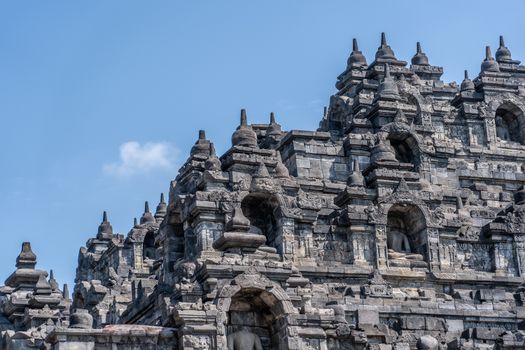
Borobudur, near Yogyakarta on the island of Java, is a large Buddhist monument built in the ninth century. It is a stepped structure decorated with many carved reliefs and numerous stupas, and its design is often studied for its layout and symbolism. Visitors usually walk the terraces, which allows them to follow the reliefs and enjoy views across the surrounding countryside. The site has been restored more than once, and it is recognized as a UNESCO World Heritage Site. Check current opening hours and ticketing rules before your visit, and plan to arrive early in the day, when the paths are typically cooler and less busy.
Hampi in India
Hampi, in the state of Karnataka, contains the ruins of Vijayanagara, a capital city that flourished from the 14th to the 16th centuries. Its landscape is dramatic, with granite boulders and ruined temples, shrines and markets scattered across a large area. Hampi is best explored slowly, on foot or by bicycle, and many visitors spend several days there. The Virupaksha Temple remains an active place of worship, which gives the site a living dimension that some ruins lack. Hampi is also a UNESCO World Heritage Site. Temperatures can be high for much of the year, so plan walks for the morning and evening, and carry water.
Tikal in Guatemala
Tikal is a major city of the ancient Maya in northern Guatemala, located within a national park that also protects rainforest. Its large temples rise above the forest canopy, and the surrounding area is rich in birdlife and wildlife. Visitors often climb the temple stairs for views over the jungle, which gives Tikal a quieter and more immersive feel than some busy complexes. The site is listed as a UNESCO World Heritage Site. Good footwear, insect repellent and water are important, and an early start can help you avoid the heat of the day and enjoy the wildlife at its most active.
Comparing scale, setting and atmosphere
When comparing these sites with Angkor Wat, it helps to think in terms of what you value most. Bagan offers the experience of wandering among thousands of structures in an open plain. Borobudur focuses on a single monumental form and its carved narrative. Hampi combines ruins with a dramatic natural landscape and a living temple. Tikal blends ancient architecture with a rainforest setting. Angkor Wat remains a unique blend of monumental scale and extensive reliefs. Many travelers find that combining two or three of these sites in one trip gives a richer picture of how different cultures approached sacred architecture.
Practical tips
- Check current entry requirements, opening hours and any site rules before traveling.
- Plan visits for early morning or late afternoon, when light is softer and crowds are lighter.
- Dress modestly, and remove footwear where customs require it.
- Hire a licensed local guide for historical context, particularly at large sites.
- Allow enough time for transport between sites, as distances can be considerable.
Common mistakes to avoid
A common mistake is trying to cover too many temples in a short time, which can make the sites blur together. Another is underestimating the distances between sites, particularly in places where road conditions or transport schedules are unpredictable. Travelers also sometimes visit at midday, when heat and crowds can make walking tiring. Some people wear clothing that does not meet local dress expectations, or they climb structures where climbing is restricted. Finally, many visitors skip background reading, which means they miss the stories carved into walls, stairs and shrines that give each site its meaning.
Who this suits and who it does not
Temple-focused journeys tend to suit travelers who enjoy history, architecture and slow exploration, and who are comfortable walking or cycling in warm conditions. They can suit photographers, students of religion and art, and people who like to combine cultural sites with landscape. They may be less suitable for those with limited mobility, young children who struggle with long walks, or anyone who needs a fully air-conditioned itinerary. Visitors who prefer rapid sightseeing may find that one site a day is more rewarding than several.
A checklist for your temple route
- Check current entry rules, opening hours and any restrictions on climbing or photography.
- Plan daily distances and transport between sites, allowing time for delays.
- Pack modest clothing, a hat, water and footwear suited to uneven surfaces.
- Consider a licensed local guide for historical context at larger sites.
- Choose one or two key visits per day so there is time for observation.
Temple travel rewards curiosity and patience. Angkor Wat is a strong anchor for any itinerary in Southeast Asia, but the temple sites of Myanmar, Indonesia, India and Guatemala each offer distinct histories and landscapes. Treating them as complementary experiences, rather than rankings, usually leads to a more satisfying trip.