The Scent of Cardamom and the Law of the Desert
I stepped off the sun-bleached gravel path in Misfat al Abriyeen, a 500-year-old mud-brick village in Oman’s Al Hajar Mountains, and within four minutes, I was no longer a tourist. I was a guest.
The air smelled of burning frankincense and the sharp, citrusy sting of crushed cardamom. An elderly man named Hamed, wearing a crisp white dishdasha and a hand-embroidered kuma, didn't just point me toward the ancient irrigation channels (falaj) I was looking for. He took my elbow, led me into his cool, thick-walled home, and sat me down on a plush floor cushion.
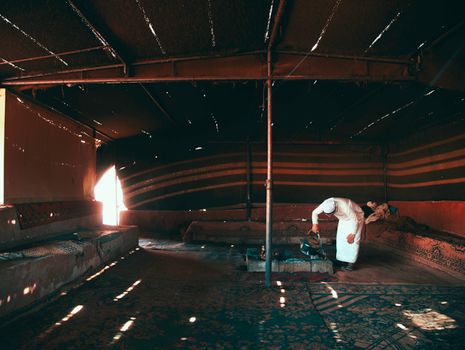
Before I could even offer a "Shukran," a Dallah (traditional coffee pot) was tilted, and a small cup of golden Gahwa was in my hand. This wasn't a sales pitch. There was no gift shop at the end. This was the Middle Eastern hospitality putting others to shame worth considering—a cultural phenomenon where the stranger is treated better than the neighbor.
1. The Bedouin Code: Why You Are Safe for Three Days
To understand why hospitality here is so intense, you have to look at the desert. For a Bedouin, turning away a traveler meant sentencing them to death by the elements.
There is an unwritten "Three-Day Rule": A guest is entitled to food, shelter, and protection for three days and one-third of a day before they are even asked why they have come. While you’re unlikely to be wandering the dunes of the Empty Quarter on a camel, this DNA persists in modern cities like Dubai and Amman.
The Insider Secret:
If you are invited into a home, never offer money in exchange for the meal. It is seen as a deep insult, implying the host is running a business rather than fulfilling a sacred social contract. Instead, bring a high-quality box of dates or premium chocolates.
2. The Jordanian 'Mansaf' Marathon
In Jordan, hospitality is measured in kilograms of lamb. If you find yourself invited to a traditional lunch, you will likely encounter Mansaf—the national dish of lamb cooked in a sauce of fermented dried yogurt (jameed) and served on a massive platter of rice.
Pro-Tip:
The "Hidden Entrance" to the best Mansaf in Amman isn't a restaurant. It’s the Al-Quds restaurant on Rainbow Street, but specifically the downstairs seating area at 1:00 PM on a Friday.
When eating communal Mansaf:
* Use your right hand only. The left is considered "unclean."
* The "Ping-Pong" Move: Watch the locals. They roll the rice and lamb into a perfect ball with their fingertips and flick it into their mouths. It takes practice, and your host will love watching you try (and fail) at it.
* The Eye: If the host offers you the sheep’s eye or the brain, it is the highest honor. If you can't stomach it, politely place it on your plate and focus on the prime cuts of meat they will inevitably pile in front of you.
3. Decoding Ta’arof: Iran’s Complex Dance of Politeness
If you head east to Iran, hospitality takes on a theatrical, almost poetic form called Ta’arof. It is a complex system of etiquette that often involves refusing something offered to you at least three times before finally accepting.
I once spent twenty minutes in a Shiraz taxi trying to pay the driver. "It is unworthy of you," he insisted. "Please, keep your money." This is Ta’arof. He does want the money, but his cultural programming demands he prioritize my "guest" status over his profit.
Pro-Tip:
When a shopkeeper or driver says "Ghabelan nadareh" (It is worthless/free), do not walk away. This is the first step of the dance. Insist on paying. Only if they refuse a fourth time (which they won't) is it actually free.
4. The Omani 'Dallah' and the Art of the Refill
In Oman and the UAE, the coffee ritual is the heartbeat of the home. The host will continue to refill your finjan (tiny handleless cup) as long as it is empty.
The Signal:
To indicate you’ve had your fill and your heart is about to explode from the caffeine, you must jiggle or shake the cup from side to side before handing it back. If you simply hand it back, they will pour another. I once drank fourteen cups in a village near Nizwa because I forgot the shake. I didn't sleep for two days.
5. The Majlis: The Original Social Network
The Majlis (literally "place of sitting") is a dedicated room in most Khaleeji homes for receiving guests. It is usually the most lavishly decorated room in the house, separate from the private family quarters.
Entering a Majlis is like entering a sanctuary. You must remove your shoes at the door. The seating is usually low to the ground to ensure everyone—rich or poor—is at the same eye level.
Quick Facts Table: Navigating the Visit
| Category | Protocol | Estimated Cost |
| :--- | :--- | :--- |
| Gift Etiquette | Dates, Baklava, or high-end Oud. | $20 - $50 |
| Footwear | Always remove shoes before stepping on a rug. | Free |
| Best Time to Visit | October to March (The "Outdoor Majlis" season). | N/A |
| How to Get There | In Oman/Jordan, hire a private driver for local village access. | $100/day |
| The "Golden Rule" | Never point the soles of your feet at your host. | Social Capital |
6. The Levantine Breakfast: A 20-Dish Welcome
In Lebanon and Palestine, "breakfast" is a misnomer. It is an assault of flavor. If you stay in a guesthouse in the Chouf Mountains of Lebanon, expect Manakish (za'atar flatbread), Labneh drizzled with olive oil so green it looks like liquid emeralds, and olives cured in lemon and chili.
The hospitality here is vocal. "Sahtain!" they will shout—roughly translating to "May you eat with two healths."
Pro-Tip:
Visit the Beit Ammiq guesthouse in the Bekaa Valley. Arrive at 8:30 AM. The "hidden" experience here is watching the local women bake the Saj bread on a domed griddle. The steam smells like toasted wheat and sun-drenched thyme.
7. Why This Matters for the Modern Traveler
In an era of automated check-ins and "no-contact" delivery, Middle Eastern hospitality is a radical reminder of our shared humanity. It puts Western service to shame because it isn't based on a tip or a Yelp review. It’s based on the belief that a guest is a blessing from God (Dhuyuf al-Rahman).
When you travel here, you aren't just seeing monuments; you are being woven into a social fabric that has remained intact for millennia.
---