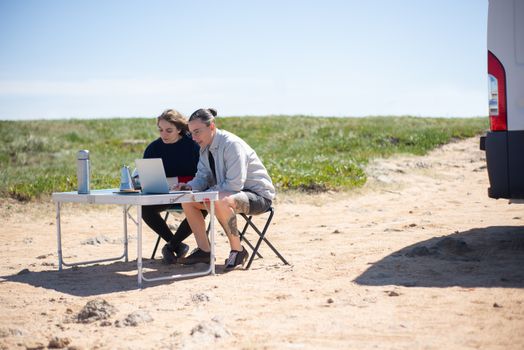
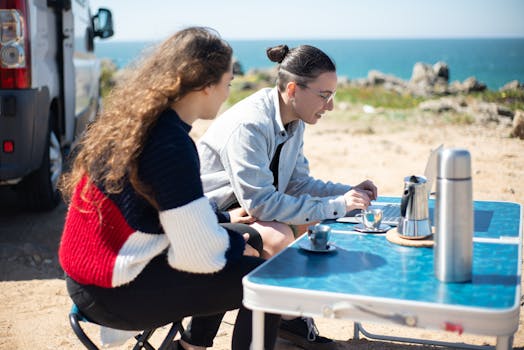
The year was 2019, and I was staring at my beige office wall, clocking out after another soul-crushing 9-to-5. Outside, the world was bustling, full of vibrant colors and untold adventures. My desk, however, was a monument to monotony. That night, scrolling through Instagram, I saw a friend’s post: "Office for the day – overlooking the Aegean Sea!" A switch flipped. Why was I stuck here when the world was out there, waiting?
Fast forward to today, and my "office" has been a bustling café in Lisbon, a quiet balcony overlooking Medellín, and even a rustic bungalow in rural Thailand. The beige wall is a distant, almost comical memory. The idea of a mobile office isn't just a trend anymore; it's a fully-fledged lifestyle, and by September 2025, it's more accessible, efficient, and exhilarating than ever before.
You're here because you're ready to ditch the commute, embrace flexibility, and redefine what "work" truly means. You're ready to taste freedom. And I'm here to tell you how. This isn't just about packing a laptop; it's about building a sustainable, productive, and utterly liberating mobile office that lets you thrive anywhere on the planet. So, grab a virtual coffee, because your September 2025 adventure starts now!
1. The Foundation: Mindset & Planning for Your Untethered Life
Before we dive into the gear, let's talk about the most crucial component: you. Transitioning to a mobile office isn't just about changing your location; it's about shifting your mindset. It requires discipline, adaptability, and a proactive approach to problem-solving.
My Own Journey:
When I first started, I thought it was all about the freedom. And it largely is! But I quickly learned that freedom comes with responsibility. My first "mobile office" was a disaster – I spent more time hunting for Wi-Fi and worrying about deadlines than actually enjoying my surroundings. I was reactive, not proactive.
For September 2025, think ahead:
- Financial Stability: Ensure you have a solid emergency fund (3-6 months of expenses) and a reliable income stream. Whether you're a freelancer, a remote employee, or running your own business, clarity here is key. Understand tax implications for working across borders (more on this later!).
- Client & Team Communication: Establish clear communication protocols. What tools will you use (Slack, Teams, Zoom)? How will you manage time zone differences? I personally use a simple spreadsheet to track client time zones relative to my current location, which has saved me from many early morning/late night calls.
- Define Your "Why": What do you want to achieve with this lifestyle? More travel? More time with family? Less stress? Having a clear "why" will keep you motivated when challenges arise (and they will!).
- Embrace the Unpredictable: Things will go wrong. Wi-Fi will drop. Flights will be delayed. Your ability to adapt and find solutions is your superpower. My mantra? "Flexibility is currency."
By September 2025, the world is even more accustomed to remote work. Companies are more supportive, and tools are more integrated. This isn't just a fantasy; it's a well-trodden path with a clearer roadmap than ever before.
2. Your Essential Tech Stack: Powering Your Portable Productivity
This is where the magic happens – your gear! Think lightweight, powerful, and reliable. Every ounce counts when you're carrying your office on your back.
- The Brain: Your Laptop
- Recommendation: A lightweight, powerful laptop is non-negotiable. For 2025, the MacBook Air M3 (15-inch) is a stellar choice for its balance of power, battery life (easily 12-18 hours on a charge), and portability (around 1.2 kg). If you're a Windows user, the Dell XPS 15 or a Lenovo ThinkPad X1 Carbon offers excellent performance and build quality, though often a bit heavier.
- My Pick: I swear by my MacBook Air. It’s handled everything from complex video editing to endless spreadsheets, all while fitting snugly in my backpack.
- Price Range (Sept 2025): €1200 - €2500, depending on specs.
- The Second Screen: Portable Monitor
- Game Changer: A portable monitor drastically boosts productivity. Look for USB-C powered models that are light and thin.
- Recommendation: The ASUS ZenScreen or Lenovo ThinkVision M14 are fantastic. They connect with a single USB-C cable for both power and display, weighing less than a kilogram.
- My Setup: I use an ASUS ZenScreen, and it's like having a full desktop setup anywhere. I've used it in a co-working space in Bali and on a train through Italy.
- Price Range: €200 - €400.
- Audio Sanctuary: Noise-Cancelling Headphones
- Essential for Focus: Whether it's a noisy café, a bustling airport, or a chatty hostel, good headphones are your shield.
- Recommendation: Bose QuietComfort Ultra or Sony WH-1000XM5 are top-tier for their noise cancellation and comfort.
- My Lifesaver: My Sony XM5s are my constant companion. They turn chaos into calm, letting me focus on calls or deep work.
- Price Range: €300 - €500.
- Power Up: Portable Power Bank
- Never Run Out: A high-capacity power bank is crucial for keeping your devices charged on the go.
- Recommendation: Look for banks with at least 20,000mAh capacity and USB-C Power Delivery (PD) for fast charging your laptop. The Anker 737 PowerCore 24K is a beast, offering 24,000mAh and 140W output.
- Price Range: €80 - €150.
- Backup & Security: External SSD & Travel Router/VPN
- Storage: A fast, compact external SSD (like the Samsung T9 Portable SSD) is vital for backups and extra storage.
- Security: A travel router (e.g., GL.iNet GL-AR750S-Ext or a newer 5G model) allows you to create your own secure Wi-Fi network from public hotspots, and a VPN service (like ExpressVPN or NordVPN) encrypts your internet traffic.
- My Double-Layer Protection: I never connect to public Wi-Fi without my travel router and VPN. It’s peace of mind, especially when handling sensitive client data.
- Price Range: SSDs €100-300, Travel Routers €50-150, VPNs €5-10/month.
3. Connectivity: Staying Online, Anywhere, Anytime
Your mobile office is only as good as its internet connection. This is often the biggest hurdle, but by September 2025, solutions are more robust and accessible than ever.
- Global eSIMs: The Modern Nomad's Best Friend
- How it Works: Forget fumbling with physical SIM cards. eSIMs allow you to instantly download a data plan for a specific country or region.
- Recommendation: Services like Airalo, Nomad, and Holafly offer excellent coverage and competitive pricing. You can buy plans for a week, a month, or even longer, often cheaper than local physical SIMs, especially for short stays.
- My Experience: Landing in Bangkok, I activated my Airalo eSIM before even clearing customs. Within minutes, I had high-speed data. It’s seamless. Expect to pay €20-50 for a decent monthly data package (10-20GB) depending on the region.
- Portable Wi-Fi Hotspots & Local SIMs
- Backup Plan: While eSIMs are great, a dedicated portable hotspot like the Skyroam Solis or a powerful 5G mobile hotspot from a local provider can be a lifesaver.
- Local SIMs: For longer stays (1+ months), buying a local physical SIM card can still be the most cost-effective option for unlimited data. Research local providers upon arrival.
- Starlink Roam: Off-Grid Connectivity
- The Game Changer for Remote Work: For truly off-the-beaten-path locations, Starlink Roam (formerly Starlink RV) is unparalleled. It provides high-speed, low-latency internet from almost anywhere with a clear view of the sky.
- Considerations for Sept 2025: The initial hardware cost (around €450-€600) and monthly subscription (€100-€150, depending on region) are significant, but for working from a remote cabin in Norway or a beach in the Philippines, it's worth every penny. Availability and speeds are continually improving.
- Coworking Spaces: Community & Reliable Internet
- Beyond Just Wi-Fi: Coworking spaces offer dedicated internet, ergonomic setups, and invaluable community.
- Recommendation: Platforms like Coworker.com and Croissant help you find and book spaces globally. Many popular digital nomad hubs like Lisbon, Medellín, and Bali have excellent options. Selina is a popular chain that combines accommodation and coworking.
- My Go-To: When I need serious focus or a stable connection for an important video call, a coworking space is my haven. I found a fantastic one in Lisbon for €180/month with unlimited coffee and a vibrant community.
A Near-Disaster Story:
I once found myself in a small village in Guatemala, relying on a patchy hostel Wi-Fi for a critical client presentation. Ten minutes before the call, the power went out! Luckily, I had researched local internet cafes as a backup and sprinted there, arriving just in time. Always have a Plan B (and C!).
4. Ergonomics & Comfort: Working Sustainably on the Go
Your health and posture are paramount. Don't sacrifice comfort for portability. A few smart additions can make a huge difference.
- Portable Laptop Stand:
- Why it Matters: Elevates your laptop screen to eye level, preventing neck and back strain.
- Recommendation: The Roost Laptop Stand or MOFT Invisible Laptop Stand are incredibly light, foldable, and sturdy.
- My Back-Saver Discovery: For years, I hunched over my laptop, convinced it was "fine." Then I bought a Roost stand. It literally changed my posture within a week. Now, I won't travel without it.
- Price Range: €20 - €80.
- Travel Mouse & Keyboard:
- Precision & Comfort: A good external mouse and keyboard improve typing speed and reduce wrist strain.
- Recommendation: The Logitech MX Anywhere 3S mouse is compact, precise, and works on almost any surface. For keyboards, the Logitech K380 is a slim, multi-device Bluetooth option.
- Price Range: Mouse €50-80, Keyboard €40-70.
- The Right Backpack:
- Your Mobile Office Carrier: This is more than just a bag; it's your portable HQ. Look for something ergonomic, durable, and with smart compartments.
- Recommendation: Brands like Nomatic Travel Bag, Osprey Farpoint/Fairview, or Peak Design Travel Backpack are highly rated by digital nomads. Ensure it fits airline carry-on requirements.
- My Trusty Companion: My Nomatic bag has been through countless airports and cobblestone streets, keeping my gear safe and organized. It's an investment, but worth it.
- Price Range: €150 - €350.
- Self-Care Essentials: Don't forget a small, inflatable lumbar support pillow, a resistance band for quick stretches, and an eye mask for better sleep. Remember to take regular breaks, stretch, and get up and move – your body will thank you!
5. Location, Location, Location: Choosing Your Dream Office Spot
By September 2025, more countries than ever are rolling out digital nomad visas, making long-term stays simpler and more legitimate. Your choice of location heavily impacts your mobile office experience.
Key Criteria:
* Cost of Living: How far does your income stretch?
* Internet Infrastructure: Reliable high-speed internet is non-negotiable.
* Visa Requirements: Research digital nomad visas.
* Community: Do you prefer solitude or a bustling nomad scene?
* Time Zone: Consider your clients/team.
Top Picks for September 2025 (with estimated monthly costs for a comfortable single person):
- Lisbon, Portugal:
- Why: Vibrant culture, delicious food, excellent infrastructure, strong digital nomad community, and a dedicated Digital Nomad Visa (D8 visa). European base with easy travel.
- My Experience: I spent three months here. The Wi-Fi was consistently fast, the coworking spaces were fantastic, and the pastel de nata fueled many late-night work sessions.
- Cost: €1500-€2500 (rent, food, coworking, transport).
- Medellín, Colombia:
- Why: Known as the "City of Eternal Spring" for its perfect climate. Affordable, friendly locals, burgeoning tech scene, and a new digital nomad visa.
- My Favorite Spot: I found a fantastic café in El Poblado called "Pergamino" – great coffee, strong Wi-Fi, and a buzzing atmosphere perfect for getting work done.
- Cost: €1000-€1800.
- Chiang Mai, Thailand:
- Why: The original digital nomad hub. Incredibly affordable, amazing food, spiritual atmosphere, and a large, established nomad community. The Thai LTR (Long-Term Resident) visa or a standard tourist visa with extensions might be options for 2025.
- My Anecdote: I remember working from a rooftop café overlooking ancient temples as monks chanted in the distance. Pure magic.
- Cost: €800-€1500.
- Bali, Indonesia:
- Why: Beaches, surf, yoga, and a thriving international community. Indonesia is actively pursuing a "digital nomad visa" that could be fully operational and streamlined by Sept 2025.
- My Tip: Head to Canggu or Ubud for the best coworking spaces and nomad vibes. The "Tropical Nomad" coworking in Canggu is a personal favorite.
- Cost: €1200-€2000.
- Canary Islands, Spain (e.g., Gran Canaria, Tenerife):
- Why: European quality of life, year-round sunshine, beautiful beaches, and a Spanish Digital Nomad Visa. Excellent internet.
- My Recommendation: Las Palmas in Gran Canaria has a fantastic vibe, great beaches, and a growing nomad community.
- Cost: €1400-€2200.
Always check official government websites for the latest visa regulations and requirements well in advance of your travel date for September 2025.
6. The Digital Nomad Lifestyle: Beyond the Gear
A mobile office is more than just tech; it's a lifestyle. To truly thrive, you need to nurture your well-being and embrace the journey.
- Community is Key: It can get lonely on the road. Seek out other digital nomads. Join Facebook groups (e.g., "Digital Nomads in [City Name]"), attend meetups (check Meetup.com, Nomad List events), or simply strike up conversations at coworking spaces.
- A Lesson Learned: My first few months were isolating. I was so focused on work that I forgot to connect. Once I started attending weekly nomad meetups in Lisbon, my entire experience transformed. I found friends, travel buddies, and even professional collaborators.
- Work-Life Balance: This is harder than it sounds when your office is everywhere. Set clear boundaries. Designate specific work hours. Explore your surroundings after work. The beach or mountain isn't going anywhere.
- My Rule: I try to finish work by 6 PM local time, then my laptop is closed. Even if I'm tempted to "just check one more email," I resist. The world outside is calling.
- Safety & Insurance:
- Travel Insurance: Non-negotiable. Look for policies specifically designed for digital nomads that cover medical emergencies, travel delays, and even gear theft. SafetyWing and World Nomads are popular choices.
- Cybersecurity: Always use a VPN, strong passwords, and two-factor authentication. Be wary of public Wi-Fi.
- Personal Safety: Research local customs, avoid walking alone at night in unfamiliar areas, and trust your gut.
- Local Immersion: Don't just work in a place; experience it. Learn a few phrases of the local language, try the street food, visit local markets, and engage with the culture. This enriches your life and makes your travel more meaningful.
7. Financials & Logistics: Making it Sustainable
To keep your mobile office dream alive, you need smart financial management and logistical planning.
- Budgeting Like a Pro:
- Research Costs: Use tools like Numbeo to get a realistic estimate of living costs in your target cities.
- Track Everything: I use a simple Google Sheet to track every euro, peso, or baht I spend. It helps me stay within budget and understand where my money goes.
- Accommodation: For long-term stays, look beyond daily Airbnb rates. Many hosts offer significant discounts (20-50%) for monthly rentals. Join local Facebook groups for apartment hunting.
- Banking & Money Management:
- Borderless Accounts: Services like Wise (formerly TransferWise) and Revolut are essential. They allow you to hold multiple currencies, send money internationally with low fees, and use a debit card with excellent exchange rates.
- My Financial Lifeline: I rely on Wise for nearly all my international transactions. It's saved me hundreds in bank fees.
- Taxes: This is complex and varies wildly depending on your nationality, where you earn your income, and how long you spend in different countries.
- Actionable Advice: Consult a tax professional specializing in international remote work or digital nomads. Do this before you leave. This isn't something to guess at. Many countries have specific rules for "tax residency."
- Visa Logistics (Revisited):
- Stay Informed: Visa rules change. Always refer to the official government websites of the countries you plan to visit.
- Digital Nomad Visas (Sept 2025): Expect more countries to offer these, but requirements (minimum income, health insurance, criminal record checks) will vary. Apply well in advance!
---
Conclusion: Your Global Office Awaits!
The dream of working from anywhere is no longer just a dream; it's a tangible reality, especially by September 2025. With the right mindset, the perfect tech stack, reliable connectivity, and a sprinkle of adventurous spirit, you can transform your work life into an extraordinary journey.
My beige office wall is a distant memory, replaced by views of ancient ruins, bustling markets, and serene coastlines. Yours can be too. This isn't just about escaping; it's about embracing a richer, more fulfilling way to live and work.
So, what are you waiting for? Start planning your September 2025 mobile office adventure today! Which destination is calling your name? What's the first piece of tech you're upgrading? Share your thoughts and dream setups in the comments below – let's inspire each other!
#WorkFromAnywhere #DigitalNomadLife #MobileOffice #TripsoraAdventures
---