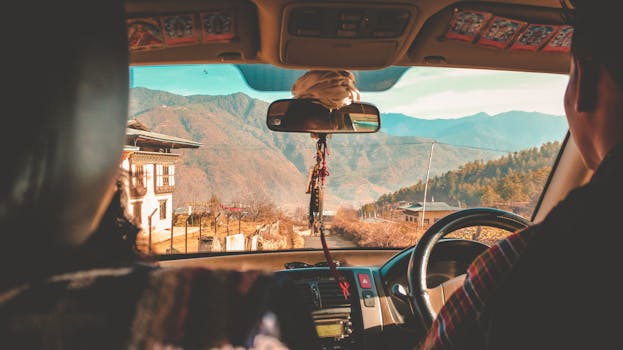
The engine rumbles, the open road stretches ahead, and the scent of adventure fills the air. You’re on an epic road trip, perhaps winding through the lavender fields of Provence, cruising the historic Route 66, or navigating the dramatic fjords of Norway. Everything is perfect… until you glance at the fuel gauge, hovering dangerously close to empty. Panic sets in. You pull into the next station you see – usually an overpriced, highway-side behemoth – and watch in horror as the digits on the pump spin faster than a roulette wheel, draining your travel fund faster than you can say "fill 'er up!"
Sound familiar? I’ve been there. More times than I care to admit. Like the time I paid an obscene €2.50 per liter for petrol in a remote Icelandic village, convinced it was my only option before running dry in the middle of nowhere. Or the time I shelled out nearly double the city price at a gas station just off the German Autobahn, cursing my lack of foresight. Each time, I felt like a rookie, an easy target for the fuel gods. But these painful lessons taught me something invaluable: finding cheap gas, especially when you’re far from home, isn't just about luck. It's an art, a science, and a secret language spoken by locals worldwide.
Over years of crisscrossing continents, from the dusty outback roads of Australia to the bustling motorways of Italy, I’ve refined my strategy. I’ve learned to sniff out the bargains, leverage technology, and even charm a few local tips out of unsuspecting shopkeepers. And today, I’m pulling back the curtain on all those hard-won secrets. Forget paying tourist prices; it's time to fuel your adventures like a seasoned pro.
The Digital Detective: Unmasking Gas Price Apps (Your New Best Friends)
In the age of smartphones, there’s no excuse to fly blind. Your phone isn't just for snapping Instagram-worthy landscapes; it's your most powerful weapon in the battle against overpriced petrol.
My Go-To Global Arsenal:
- GasBuddy (US & Canada): If you're tackling North America, GasBuddy is non-negotiable. This app is a lifesaver, leveraging a massive community of users who report real-time gas prices. You can filter by fuel type, distance, and even amenities. I've personally saved hundreds of dollars using GasBuddy to navigate the vast price disparities across states and even within cities. It once directed me to a station just two blocks off a major highway in Arizona, saving me nearly $0.50 per gallon compared to the highway-side options. That's a tank-full of savings!
- Waze (Global with Caveats): While primarily a navigation app, Waze's community-driven data often includes user-reported gas prices. It's not as dedicated as GasBuddy, but if you're already using it for directions, keep an eye on the fuel icon. Its strength lies in its global reach, making it a decent fallback in countries where dedicated gas apps are scarce. Just be aware that prices might not be as frequently updated as on specialized apps.
- Google Maps (Increasingly Useful): Google Maps has been steadily improving its gas price integration. In many regions, especially North America and parts of Europe, if you search for "gas stations near me," it will display prices directly on the map for nearby stations. It’s incredibly convenient if you’re already using Maps for navigation and don't want to switch apps.
Region-Specific Gems:
- Europe:
- PetrolPrices.com (UK): Excellent for finding the cheapest fuel in the United Kingdom.
- Spritmonitor (Germany): A fantastic community-driven platform for tracking fuel prices and consumption in Germany. Essential for navigating Autobahn vs. town prices.
- Fuel Flash (Germany, Austria, Switzerland): Another strong contender for real-time prices in these countries.
- Essence&Co (France): Great for finding the best deals, especially at those hypermarket giants (more on them later!).
- Australia:
- FuelWatch (Western Australia) & MyFuel NT (Northern Territory): Government-run services that provide daily updated prices, often mandated by law. In WA, prices are fixed for 24 hours from 6 AM, so you know exactly what you're getting.
- NRMA/RACV/RACQ (State-based motor clubs): Their apps often include fuel price comparison features for their respective states.
- Other Regions: A quick search in your app store for "gas prices [country name]" will often reveal local favorites. Always check reviews for accuracy and update frequency.
Pro-Tip:
Download these apps before you leave home, or while you have Wi-Fi. Many require data to update prices, so having them ready to go is crucial. And remember, these apps are only as good as their users – if you see outdated info, be a good travel citizen and update it!
The Local Whisper Network: Beyond the Apps
Sometimes, technology isn't enough. Or perhaps you're in a region where apps are less reliable. This is where your observational skills and a friendly demeanor become your best assets.
1. Ask a Local (The Right Way):
Don't just walk into a random shop and ask for "cheap gas." Instead, try:
* "Excuse me, do you know where the moins cher (cheapest) petrol station is around here?" (France)
* "Entschuldigen Sie, wo ist die günstigste Tankstelle?" (Germany)
* "Disculpe, ¿dónde está la gasolinera más barata?" (Spain/Latin America)
* Be polite, smile, and be prepared for a language barrier. A phrasebook or translation app can be invaluable. I've had incredible success asking at local bakeries, small cafes, or even my hostel reception. Once, in rural Italy, a kind barista sketched a tiny map on a napkin, guiding me to a small, independent station that was significantly cheaper than the major brands.
2. Observe and Learn Local Pricing Habits:
Every country, and often every region, has its own gas pricing quirks.
* France & Spain: The Hypermarket Kings! This is perhaps my favorite European hack. Major supermarkets like Carrefour, E.Leclerc, Auchan, and Intermarché almost always have their own gas stations, and their prices are consistently 10-20 cents per liter cheaper than standalone stations. They use fuel as a loss leader to get you into their stores. My trick? Plan my fuel stops around grocery runs. It’s a win-win!
* Germany: Avoid the Autobahn! While convenient, gas stations directly on the Autobahn are notoriously expensive. Venture a few kilometers off into a town, and you'll often find prices plummet. This applies to many major highways worldwide.
* United States: Independent vs. Brand Name: Sometimes, smaller, independent stations can offer better deals, but often big-box stores like Costco or Walmart (Murphy USA) are the cheapest.
* Australia: The Timing Game: As mentioned with FuelWatch, understand if there's a weekly price cycle. In Perth, for instance, Tuesdays are often the cheapest day to fill up before prices spike mid-week.
3. Look for the "No-Frills" Stations:
Avoid the gleaming, brand-new stations with fancy coffee shops and attached convenience stores. These amenities come at a cost – which you pay at the pump. Look for older, smaller, sometimes even slightly grubby-looking stations. These are often independent, have lower overheads, and pass those savings on to you. They might not have gourmet coffee, but they'll get you where you need to go for less.
Timing is Everything: When and Where to Fill Up
Just like airfare, gas prices fluctuate. Understanding these patterns can save you a bundle.
1. The Best Days & Times:
* Early Week Savings: In many regions (especially North America and parts of Europe), gas prices tend to be lowest at the beginning of the week (Monday/Tuesday) and creep up towards the weekend. Why? Demand. People fill up for weekend trips, so stations raise prices.
* Avoid Peak Hours: Just like traffic, gas stations can have peak hours. Try to fill up mid-morning or mid-afternoon, avoiding rush hour commutes.
* Don't Wait Until Empty on Weekends: If you know you'll need gas for a weekend drive, try to fill up on a Monday or Tuesday. Don't push it until Friday evening when prices are likely at their peak.
2. Strategic Border Crossings:
This is a huge one for international road trips. Always check fuel prices in neighboring countries before you cross a border.
* Example: France to Switzerland: Fuel in Switzerland is notoriously expensive. I always make sure my tank is full before crossing from France into Switzerland. The savings are substantial.
* Example: US to Canada: Historically, gas is cheaper in the US. Fill up before heading north. (Though this can fluctuate with exchange rates and local taxes).
* Example: Eastern vs. Western Europe: Countries like Poland, Czech Republic, Hungary, and often Spain and Portugal tend to have lower fuel prices than Germany, France, Italy, or Scandinavia. Plan your route to fill up strategically.
3. Avoid the Obvious Tourist Traps:
* Highway Service Stations: As mentioned, these are almost always more expensive due to convenience.
* Airport Stations: Never, ever fill up at an airport gas station unless it's an absolute emergency. They prey on last-minute travelers and rental car returns.
* Stations Near Major Tourist Attractions: Just like souvenir shops, gas stations right next to the Eiffel Tower or the Colosseum will have inflated prices. Drive a few blocks away.
The Membership Advantage & Discount Cards
Loyalty pays, especially when it comes to fuel.
1. Supermarket Loyalty Cards:
Many supermarket chains (like Tesco and Sainsbury's in the UK, Carrefour and E.Leclerc in France, Costco in the US/Canada/Australia) offer loyalty programs that include discounts at their attached gas stations. If you're staying in a country for a while, it's worth signing up. I once saved 5p per liter at a Tesco station just by flashing my Clubcard – that adds up over a few fills!
2. Gas Station Loyalty Programs:
Some major gas station brands have their own loyalty programs (e.g., Shell Fuel Rewards, BPme Rewards). While often not as aggressive as supermarket discounts, they can offer a few cents off per gallon/liter or points towards future purchases. If you find yourself consistently using one brand, it's worth joining.
3. Credit Card Rewards:
Check your credit card benefits. Many travel-focused credit cards offer bonus points or cashback on gas purchases. Some even have specific partnerships with gas station chains. While not a direct discount at the pump, it's a way to claw back some of those fuel costs.
The Tank Strategy: Don't Wait Till Empty
This isn't just about avoiding roadside emergencies; it's about giving yourself options.
1. The "Half-Tank Rule":
My personal golden rule: when your tank hits half-full, start looking for gas. This gives you plenty of buffer to drive past overpriced stations, explore a side road for a cheaper option, or simply wait for better prices to appear on your app. Waiting until the low fuel light comes on is a recipe for panic-induced overspending.
2. Understand Your Vehicle's Range:
Especially in remote areas (like the Australian Outback, the US desert states, or the Scottish Highlands), knowing how far your car can go on a full tank is crucial. Don't assume there will be a station every 50 miles. Plan your fuel stops in advance, particularly when using rental cars you're not familiar with.
3. Fuel Types & Octane:
* Diesel vs. Petrol: In some countries, diesel is cheaper; in others, it's more expensive. Always check.
* E10 vs. E5: In Europe, E10 (up to 10% ethanol) is often cheaper than E5 (up to 5% ethanol). Most modern cars can handle E10, but always check your car's manual or the inside of the fuel flap. Older or classic cars may require E5.
* Octane Levels: Don't automatically buy the "premium" higher-octane fuel unless your car specifically requires it. For most standard rental cars, regular unleaded is perfectly fine and significantly cheaper.
The "Tourist Trap" Stations to Avoid
These are the places designed to fleece unsuspecting travelers. Learn to spot them from a mile away.
- The "Last Chance" Gas Station: Located just before a long stretch of highway with no services, a national park entrance, or a border crossing. They know you're desperate. Avoid if possible by planning ahead.
- The "Shiny & New" Station: While cleanliness is nice, these often have higher overheads and pass that cost to you. Look for the slightly older, less flashy ones.
- The "Brand Name Only" Station in a Remote Area: If you're in a tiny village and the only station is a major international brand, chances are they have a monopoly and charge accordingly. Sometimes, a small, independent station might be hidden away further down the road.
- Stations with Excessive Amenities: If it boasts a gourmet coffee shop, a full-service restaurant, a huge convenience store, and sparkling clean restrooms, you're paying for it. If you just need gas, bypass it.
Specific Regional Nuances & Hacks: A Quickfire Guide
- Europe: As mentioned, hypermarkets are your best friend in France, Spain, Portugal, and often Italy. In Germany, look for stations off the Autobahn. In Eastern Europe, prices are generally lower, so fill up there before heading west. Scandinavia is notoriously expensive; brace yourself.
- North America: GasBuddy is king. Costco gas stations offer incredible value if you're a member (or know one!). Prices can vary wildly even between towns just a few miles apart, so always check your app.
- Australia: Utilize FuelWatch (WA) and MyFuel NT. Be aware of vast distances between stations in rural areas; always carry extra fuel or fill up whenever you see a station.
- Asia/South America: Apps are less prevalent or reliable. This is where local knowledge, asking around, and observational skills become paramount. Cash discounts are sometimes offered. Fuel quality can also be a concern in very remote areas, so stick to established stations where possible.
Conclusion: Fuel Your Freedom, Not Their Profits!
Finding the cheapest gas worldwide isn't just about saving a few bucks; it's about reclaiming your travel budget and redirecting those funds to more memorable experiences. Imagine that extra €20 from a tank of gas buying you a delicious local meal, a ticket to a historical site, or an unforgettable souvenir. Every cent saved at the pump is a cent earned for adventure.
So, the next time you hit the open road, don't be that tourist blindly pulling into the first station you see. Be the savvy traveler, the digital detective, the local whisperer. Empower yourself with these tips, download those apps, and start fueling your freedom, not someone else’s inflated profits. Your wallet – and your wanderlust – will thank you for it.
What are your best gas-saving hacks from around the world? Share your tips and triumphs in the comments below! Let's build the ultimate community resource for cheap gas hunters!
---