The Whispers of the Wild: Why Hidden Forest Temples Are My New Obsession (And Should Be Yours Too!)
The sweat dripped, stinging my eyes, as I pushed through a curtain of thick, emerald-green jungle foliage. The air was heavy with the scent of damp earth and exotic blossoms, the symphony of unseen insects buzzing all around me. My guide, a wizened old man with a smile lines etched deep around his eyes, paused, turning to me with a twinkle. "Almost there," he murmured, "The forest keeps her secrets well."
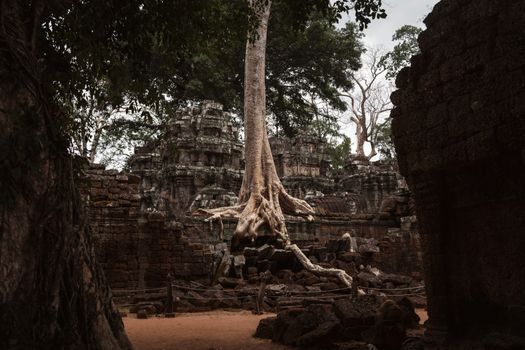
And then, through a sudden break in the dense canopy, it appeared. Not a grand, imposing structure like the iconic Angkor Wat, but something far more intimate, more profoundly moving. A small, moss-covered stone temple, its ancient carvings softened by centuries of rain and sun, its roots of colossal trees embracing its walls like protective guardians. The silence was profound, broken only by the rustle of leaves and the beat of my own heart. It was a moment of pure, unadulterated discovery, a feeling I chase relentlessly in my travels, and one that has become increasingly rare in our hyper-connected world.
This, my friends, is the magic of the hidden forest temple – and it's a travel trend that's not just booming, it's exploding. In an era where every major landmark is swarmed, and every "secret spot" is just a Google search away, the allure of genuinely unearthing something ancient, beautiful, and profoundly peaceful is irresistible. These aren't just Instagram backdrops; they are portals to another time, sanctuaries of serenity, and testaments to human devotion, reclaimed by the wild. If you're yearning for an adventure that touches your soul and fills your camera roll with truly unique shots, then pack your bags. We're going temple trekking!
The Allure of the Unseen: Why These Ancient Sanctuaries Are Trending Right Now
Why the sudden surge in popularity for temples tucked away in the wilderness? It’s simple: travelers are seeking authenticity, escape, and a deeper connection.
1. Escape the Crowds, Embrace the Quiet:
Let's face it, the Colosseum at noon can feel more like a mosh pit than a historical wonder. Hidden forest temples offer a serene alternative. Imagine meditating in a centuries-old shrine with only the sounds of nature for company, rather than the incessant chatter of tour groups. This isn't just a physical escape; it's a mental and spiritual retreat.
2. The Thrill of Discovery:
There's an undeniable satisfaction in earning your view. Trekking through a jungle, navigating winding paths, and finally stumbling upon a forgotten marvel feels like you've uncovered a secret only a few are privy to. It's an adventure, a challenge, and the reward is truly breathtaking.
3. Instagram Gold (Without the Crowds!):
Let's be real, we all love a good photo op. But imagine capturing an ancient temple swallowed by roots, bathed in dappled sunlight, without a single tourist photobombing your shot. These natural, untamed settings provide unparalleled photographic opportunities that are both unique and profoundly beautiful, making your feed stand out from the typical tourist fare. #ForestTempleVibes is the new #InstaGoals.
4. A Deeper Spiritual & Cultural Connection:
These sites often hold immense spiritual significance, still visited by local devotees. By venturing to them, you're not just seeing a ruin; you're stepping into a living, breathing history, observing ancient rituals, and gaining a more profound understanding of local cultures and beliefs, far from the commercialized tourist hubs.
Southeast Asia's Emerald Jewels: My Top Picks for Hidden Temple Adventures
Southeast Asia, with its lush jungles, rich history, and spiritual traditions, is a goldmine for these hidden wonders. I've spent months traversing its wild corners, and these are some of my absolute favorites that blend adventure with awe.
1. Beng Mealea, Cambodia: Angkor's Wild Heart
Forget the lines at Angkor Wat for a moment and journey 60km east to Beng Mealea. This 12th-century Hindu temple complex is often dubbed "Angkor's Indiana Jones Temple" – and for good reason. It’s a magnificent ruin, largely unrestored, consumed by the jungle. Gigantic banyan roots intertwine with collapsed galleries, and moss-covered stones lie scattered in chaotic grandeur.
- My Experience: I remember clambering over fallen blocks, squeezing through narrow passages, and feeling like a true explorer. There’s a rustic wooden walkway that allows you to traverse parts of the temple, but the real magic is off-path, where you can literally walk through the jungle and over the ancient stones. The sheer scale of the roots embracing the walls is mind-boggling, a stark reminder of nature's relentless power.
- Logistics:
- Getting There: Hire a tuk-tuk or private car from Siem Reap (approx. 1.5-2 hours). Combine it with Koh Ker for a full day trip.
- Cost: Entry is separate from the Angkor Pass, typically $5 USD.
- Best Time: Early morning (before 9 AM) or late afternoon (after 3 PM) for softer light and fewer people.
- Pro Tip: Wear sturdy shoes – you'll be doing some light climbing. Bring plenty of water and bug spray.
2. Wat Palad (Wat Pha Lat), Chiang Mai, Thailand: The Monk's Secret Retreat
Nestled in the foothills of Doi Suthep, just outside Chiang Mai, Wat Palad (often spelled Wat Pha Lat) is a tranquil gem often overlooked by tourists rushing to the more famous Doi Suthep temple. It's a "forest temple" in the truest sense, a working monastery where monks live and meditate amidst waterfalls and lush greenery.
- My Experience: I hiked the "Monk's Trail" to get here, a muddy, winding path that felt like stepping into a secret garden. The reward was immense: a collection of serene Lanna-style temples, statues, and stupas draped in moss, all set around a gentle waterfall. The air was filled with the scent of incense and the calming sound of trickling water. I sat there for an hour, watching a monk tend to the grounds, feeling an incredible sense of peace. It's truly Instagram-worthy, with intricate carvings, a serene pond, and the jungle as its backdrop.
- Logistics:
- Getting There: Hike the Monk's Trail (starts near the Chiang Mai Zoo entrance, search for "Monk's Trail Chiang Mai" on Google Maps – it's about a 45-60 minute uphill walk). Alternatively, take a red songthaew (shared taxi) up Doi Suthep and ask to be dropped off.
- Cost: Free entry.
- Best Time: Morning for cooler temperatures on the hike and beautiful soft light.
- Pro Tip: Wear comfortable hiking shoes. Dress respectfully (shoulders and knees covered) as it's a working monastery. Bring water.
3. Pura Lempuyang Luhur, Bali, Indonesia: The Gateway to the Gods
While not entirely "hidden" anymore thanks to the "Gates of Heaven" photo trend, the journey to the actual main temple of Pura Lempuyang Luhur is still a profound forest adventure. Most tourists only visit the lower temple for the iconic photo op with Mount Agung, missing out on the seven ascending temples nestled higher up the mountain.
- My Experience: After getting my "Gates of Heaven" shot, I decided to climb further. It was a steep, grueling ascent of over 1,700 steps through dense forest, past mischievous monkeys, and through increasingly ancient and quiet shrines. Each temple felt more sacred, more removed from the world. When I finally reached the summit, the view was breathtaking, and the silence was absolute, save for the rustling leaves. It felt like I had truly entered a sacred domain, a world away from the selfie crowds below.
- Logistics:
- Getting There: Hire a private driver from anywhere in Bali (approx. 2-3 hours from Ubud/Seminyak).
- Cost: Entry donation (around IDR 20,000-50,000), sarong rental (if needed, around IDR 10,000). Guide for the upper temples is recommended (negotiate price, around IDR 100,000-200,000).
- Best Time: Early morning (before 7 AM) for the Gates of Heaven photo to avoid queues and for clear views of Agung. For the full temple trek, start early to beat the heat.
- Pro Tip: Wear comfortable walking shoes. Bring water and snacks. Be prepared for a challenging climb if you go to the upper temples. Dress modestly.
4. Wat Chaloem Phra Kiat Phrachomklao Rachanusorn, Lampang, Thailand: The Sky Temples
This one is a true hidden gem and an absolute stunner! Perched precariously on limestone karsts high above the jungle floor in Lampang province, Wat Chaloem Phra Kiat Phrachomklao Rachanusorn (try saying that five times fast!) is a collection of dazzling white pagodas that seem to defy gravity.
- My Experience: The journey itself is an adventure. After a winding drive, you take a local pickup truck up a steep, narrow road, then embark on a 30-minute uphill hike with ropes and ladders. But every step is worth it. The pagodas, gleaming against the blue sky, offer 360-degree panoramic views of the surrounding mountains and mist-filled valleys. It’s intensely spiritual and incredibly Instagrammable – a true 'wow' moment. I felt like I was literally walking among the clouds.
- Logistics:
- Getting There: It's a 1.5-2 hour drive from Chiang Mai or a 1-hour drive from Lampang city. You'll need to hire a private driver or rent a car. Look for "Wat Chaloem Phra Kiat Phrachomklao Rachanusorn" on Google Maps.
- Cost: Entry fee around 200 THB for foreigners. Pickup truck shuttle is around 100 THB return.
- Best Time: Early morning (7-9 AM) for cooler temperatures, mist in the valleys, and fewer people.
- Pro Tip: Wear sturdy shoes for the hike. Bring water. Dress respectfully, as it is a sacred site.
Beyond Asia: Whispers of Ancient Stone Across the Globe
While Southeast Asia is a hotspot, the allure of hidden, nature-reclaimed sites isn't exclusive to the region. Many parts of the world offer similar experiences for the intrepid traveler.
- India: Explore the ancient rock-cut temples of Badami in Karnataka, or the mystical ruins of Hampi, where temples and palaces are intertwined with massive boulders and lush vegetation, particularly around the Tungabhadra River.
- Japan: Discover the spiritual paths of Dewa Sanzan, home to three sacred mountains with ancient Shinto shrines nestled within primeval forests, or the atmospheric Okunoin Cemetery on Mount Koya, where thousands of moss-covered gravestones and lanterns line a path through towering cedar trees leading to Kobo Daishi's mausoleum.
- Central & South America: While not "temples" in the Asian sense, the jungle-swallowed Mayan ruins of Tikal in Guatemala or Palenque in Mexico offer a similar sense of discovery and awe, with ancient pyramids emerging from dense rainforest.
Your Sacred Journey: Practical Tips for Temple Trekking & Sustainable Exploration
Embarking on a hidden temple adventure requires a bit more planning and mindfulness than your average tourist trip. Here’s how to make it memorable, safe, and responsible:
1. Respect is Key:
These are not just tourist attractions; they are sacred sites.
* Dress Code: Always cover your shoulders and knees. Carry a light sarong or scarf for impromptu coverage.
* Etiquette: Remove your shoes before entering temple buildings. Be quiet and respectful. Do not point your feet at Buddha images or people. Do not touch statues or carvings.
* Photography: Be mindful. Ask permission if photographing people, especially monks. Avoid flash in dark interiors. No drones without explicit permission (often impossible).
2. Gear Up for Adventure:
* Footwear: Sturdy, comfortable hiking shoes are non-negotiable. You'll be walking on uneven terrain, slippery stones, and muddy paths.
* Hydration: Always carry more water than you think you'll need. The jungle heat is no joke.
* Bug Protection: Mosquito repellent is your best friend. Seriously.
* Sun Protection: Hat, sunglasses, and high-SPF sunscreen.
* Small Backpack: To carry essentials, leaving your hands free for climbing/balancing.
* Power Bank: For your phone/camera – you don't want to run out of juice mid-discovery!
3. Planning & Logistics:
* Research: While "hidden" is the goal, a little research on accessibility, local guides, and best times to visit is crucial.
* Local Guides: For truly off-the-beaten-path sites, a local guide is invaluable. They know the terrain, the history, and the local customs. Negotiate prices beforehand.
* Transportation: Public transport might not reach these remote spots. Be prepared to hire private drivers, tuk-tuks, or ride-sharing services. Arrange return transport in advance.
* Offline Maps: Download maps of the area (Google Maps, Maps.me) before you lose signal.
4. Capture the Magic (Responsibly):
* Best Light: Early morning or late afternoon offers soft, ethereal light, perfect for photography and avoiding harsh shadows.
* Unique Perspectives: Look for angles that highlight the interplay of nature and architecture. Use roots, vines, or jungle canopy as natural frames.
* Patience: Wait for the perfect moment. Sometimes the best shot comes when no one is around, or when the light hits just right.
* Leave No Trace: Take only photos, leave only footprints. Pack out everything you pack in. Support local communities by buying from them, but bargain respectfully.
Budgeting for Bliss: Making Your Temple Dreams a Reality
Venturing off the main tourist circuit doesn't necessarily mean breaking the bank. In fact, it can often be more cost-effective.
- Entry Fees: Many smaller, hidden temples have minimal or no entry fees, relying on donations. Major sites like Beng Mealea have a modest fee ($5 USD).
- Guides: A local guide might cost anywhere from $15-$50 USD for a half-day, depending on the location and your negotiation skills. This is a worthwhile investment for safety, insight, and supporting local livelihoods.
- Transportation: This will likely be your biggest expense. Hiring a private driver for a day can range from $40-$80 USD in Southeast Asia, depending on distance and vehicle type. Consider sharing costs with fellow travelers.
- Accommodation: Look for guesthouses or homestays in nearby towns rather than major cities for more authentic experiences and better prices (e.g., in Siem Reap for Beng Mealea, or Chiang Mai for Wat Palad).
- Food: Eating street food or at local eateries is incredibly cheap and delicious. Expect to pay $1-$5 USD per meal.
My advice? Budget generously for transportation and guides, as these are the keys to unlocking these hidden gems. Save money on food and accommodation by living like a local.
Your Next Adventure Awaits!
The world is full of wonders, but the most profound experiences often lie off the well-trodden path. Hidden forest temples offer a unique blend of adventure, cultural immersion, and spiritual reflection that few other travel experiences can match. They remind us of the enduring power of human creation and the relentless embrace of nature.
So, are you ready to trade the crowded landmarks for the quiet whisper of ancient stones? Are you prepared to earn your view, to discover something truly special? I promise you, the feeling of unearthing a forgotten sanctuary, with only the jungle as your witness, is a memory you'll cherish forever.
What are your favorite hidden gems? Share your stories and tips in the comments below! And don't forget to tag #TripsoraTemples on your Instagram adventures – let's inspire each other to explore deeper!
---