The Moment Everything Changed: Jet Fuel Over Queue Lines
I stepped off the local shuttle at an airfield on the periphery of Tokyo Bay, my sneakers crunching against sun-baked gravel while the rhythmic, low-frequency chop of a rotor blade thumped directly through my chest. The air didn't smell like museum dust or polished hardwood floors; it smelled like warm kerosene, salt air, and ozone. Ten minutes earlier, I had considered spending ¥6,800 ($45 USD) on a timed-entry ticket to stand in a two-hour line for an immersive digital art museum. Instead, I tapped a seat-sharing app on my phone, confirmed a last-minute fill-in slot on a Robinson R44, and handed over precisely ¥5,200 ($34 USD).
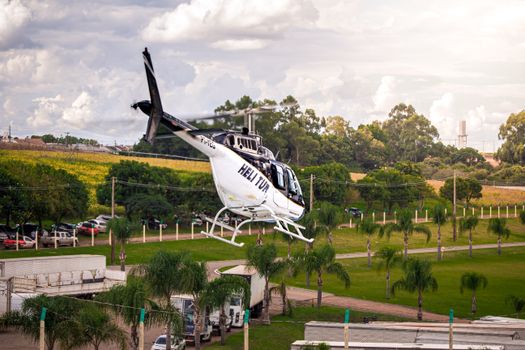
Three minutes later, I was buckled into a leather seat, my noise-canceling Bose headset crackling with air traffic control chatter. As the pilot pulled collective pitch, the earth dropped away beneath us in a butter-smooth swoop. Rainbow-hued containers on the docks shrank into Lego bricks, and Mount Fuji loomed sharp against the horizon, framed perfectly by the helicopter's Plexiglas nose bubble.
It struck me instantly: while admission prices for global landmarks, observation decks, and marquee museums have quietly skyrocketed past $50 to $70 per person, a quiet revolution in aviation logistics has pushed ultra-short helicopter rides down into the $30 to $45 bracket. Aerial sightseeing is no longer an exclusive luxury bucket-list line item; it has become the ultimate budget travel hack.
```
[ VIP Museum Ticket + Skip-Line Fee: $48 - $65 ]
VS
[ 6-Minute Micro Helicopter Tour: $32 - $44 ]
```
---
Why Helicopter Tours Costing Less Than Museum Tickets Are Emerging This Year
How is it mathematically possible to lift a gas-guzzling turbine aircraft into the sky for less than the cost of walking through an art gallery? The answer lies in a convergence of three major aviation industry shifts:
1. The Rise of "Micro-Routes"
Traditional helicopter operators historically sold 30-to-60-minute narrative flights priced upwards of $300. However, modern flight operators realized that a high volume of quick, 5-to-8-minute "hop-and-hover" loops—focused on a single iconic vantage point—yield dramatically higher profit margins when aircraft operate back-to-back non-stop runs.
2. Flight-School Hour-Building & Empty Legs
Pilots training for commercial certifications must accumulate hundreds of flight hours. Flight schools and charter operators are now monetizing these non-revenue repositioning flights (known as "empty legs") by offering budget micro-seats to the public via app-based dynamic pricing models.
3. Dynamic Seat-Matching Algorithms
Platforms akin to ride-hailing services now aggregate real-time passenger weight data and empty slots across regional airfields. If an operator has two vacant rear seats on a scheduled flight, the algorithm slashes the seat price five minutes before engine start rather than flying with empty air.
---
5 Global Destinations Where You Can Fly Cheaper Than a Museum Visit
```
+------------------+-----------------------+----------------------+--------------------+
| Destination | Local Micro-Route | Micro-Tour Price ($) | Comparable Museum |
+------------------+-----------------------+----------------------+--------------------+
| Tokyo, Japan | Tokyo Bay Horizon | $34 USD | TeamLab ($45) |
| Las Vegas, USA | Neon Strip Express | $42 USD | Mob Museum VIP ($48)|
| Cape Town, SA | Atlantic Coast Sprint | $32 USD | Zeitz MOCAA ($38) |
| Niagara, Canada | Falls Horseshoe Loop | $44 USD | Skylon+Journey ($52)|
| Berlin, Germany | Tempelhof Perimeter | $38 USD (€35) | Museum Island ($42)|
+------------------+-----------------------+----------------------+--------------------+
```
1. The Tokyo Bay Horizon Sprint (Japan)
* The Cost: ¥5,200 (~$34 USD)
* The Flight: Departing from helipads around Yokohama or Tokyo Bay, this 6-minute rush whisks you over the bay's futuristic bridges, giving you an uninterrupted panoramic view of Tokyo Skytree and Mount Fuji.
* Why It Beats the Ground Option: A ticket to top observation decks like Tokyo Skytree or Shibuya Sky can run between $35 and $45 with fast-pass add-ons, placing you behind double-paned glass smeared with fingerprints. Up here, sunlight glints directly off the bay with zero obstructions.
* Pro-Tip: Book the 08:15 AM slot. Morning air over Tokyo Bay is remarkably crisp and free of thermal turbulence, delivering crystal-clear photos of Mount Fuji.
```
[Tokyo Bay Helipad] ──(6 Min Loop)──> [Yokohama Bridge View] ──> [Mount Fuji Horizon]
```
2. The Las Vegas Strip Twilight Blitz (USA)
* The Cost: $42 USD
* The Flight: A rapid-fire 5-minute night loop taking off from terminal pads near McCarran/Harry Reid Airport, shooting along the neon corridor of the Strip, banking hard past the Sphere, and sweeping back over the Bellagio Fountains.
* Why It Beats the Ground Option: General admission tickets to Vegas attractions like the High Roller Observation Wheel or special immersive exhibits often hover around $48–$55. On a micro-flight, you experience the illuminated neon grid of Vegas in a high-G, thrilling bank turn.
* Pro-Tip: Skip the VIP hotel pickup shuttles, which tack on $30 in fees. Take a local rideshare straight to the private aviation side terminal on Haven Street.
3. The Cape Town Atlantic Coast Sprint (South Africa)
* The Cost: R600 (~$32 USD)
* The Flight: Taking off from the V&A Waterfront helipads, this 5-minute flight arcs directly over Green Point Stadium, swoops along the turquoise Atlantic coastline, and showcases Table Mountain towering above the ocean.
* Why It Beats the Ground Option: High-end museum passes or combined city historical tickets in Cape Town easily reach $38–$45. This micro-flight offers high-octane aerial views of the crashing surf against granite cliffs.
* Pro-Tip: Walk directly to the waterfront helipads around 11:30 AM to ask for "standby balance seats." Operators frequently need a light single passenger to balance out fuel-weight ratios before mid-day maintenance resets.
4. The Niagara Horseshoe Horizon Loop (Canada/USA)
* The Cost: $44 USD
* The Flight: A 6-minute circuit taking off from airfields along the Niagara Parkway, hovering directly adjacent to the mist plume of the Horseshoe Falls before sweeping back over the river gorge.
* Why It Beats the Ground Option: Combining the "Journey Behind the Falls" with local tower observation passes easily tops $50 per adult. The helicopter puts you above the mist rainbow where ground spectators can't go.
* Pro-Tip: Choose the right-hand rear seat in a Bell 206 JetRanger. The pilot's approach vectors turn clockwise, giving passengers on the right an unhindered view into the roaring throat of the falls.
5. The Berlin Tempelhof Airfield Buzz (Germany)
* The Cost: €35 (~$38 USD)
* The Flight: Departing from the outskirts of Schönhagen or suburban airfields, this flight school repositioning run follows the historic perimeter of the old Tempelhof airport and the Spree riverbank.
* Why It Beats the Ground Option: A day pass to Berlin's famous Museum Island costs €42. A fast-loop helicopter flight offers an unmatched aerial view of East Berlin's TV Tower and historic urban flight paths.
* Pro-Tip: Look for flight school "Student Hop" listings on European flight-sharing boards like Wingly. Flight instructors routinely sell rear seats on check-ride flights to offset operational costs.
---
The Insider Playbook: How to Book Sub-$50 Helicopter Seats
Getting airborne for less than the cost of a museum ticket requires understanding how flight operators manage inventory. Here is the operational playbook to secure micro-tour rates:
```
Step 1: Download Flight-Share Apps (Wingly, FlyBlade Standby, AIIR)
│
▼
Step 2: Enable Location Alerts for "Empty Leg / Standby" Within 15 Miles
│
▼
Step 3: Target Early Morning / Post-Lunch Maintenance Windows
│
▼
Step 4: Travel Light (Zero Bag Weight = Preferred Seat Allocation)
```
1. Leverage Standby Flight-Sharing Apps
Avoid generic travel aggregator sites that mark up tickets with middleman fees. Use regional aviation apps like Wingly (Europe), FlyBlade Standby (US/International), or HeliHopper aggregators. These apps connect travelers directly with pilots who have open seats on scheduled repositioning legs.
2. Aim for "Weight Balance" Standby Slots
Helicopters must carefully balance center-of-gravity weight profiles before takeoff. If a group of three leaves a fourth seat vacant, the operator cannot fly safely without adding dead weight ballast or filling that seat with a solo passenger. Show up in person at regional helicopter hubs around 10:00 AM or 2:00 PM and offer to sit as a "weight-balance standby."
3. Avoid Peak Sunset Slots
Sunset flights command premium rates (often $200+). Mid-morning (08:30 AM – 10:00 AM) and mid-afternoon (01:30 PM – 03:00 PM) are low-demand windows for corporate charters. Flight operations use micro-tours during these exact hours to keep rotors turning and engine oil warm between larger bookings.
4. Ditch the Luggage
Micro-flight operators strictly enforce weight limits. Carrying backpack gear will get your luggage weighed and potentially charged a storage fee. Arrive with only your phone, a camera attached to a wrist strap, and your ID in your pocket.
---
Quick Facts & Logistics Cheat-Sheet
- Average Cost Range: $32 – $45 USD (varies by exchange rate and platform fees).
- Flight Duration: 5 to 8 minutes (focused intensity, maximum photo density).
- Best Time for Photos: Early morning (08:00 AM – 10:00 AM) for low thermal distortion and clear air filtration.
- What to Wear: Dark-colored clothing. Bright or white shirts reflect against the inside of the acrylic canopy glass, creating unwanted glare in your aerial photos.
- How to Get to Airfields: Avoid expensive airport transfers. Most micro-tour departure points operate out of regional general aviation helipads accessible by local transit lines or low-cost rideshares.
---
The Final Verdict: Is a 6-Minute Flight Worth It?
Standing on the tarmac after my Tokyo Bay micro-flight, my adrenaline was pumping while the smell of aviation fuel hovered softly in the air. In six minutes, I had seen more of the city's geographical layout, coastline, and architectural grid than three hours in a crowded viewing gallery could ever offer.
Museums and galleries hold timeless human history, but modern travel is about maximizing unique perspective per dollar spent. When a seat in a turbine-powered helicopter costs less than standing in line for a floor-to-ceiling digital projection room, the choice becomes clear. Skip the line, strap into the harness, and watch the world open up beneath you.
---