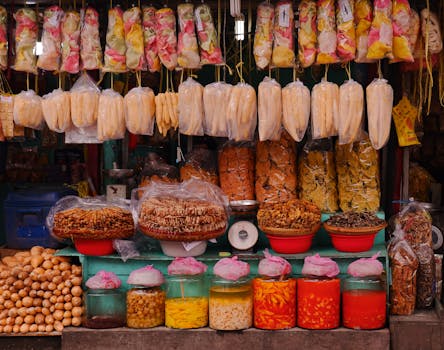
Forbidden Flavors: The Secret Dishes Locals Don't Want Tourists to Know About
The salty air of the Mediterranean coast kissed my face as I wandered through a bustling Sardinian market, a symphony of local dialects filling the air. I was on the hunt, not for the usual pecorino or bottarga, but for whispers. Whispers of a cheese so legendary, so wild, that it was said to literally crawl with life. "Casu Marzu," I'd breathed to a friendly shopkeeper, who quickly averted his eyes, a knowing smile playing on his lips. "Ah, quel formaggio," he'd muttered, waving me off with a hand gesture that perfectly conveyed "don't ask."
That encounter wasn't just a quirky travel moment; it was my initiation into a hidden world of culinary secrets. A world where tradition, daring, and sometimes, outright legality clash. As a professional travel blogger for Tripsora, I’ve tasted my way across continents, from Michelin-starred marvels to humble street food stalls. But nothing quite captures the imagination like the foods that exist on the fringes – dishes that are illegal in most countries, fiercely protected by local tradition, and often, deliberately kept off the tourist radar.
Why the secrecy? Sometimes it’s about health regulations, sometimes about conservation, and often, it's simply that these foods are so integral to a specific culture that their true essence can only be understood by those born into it. For us curious wanderers, understanding these forbidden flavors isn't just about eating; it's about delving into the deepest culinary soul of a destination. It’s about understanding the stories, the risks, and the sheer audacity of human taste.
So, buckle up, fellow food adventurers. We’re about to journey into the intriguing, often controversial, realm of forbidden foods. Just remember: curiosity is encouraged, but always prioritize safety, legality, and respect for local customs.
1. Casu Marzu: The Maggot Cheese of Sardinia, Italy
The Legend:
My Sardinian quest for Casu Marzu was like hunting for a mythical beast. Locals would either deny its existence, chuckle conspiratorially, or give me vague directions to a "friend of a friend" in the countryside. This sheep's milk cheese, whose name literally translates to "rotten cheese," is infamous for containing live insect larvae (maggots). These maggots are deliberately introduced to the cheese, aiding a unique fermentation process that breaks down fats, making the cheese incredibly soft and intensely pungent.
Why it's "Illegal":
The European Union has declared Casu Marzu illegal due to health and hygiene regulations, as the consumption of live maggots can pose risks of intestinal larval infections. Despite this, it remains a cherished, albeit clandestine, delicacy in Sardinia.
The Experience (Mine & Yours):
After days of polite inquiries and a few raised eyebrows, I finally found a local who, after a shared espresso and a long conversation about Sardinian history, offered to let me "observe" a family's traditional preparation. I watched, fascinated and a little queasy, as a thick, creamy substance – teeming with tiny, jumping white larvae – was scooped onto a piece of pane carasau (Sardinian flatbread). The smell was overpowering, a sharp, ammoniac tang mixed with rich sheep's milk. While I didn't partake (respecting the health warnings and the delicate nature of the offering), the sheer audacity of it, the deep cultural pride in this forbidden food, was an unforgettable experience.
Tripsora Tip:
You won't find Casu Marzu on any restaurant menu, and for good reason. If you're genuinely curious, your best bet is to build a rapport with locals in rural Sardinia. Explain your interest in traditional foods respectfully. Don't ask to buy it, but rather to learn about it. Many families still make it for personal consumption, and some might be willing to share the story, if not the actual cheese, with a genuinely interested and respectful visitor. However, understand the risks involved; consuming uninspected dairy products with live larvae carries significant health hazards.
2. Ortolan Bunting: France's Forbidden Feathered Delicacy
The Legend:
Imagine a tiny songbird, caught and force-fed until it's plump, then drowned in Armagnac, roasted whole, and eaten in one bite, bone and all, under a white napkin. This is the Ortolan Bunting, a dish once reserved for French royalty and the most exclusive gastronomes, steeped in ritual and controversy. The napkin, it's said, is to hide one's gluttony from God, or to simply contain the intense aromas.
Why it's "Illegal":
Ortolan Buntings are migratory songbirds, and their populations have plummeted due to overhunting, particularly for this dish. They are now a protected species under EU law, making it illegal to hunt, sell, or consume them. The ban has been in place since 1999, though a brief, controversial push for a seasonal re-opening occurred in 2014.
The Experience (Mine & Yours):
My closest encounter with the Ortolan was not in a clandestine backroom, but through the vivid descriptions of an elderly French chef in Gascony. He spoke of its "nutty, almost gamey flavor, delicate bones, and the burst of Armagnac." His eyes glazed over with nostalgia and a hint of defiance as he recounted the ritual. It was clear that for him, it wasn't just food; it was a connection to a bygone era, a symbol of French culinary identity.
Tripsora Tip:
This is one forbidden food you absolutely should not seek out to consume. The ethical implications of eating an endangered species are immense, and the legal penalties are severe. Instead, appreciate the story of the Ortolan. Visit regional French markets, explore the rich history of French gastronomy, and perhaps try other traditional game birds (like quail or partridge, legally sourced) to understand the broader culinary context without contributing to illegal wildlife trade. The allure here is in understanding the cultural significance of a dish that has transcended mere sustenance to become a controversial icon.
3. Fugu: Japan's Deadly Delight
The Legend:
The pufferfish, or Fugu, is legendary. It's not illegal in Japan, but it's so tightly regulated that it might as well be "forbidden" for the untrained. Its liver, ovaries, and intestines contain tetrodotoxin, a neurotoxin 1,200 times deadlier than cyanide, for which there is no known antidote. A single fish contains enough poison to kill 30 adults. Yet, in Japan, it's a prized delicacy, celebrated for its unique texture and the thrilling, subtle tingling sensation (a controlled dose of the toxin) it can impart.
Why it's "Illegal" (for most):
Only highly trained and licensed chefs are permitted to prepare Fugu in Japan. This rigorous licensing process, which can take years to achieve, ensures that the poisonous parts are meticulously removed, leaving only the safe, edible flesh. For anyone else to prepare it is effectively illegal and incredibly dangerous.
The Experience (Mine & Yours):
My first Fugu experience in Osaka was a blend of anticipation and genuine apprehension. We chose a reputable, established Fugu restaurant (look for the Fugu lantern outside). The chef, a stoic man with decades of experience, presented us with a multi-course meal: paper-thin sashimi (Fugu-sashi), deep-fried Fugu (Fugu-karaage), and a hotpot (Fugu-chiri). Each dish was meticulously prepared, a work of art.
The sashimi, arranged like chrysanthemum petals, was delicate, almost translucent. The taste was subtle, firm, and surprisingly mild. The "tingle" wasn't a dramatic shock, but a slight numbness on the lips and tongue – a gentle reminder of the power contained within. It was less about the flavor and more about the mastery, the trust, and the thrill of consuming something so potent. The entire meal for two cost around 15,000-25,000 JPY (approx. $100-$170 USD), a price reflecting the chef's skill and the inherent risk.
Tripsora Tip:
This is one "forbidden" food you absolutely can and should try, but only under the strictest conditions.
* Do your research: Only eat Fugu at licensed restaurants with certified Fugu chefs. Look for official certificates displayed in the restaurant.
* Trust the experts: Do not attempt to prepare Fugu yourself, ever. Do not buy it from unverified sources.
* Embrace the experience: It's a culinary adventure rooted in precision and tradition. The thrill is part of the package.
4. Traditional Haggis (with Sheep's Lung): Scotland's Banned Export
The Legend:
Haggis, Scotland's national dish, is a savory pudding made of sheep's pluck (heart, liver, and lungs), minced with onion, oatmeal, suet, spices, and salt, traditionally encased in the animal's stomach. It's a hearty, flavorful dish synonymous with Scottish culture, especially on Burns Night.
Why it's "Illegal" (for import):
While perfectly legal and widely consumed in Scotland, the traditional recipe containing sheep's lung has been banned from import into the United States since 1971 by the USDA. The ban stems from concerns over "specified risk materials" (SRMs) that could transmit Bovine Spongiform Encephalopathy (BSE), or "mad cow disease," even though sheep are not susceptible to BSE. Other countries may have similar import restrictions on offal.
The Experience (Mine & Yours):
My first taste of authentic haggis in Edinburgh was at a cozy pub, served with neeps (turnips) and tatties (potatoes). Forget any preconceived notions of "gross." It was rich, earthy, savory, and incredibly comforting – like a highly spiced, crumbly sausage. It paired perfectly with a dram of Scotch whisky. The texture was crumbly and moist, the flavor deep and gamey, with a wonderful peppery kick. I remember thinking, "This is what real comfort food tastes like." A generous portion cost around £12-18 (approx. $15-$23 USD).
Tripsora Tip:
If you're traveling to Scotland, absolutely try traditional haggis. It's a cultural cornerstone and a delicious one at that. Don't let the ingredients deter you; it's a testament to nose-to-tail eating and resourceful cooking.
* In the US: You can find "American-style" haggis, which omits the lung to comply with regulations. While a decent substitute, it's not the full, authentic experience.
* Respect the tradition: Haggis is more than just food; it's a symbol of Scottish resilience and heritage. Enjoy it with an open mind and a celebratory spirit.
5. Absinthe (The Original Formulation): Europe's "Green Fairy"
The Legend:
Absinthe, often called "The Green Fairy," is a high-proof distilled spirit derived from botanicals, primarily wormwood, anise, and fennel. It gained notoriety in 19th-century Europe, particularly France, for its purported psychoactive effects, inspiring artists and writers like Van Gogh and Oscar Wilde. Tales of its hallucinogenic properties and a supposed ingredient, thujone, leading to madness, fueled its mystique.
Why it's "Illegal" (Historically):
Due to its association with social ills and the "madness" it supposedly caused (later largely attributed to alcohol abuse, adulterated products, and marketing hype), absinthe was banned in many countries, including France, the US, and Switzerland, in the early 20th century. The bans were often tied to the thujone content from wormwood.
The Experience (Mine & Yours):
While the original, highly concentrated, unregulated versions of absinthe are not widely available or advisable to consume, modern absinthe has seen a resurgence. Regulations now cap the thujone content at safe levels, and it's legal in most countries. My experience with a high-quality, legal absinthe in Prague was less about hallucinations and more about a ritual. We performed the traditional "louche" – slowly dripping ice-cold water over a sugar cube resting on a slotted spoon, turning the clear green spirit cloudy and releasing its complex aromas.
The taste was intensely herbal, with a dominant anise flavor, a hint of bitterness from the wormwood, and a surprising sweetness from the dissolved sugar. It was potent, requiring slow sipping and appreciation. It felt like stepping back in time, connecting with a bohemian past. A shot of good absinthe in a bar can range from 150-300 CZK (approx. $7-$14 USD).
Tripsora Tip:
Don't seek out "illegal" or unregulated absinthe. Modern, legally produced absinthe is a fascinating spirit to explore.
* Look for reputable brands: Research absinthe distilleries known for quality and adherence to modern regulations.
* Learn the ritual: The preparation is as much a part of the experience as the drink itself.
* Drink responsibly: Absinthe is high proof; treat it with respect, like any strong spirit. It's about savoring the history and the complex flavors, not about chasing a "high."
6. Unregulated Bushmeat & Endangered Species: A Global Concern
The Legend:
Across various parts of the world, particularly in certain regions of Africa, Asia, and South America, "bushmeat" refers to meat derived from non-domesticated terrestrial mammals, birds, reptiles, and amphibians hunted for food. While some bushmeat consumption is traditional and sustainable, a significant portion involves endangered species or occurs in unregulated, unsafe conditions.
Why it's "Illegal":
The illegality here is multi-faceted:
* Conservation: Hunting and consuming endangered or protected species is a major driver of biodiversity loss and is strictly illegal under international and national wildlife protection laws.
* Health Risks: Unregulated bushmeat can carry zoonotic diseases (diseases transferable from animals to humans), such as Ebola, SARS, and other unknown pathogens, posing significant public health risks.
* Food Safety: Without proper inspection and hygiene, the preparation and sale of bushmeat can lead to foodborne illnesses.
The Experience (Mine & Yours):
My encounters with this topic have largely been through observation and conversations with conservationists and locals. I've seen markets in Southeast Asia where "exotic" meats were on display, some clearly from protected species. The air was often thick with a sense of the illicit, the vendors wary of cameras and questions. I've also spoken with indigenous communities who differentiate between traditional, sustainable hunting practices and the commercial, illegal trade that threatens both wildlife and public health.
Tripsora Tip:
This is not a "forbidden food" to seek out for culinary adventure. It's a critical issue of conservation and public health.
* Be aware and responsible: If traveling to regions where bushmeat is present, be mindful of what you're consuming. Avoid any meat that looks unusual, comes from an unknown source, or is sold in unhygienic conditions.
* Support sustainable tourism: Choose tour operators and accommodations that promote ethical wildlife interactions and conservation.
* Educate yourself: Understand the impact of illegal wildlife trade on global ecosystems and local communities. Your choices as a traveler can make a difference.
The Allure of the Forbidden: A Final Word
The world of food is vast, diverse, and endlessly fascinating. The dishes we've explored today, whether truly illegal, strictly regulated, or historically banned, offer a unique window into the human spirit – our ingenuity, our traditions, our risks, and our deep connection to the land and its creatures.
These "forbidden flavors" aren't just about what you eat; they're about the stories they tell, the cultures they represent, and the boundaries they push. As travelers, our role isn't to break laws or endanger ourselves, but to observe, to learn, and to appreciate the intricate tapestry of global cuisine, even its most mysterious threads.
So, the next time you travel, keep an open mind and an adventurous spirit. Ask questions, listen to local stories, and always, always respect the laws and traditions of the places you visit. Who knows what legal, yet incredibly unique, culinary secrets you might uncover?
What's the most unusual (and legal!) dish you've ever encountered on your travels? Share your stories in the comments below!
---