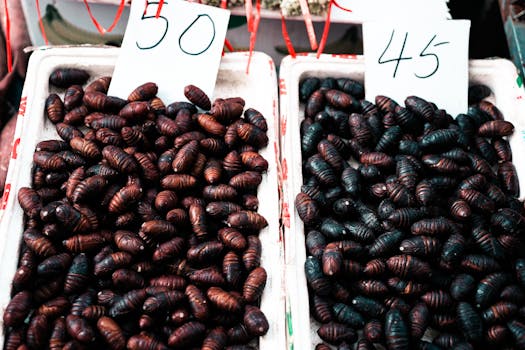
The aroma hit me before I even saw the market stall – a pungent, earthy scent, like old cheese mixed with something wild and alive. I was deep in the heart of Sardinia, a rugged Italian island where ancient traditions cling fiercely to life. My guide, a jovial local named Marco, winked. "Ready for a taste of true Sardinian courage, amico?"
I’d read about it, of course. Heard the whispers, seen the sensationalist headlines. But nothing quite prepares you for standing face-to-face with Casu Marzu, the infamous "maggot cheese." This wasn't just food; it was a legend, a dare, and in most parts of the world, strictly illegal. Yet here, it was a proud part of their heritage.
That moment in Sardinia wasn't just about trying a controversial cheese; it was about tearing down my preconceived notions of what food is. It sparked a fascination with the world's most forbidden flavors – delicacies so unique, so potentially dangerous, or so ethically fraught, that they're outlawed in most countries, yet revered in others.
As a travel blogger for Tripsora, I live for these moments of culinary awakening, these deep dives into local culture that challenge my palate and my perspective. And today, I’m taking you on an exhilarating, slightly unsettling, but utterly mind-blowing tour of foods that are illegal in most countries, but will leave an indelible mark on your travel memory.
1. Fugu (Pufferfish): The Dance with Death on a Plate
Let's kick things off with the undisputed king of culinary danger: Fugu. This notorious Japanese delicacy is a pufferfish, and its internal organs contain tetrodotoxin, a neurotoxin 1,200 times more potent than cyanide. Just a tiny speck can paralyze and kill an adult human within hours. So, why would anyone eat it? For the thrill, the delicate texture, and the subtle, almost tingling sensation it leaves on the lips – a testament to the chef's precision.
My first (and so far, only) encounter with fugu was in Tokyo’s Tsukiji Outer Market, at a small, unassuming restaurant specializing in the dish. The chef, an elderly man with steady hands and piercing eyes, had spent decades honing his craft, passing rigorous national examinations to earn his fugu license. He prepared the fish with surgical precision, meticulously removing the liver, ovaries, and intestines – the parts that harbor the deadly toxin – with practiced ease.
He served it sashimi-style: translucent slices arranged like delicate petals on a ceramic dish, accompanied by a ponzu sauce. Each slice was almost impossibly thin, so delicate it practically melted on the tongue. There was a faint, clean taste, and then, that subtle tingle. It wasn't unpleasant; it was a gentle reminder of the tightrope walk between pleasure and peril. It’s a meal that demands respect, not just for the chef, but for the inherent danger and the cultural significance.
Why it’s illegal elsewhere:
The sheer lethality of the toxin. Most countries simply don't have the regulatory framework or the highly specialized chefs required to prepare fugu safely. Importing it is a no-go for good reason.
Where to try it (legally & safely):
Japan, primarily. Look for restaurants displaying a fugu license. Expect to pay anywhere from ¥5,000 to ¥20,000+ (approx. $35-$140+) for a multi-course fugu meal, depending on the restaurant and cuts.
Practical Tip:
Never, EVER try to prepare fugu yourself. Only consume fugu prepared by a highly licensed and experienced chef in Japan. This is not a dare; it's a matter of life and death.
2. Casu Marzu (Maggot Cheese): Sardinia’s Squirming Delicacy
Remember that pungent aroma from my intro? That was Casu Marzu. This Sardinian sheep's milk cheese is intentionally infested with the larvae of the cheese fly (Piophila casei). These maggots digest the cheese, breaking down its fats, making it incredibly soft, almost liquid, and giving it a unique, intensely pungent flavor.
When Marco first presented the cheese, it looked like a normal, albeit very soft, Pecorino. But then, as he cut into it, the tiny, translucent maggots began to squirm and leap. Yes, leap. They can jump up to six inches! Locals often cover their eyes with a hand while eating to avoid getting a jumping maggot in the eye.
Taking a deep breath, I spread some on a piece of traditional Sardinian flatbread, pane carasau. The texture was creamy, almost oily, with a sharp, tangy, and profoundly earthy flavor that lingered on the palate. And yes, you can feel the maggots moving. It’s an experience that truly tests your comfort zone.
Why it’s illegal elsewhere:
Primarily for health and hygiene reasons. The maggots themselves aren't harmful if ingested, but the cheese is a "live" product, and there are concerns about potential bacterial contamination, as well as the obvious "ick" factor for food safety regulations. The EU has banned its commercial sale, though it enjoys an exemption for traditional products in Sardinia.
Where to try it (legally & safely):
Sardinia, Italy. It's often shared at family gatherings, festivals, or found through underground networks. You won't find it on a regular restaurant menu, but ask local guides or hosts about agriturismo (farm-stay) experiences where it might be offered as a traditional tasting. Prices are hard to pin down as it's not commercially sold, but it's considered a precious delicacy.
Personal Anecdote:
Marco chuckled as I tried my first bite, "You are officially Sardinian now, my friend! You have the courage of a mountain goat!" It wasn't just a meal; it was an initiation into a very specific, very proud culture.
3. Ortolan Bunting: The Songbird of Shame
This one is perhaps the most ethically contentious on the list. The Ortolan Bunting is a small, migratory songbird, traditionally considered a delicacy in French haute cuisine. The preparation is gruesome: the birds are force-fed until they quadruple in size, then drowned in Armagnac, plucked, and roasted whole. The tradition dictates that diners eat the entire bird, bones and all, while covering their heads with a napkin to savor the aroma and hide their shame from God.
I haven't, and will not, personally try Ortolan Bunting. My "experience" with this food comes from delving into its history and the intense ethical debates surrounding it. The sheer brutality of its preparation and the severe endangerment of the species due to illegal trapping make it a symbol of culinary excess and disregard for wildlife.
Why it’s illegal elsewhere:
Primarily due to conservation concerns. The Ortolan Bunting population plummeted due to overhunting, leading to its protection under EU law. International trade is strictly forbidden, and even in France, hunting and selling them is illegal.
Where to try it (legally & safely):
Nowhere. It is illegal to hunt, sell, or consume Ortolan Bunting. Any consumption would be part of a black-market, clandestine operation, which I strongly advise against due to ethical and legal implications. This is a food to learn about, to understand the dark side of culinary history, but not to consume.
Actionable Advice:
Instead of pursuing illegal and unethical foods, seek out sustainable and ethically sourced local delicacies. France has an incredible array of legal and delicious poultry and game birds that support local farmers and conservation efforts.
4. Ackee Fruit: Jamaica’s Deliciously Dangerous Staple
From ethical dilemmas to biochemical ones, we move to the Ackee fruit, Jamaica's national fruit and a staple in its cuisine, most famously in "Ackee and Saltfish." When ripe, the fruit splits open to reveal three large, black seeds surrounded by a soft, buttery, yellow aril. This aril is the edible part. However, if the fruit is unripe or improperly prepared, the aril contains hypoglycin A and B, toxins that can cause "Jamaican Vomiting Sickness," leading to severe hypoglycemia, coma, and even death.
During a trip to Jamaica, I was fascinated by the ubiquitous presence of Ackee. My host family, experts in its preparation, patiently explained the strict rules: only eat the yellow arils from naturally opened, fully ripe fruit. Never force an unripe fruit open. Never eat the pinkish membrane or the black seeds.
The first bite of Ackee and Saltfish was a revelation. The Ackee itself has a delicate, creamy texture, almost like scrambled eggs, with a subtly nutty flavor. It soaks up the savory spices of the saltfish, onions, and peppers beautifully. It’s a truly unique taste of the Caribbean, but one that comes with a very clear instruction manual.
Why it’s illegal elsewhere:
The toxicity of unripe or improperly prepared fruit led to a ban on its import into the US for many years. While fresh ackee is now allowed under strict FDA regulations (requiring specific processing to ensure safety), the "illegal" status in many countries stems from the potential health risks if not handled correctly.
Where to try it (legally & safely):
Jamaica is the best place to experience fresh ackee. You'll find it in nearly every local restaurant and home. Canned ackee (which is processed to remove toxins) is widely available in Caribbean grocery stores worldwide and is safe to consume. A typical plate of Ackee and Saltfish might cost JMD 800-1500 (approx. $5-$10) at a local eatery.
Practical Tip:
If trying fresh ackee, ensure it's prepared by locals who understand the fruit's intricacies. When buying canned, always check for reputable brands.
5. Sannakji (Live Octopus): A Squirming, Sucking Challenge
Imagine a plate of food that’s still moving, its tentacles writhing and suction cups clinging to your tongue. That's Sannakji, a Korean delicacy made from a live octopus cut into small pieces and served immediately, often lightly seasoned with sesame oil and seeds. The octopus's nerve activity means the tentacles continue to writhe even after being severed, and their suction cups remain active.
My first encounter with Sannakji was in a bustling seafood market in Seoul. My Korean friend, Ji-hoon, dared me to try it. The small octopus pieces were delivered to our table, still actively squirming. Ji-hoon demonstrated how to quickly pick up a piece with chopsticks and chew thoroughly. The texture was incredibly chewy, almost rubbery, and the suction cups created a bizarre, almost ticklish sensation as they adhered to my tongue and the roof of my mouth. The flavor was fresh, briny, and subtly sweet, enhanced by the sesame oil.
It's not the taste that makes it mind-blowing, but the texture and the sheer novelty of eating something that's still fighting back. It’s a truly visceral experience.
Why it’s illegal elsewhere:
Not due to toxicity, but primarily due to the significant choking hazard. The active suction cups can stick to the throat, leading to suffocation. Several deaths have been reported over the years in Korea from improper consumption. Many Western countries would deem it too dangerous for widespread commercial sale without extremely clear and prominent warnings, making it effectively "illegal" by omission or strict health regulations.
Where to try it (legally & safely):
South Korea, especially in seafood markets like Noryangjin Fish Market in Seoul, or specialized restaurants. A plate can cost anywhere from ₩10,000 to ₩30,000 (approx. $7-$22) depending on the size of the octopus.
Practical Tip:
Chew thoroughly and carefully! Do not rush, and take small pieces. Always have water nearby. This is a food where mindful eating is paramount.
6. Haggis: Scotland’s Hearty, Banned Pudding
You might be surprised to see Haggis on this list. Scotland's national dish, a savory pudding made from a sheep's pluck (heart, liver, and lungs), minced with onion, oatmeal, suet, spices, and salt, encased in the animal's stomach (or an artificial casing), is a beloved culinary icon. How could it be illegal?
The illegality isn't universal, but rather specific. For decades, the import of Haggis containing sheep's lung was banned in the United States by the USDA. This ban, in place since 1971, was due to regulations against the consumption of lungs from any animal, citing concerns over potential contamination from digestive fluids.
I first tried Haggis during a Hogmanay (New Year's Eve) celebration in Edinburgh. The atmosphere was electric, filled with bagpipes, whisky, and the aroma of hearty food. Served with 'neeps and tatties' (turnips and potatoes), the Haggis was a revelation. It tasted rich, earthy, and deeply savory, with a wonderfully crumbly texture and a peppery kick. Far from the intimidating description, it was incredibly comforting and flavorful – the perfect meal for a cold Scottish night.
Why it’s illegal elsewhere:
Specific ingredient bans. While legal and celebrated in Scotland, the inclusion of sheep's lung made it unimportable into countries like the US for many years. Though there have been recent efforts to lift the ban, it still stands as a classic example of how different food safety regulations can deem a cultural staple "illegal" elsewhere.
Where to try it (legally & safely):
Scotland, of course! You’ll find it everywhere from pubs and fine dining restaurants to supermarkets. A typical pub portion might cost £10-£18 (approx. $12-$22). You can also find lung-free versions or vegetarian Haggis globally, but for the authentic experience, Scotland is your go-to.
Shareable Moment:
Snap a photo of your Haggis with a dram of whisky in a traditional Scottish pub – pure #ScotlandVibes!
The Mind-Blowing Takeaway: Respecting Culinary Diversity
Exploring these "illegal" foods isn't about breaking laws or seeking danger. It's about understanding the incredible diversity of human cuisine, the deep cultural roots that shape what we eat, and the often-complex reasons behind food regulations. It's about stepping outside our comfort zones and realizing that what's forbidden in one place can be a cherished, life-affirming tradition in another.
Each of these foods tells a story – a story of survival, of ingenuity, of tradition, and sometimes, of conflict with modern sensibilities or scientific understanding. As travelers, our role is to observe, to learn, and to approach these experiences with respect, curiosity, and an open mind (and stomach!).
So, the next time you travel, don't just stick to the familiar. Ask the locals, dive into the history, and if the opportunity arises to safely and legally try a truly unique, mind-blowing delicacy, seize it! You might just find your own "maggot cheese" moment that forever changes how you see the world, one bite at a time.
What's the most unusual food you've ever tried? Share your stories in the comments below! And don't forget to share this post with your fellow adventurous foodies!
---