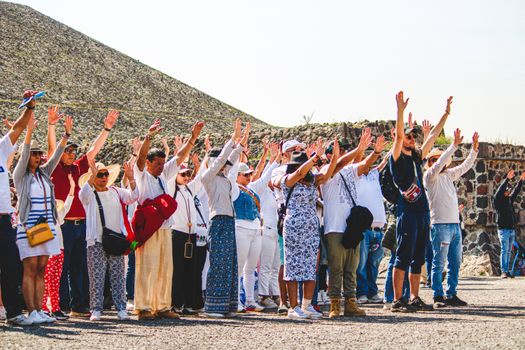
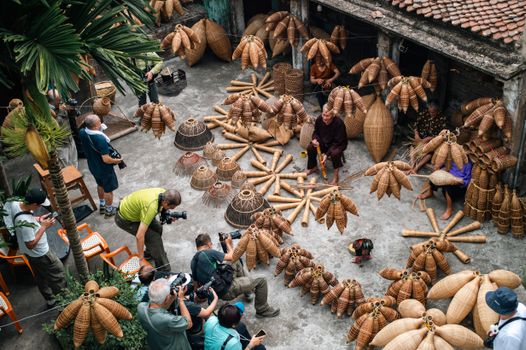
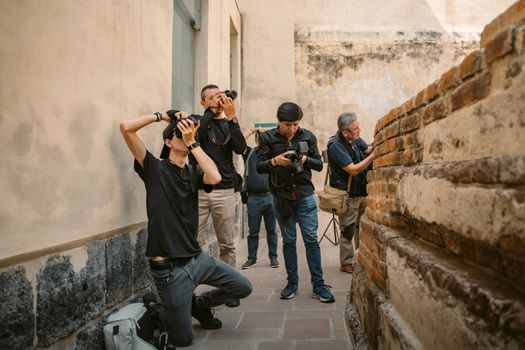
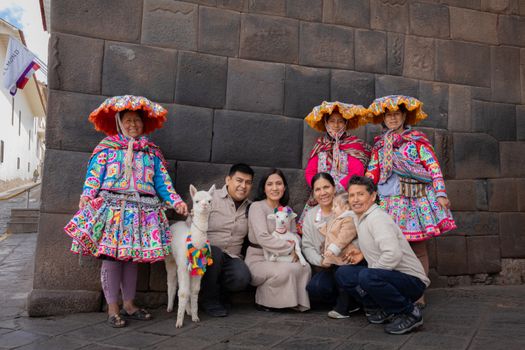
Remember that feeling? That gnawing disappointment when you finally reach a much-hyped destination, only to find it teeming with fellow tourists, all snapping the same photos, all chasing the same generic experience? I do. I once trekked for hours to a "secluded" waterfall in Southeast Asia, only to arrive and find a queue of selfie sticks longer than the waterfall itself. That was my breaking point. I vowed then and there to seek out a different kind of travel – one that wasn't about checking off famous landmarks, but about truly connecting, learning, and growing.
That's when I stumbled upon the magic of educational trips that feel less like a classroom and more like an epic adventure. These aren't your typical package tours; they're immersive experiences where you learn a skill, contribute to a cause, or delve into a culture so deeply, you might just forget you're a "tourist" at all. These are the trips locals whisper about, the ones they might even prefer weren't discovered by the masses, precisely because their authenticity is their most precious commodity.
Ready to trade your guidebook for a genuine story? Let's dive in.
Beyond Postcards: Why Authentic Educational Adventures Matter
Before we get to the "where," let's talk about the "why." In an age of overtourism and Instagram-driven itineraries, genuine connection is often lost. These educational adventures offer:
- Deep Cultural Immersion: You don't just observe; you participate. You learn a language, cook a traditional meal, or understand a local craft from the masters themselves. This fosters a respect and understanding far beyond what any museum or tour bus could offer.
- Skill Acquisition: Imagine returning home not just with souvenirs, but with the ability to weave a rug, identify constellations, or speak basic Quechua. These are tangible, life-enriching skills.
- Meaningful Contribution: Many of these trips involve citizen science, volunteering, or supporting local economies directly. Your presence isn't just a transaction; it's an investment in the community and the planet.
- Unforgettable Stories: Forget the generic "I saw the Eiffel Tower" tale. You'll be sharing stories like "I helped excavate a Roman villa" or "I tracked jaguars in the Amazon." These are conversation starters that last a lifetime.
- Personal Growth: Stepping out of your comfort zone, learning new things, and connecting with people from different walks of life inevitably leads to a deeper understanding of yourself and the world.
These are the kinds of experiences that don't just fill your camera roll; they fill your soul.
1. Crafting Culture: The Ancient Art of Indigo in Rural Japan
My journey into truly authentic travel took a vivid blue turn in the remote valleys of Tokushima Prefecture, Japan. Forget Tokyo's neon glow; here, time slows down, and ancient traditions thrive. I wasn't there for temples or cherry blossoms (though there were plenty); I was there to learn Aizome, the traditional Japanese art of indigo dyeing.
I found a small, family-run workshop nestled in a village so tiny, it barely registered on Google Maps. The master dyer, a gentle woman named Akiko-san, spoke little English, and my Japanese was rudimentary at best. Yet, through gestures, smiles, and the universal language of shared passion, we communicated. For three days, I lived with her family, rising with the sun, tending to the indigo vats fermented with natural ingredients, and meticulously dipping fabrics.
The process was mesmerizing: fabric dipped green, emerging blue as it oxidized in the air. Akiko-san taught me the intricate shibori techniques, tying and folding cloth to create stunning patterns. We shared simple meals of homegrown vegetables and freshly caught fish, and in the evenings, I'd listen to her husband's stories of the village, translated by their granddaughter.
The "Secret" Angle:
Most tourists flock to Kyoto for tea ceremonies or geisha spotting. Few venture to rural Tokushima, where the indigo tradition has been passed down for centuries, almost untouched by mass tourism. The workshops are often small, requiring direct contact or a local guide to arrange. It's an intimate, hands-on experience that feels like stepping into a living museum, where you're not just an observer, but a temporary apprentice.
Practical Details:
* Location: Rural Tokushima Prefecture, Japan (e.g., Aizumi Town or nearby villages).
* Cost: A 2-3 day immersive workshop, including meals and basic accommodation, can range from ¥30,000 - ¥80,000 (approx. $200-$550 USD), depending on the workshop and duration. Day workshops are cheaper, around ¥5,000 - ¥15,000.
* How to Find It: Search for "Aizome experience Tokushima" or "indigo dyeing workshop Japan." Look for smaller, independent workshops rather than large tourist centers. Sometimes, local tourism boards in smaller towns can connect you. Learning a few basic Japanese phrases will go a long way.
* Instagram Moment: Your hands stained blue, a beautifully patterned indigo scarf you made yourself, and a genuine smile shared with your master artisan.
2. Whispers of the Past: Unearthing Ancient Sicily
My next adventure took me to the sun-drenched hills of Sicily, but not to its famous beaches or bustling cities. I was drawn to the whispers of ancient history, specifically to an archaeological field school near Agrigento. For two weeks, I traded my comfortable bed for a cot in a student dorm and my laptop for a trowel and brush.
Our days began early, under the intense Sicilian sun. We learned the painstaking process of excavation: carefully removing layers of earth, identifying pottery shards, sketching findings, and documenting every detail. One afternoon, I was meticulously scraping away soil when my trowel hit something hard. My heart pounded. With the guidance of the lead archaeologist, we uncovered a perfectly preserved Roman mosaic fragment, its colors still vibrant after millennia. The thrill was indescribable – a direct connection to a civilization long past.
Evenings were spent analyzing finds, attending lectures on Roman history, and sharing stories with fellow volunteers from around the world. We'd often venture into Agrigento for cheap, delicious arancini and gelato, discussing the day's discoveries.
The "Secret" Angle:
While Agrigento's Valley of the Temples is a major tourist draw, few know about the ongoing archaeological work where you can actually participate. These field schools and volunteer programs are often run by universities or specialized organizations and are designed for serious learners, not casual tourists. You're not just observing history; you're uncovering it.
Practical Details:
* Location: Various sites across Sicily, Italy (e.g., near Agrigento, Syracuse, or inland Roman villas).
* Cost: Volunteer archaeology programs typically charge a fee (e.g., €500-€1500 per week) which usually covers accommodation, food, expert instruction, and often local transport to the site. Flights are extra.
* How to Find It: Search for "archaeological field school Sicily," "volunteer archaeology Italy," or "experiential archaeology programs." Organizations like ArchaeoSpain, Earthwatch Institute, or various university programs often run these. Book well in advance, as spots are limited.
* Instagram Moment: Dust-covered hands holding a newly discovered ancient artifact, the sprawling view of an archaeological site under the Mediterranean sun, or a celebratory group photo with your fellow "diggers."
3. Nature's Classroom: Citizen Science in the Azores' Wild Waters
If you crave wild beauty and a purpose-driven adventure, head to the Azores, Portugal's volcanic archipelago in the Atlantic. I joined a marine biology citizen science project focused on whale and dolphin research off São Miguel island. This wasn't a standard whale-watching tour; this was about contributing to real scientific data.
Every morning, we'd board a small research vessel, equipped with hydrophones, cameras, and data sheets. Our mission: to locate, identify, and document the behavior of the magnificent marine life that thrives in these nutrient-rich waters. One unforgettable afternoon, we encountered a pod of sperm whales. Instead of just watching, we were recording their dive patterns, listening to their clicks on the hydrophone, and helping to identify individuals by their unique dorsal fins. It was a profound experience, feeling like a tiny cog in a vast, important scientific endeavor.
Evenings were filled with lectures from marine biologists, data entry, and lively discussions with the team. We also explored the island's volcanic landscapes, natural hot springs, and sampled fresh Azorean cheese and wine, always with a newfound appreciation for its unique ecosystem.
The "Secret" Angle:
While whale watching is popular, participating in a citizen science project takes you beyond the surface. These programs are often small-scale, run by local research institutes or NGOs, and require a genuine interest in conservation. You're not just observing; you're actively contributing to the understanding and protection of these incredible creatures. It's a privilege, not a tourist right.
Practical Details:
* Location: São Miguel, Pico, or Faial islands in the Azores, Portugal.
* Cost: A week-long citizen science program can range from €800 - €1500, often including accommodation, boat trips, and expert guidance. Some programs might be longer or offer different levels of involvement.
* How to Find It: Search for "Azores marine conservation volunteer," "whale research Azores," or "citizen science Portugal." Look for local research centers or reputable eco-tourism operators that partner with scientific initiatives.
* Instagram Moment: A majestic whale breaching in the distance from a research boat, dramatic volcanic landscapes, or a close-up of marine research equipment with the ocean as a backdrop.
4. Culinary Chronicles: Mastering Moroccan Tagines in the Atlas Foothills
My taste buds led me to Morocco, specifically to a small Berber village nestled in the foothills of the Atlas Mountains, away from the bustling souks of Marrakech. I enrolled in a traditional cooking class, but this was no polished tourist demonstration. This was an immersion into a local home and its culinary heart.
My instructor was Fatima, a warm, matriarchal figure who welcomed me into her kitchen – a simple, open-air space with a wood-fired oven and earthenware pots. Over several days, I learned to grind spices by hand, prepare fluffy couscous from scratch, and master the art of the tagine, slow-cooking savory stews over coals. We sourced fresh vegetables from her garden and visited the local village market, where bartering was an art form.
Meal times were communal affairs, sharing food with Fatima's extended family, sipping sweet mint tea, and learning snippets of Darija (Moroccan Arabic) and Tamazight (Berber). It was a sensory feast and a lesson in hospitality, patience, and the profound connection between food and culture.
The "Secret" Angle:
Many cooking classes in Marrakech cater to tourists. The "secret" here is to seek out classes in smaller villages or through homestay programs (often arranged by ethical tour operators or guesthouses) in the Atlas Mountains or Draa Valley. These are run by local families, providing a genuine, uncommercialized experience where you truly learn the heart of Moroccan home cooking.
Practical Details:
* Location: Small villages in the Atlas Mountains (e.g., Ourika Valley, Imlil) or near Ouarzazate, Morocco.
* Cost: A multi-day cooking immersion with a homestay can range from €200 - €500, including ingredients, instruction, and accommodation. A single day class in a less touristy area might be €50-€100.
* How to Find It: Look for "Berber cooking class homestay Morocco," "Atlas Mountains cooking experience," or inquire with reputable eco-tourism companies specializing in cultural treks. Sometimes guesthouses in smaller towns can arrange these directly with local families.
* Instagram Moment: Vibrant spices laid out, a bubbling tagine on a traditional stove, sharing mint tea with a local family, or a panoramic view of the Atlas Mountains from a village kitchen.
How to Find Your Own Secret Educational Adventure
Ready to unlock these hidden gems? Here's my actionable advice:
- Define Your Passion: What do you genuinely want to learn or contribute to? History, art, nature, language, cooking, conservation? Nailing this down will help narrow your search.
- Go Local (Online First): Instead of major tour operators, search for local NGOs, universities, community organizations, or small, specialized tour companies in your chosen region. Use specific keywords like "volunteer [skill/interest] [country/region]," "experiential travel [country]," or "traditional crafts workshop [country]."
- Leverage Niche Platforms: Websites like Workaway, WWOOF, or specialized volunteer travel platforms (e.g., Earthwatch Institute, Global Volunteers) often list immersive, educational opportunities.
- Ask Around (Respectfully): Once you're in a destination, speak to local guesthouse owners, shopkeepers, or community leaders. They often know about unique local initiatives or artisans that aren't advertised. Always approach with genuine curiosity and respect.
- Learn Basic Language: Even a few phrases in the local language can open doors and show respect, making it easier to connect with locals and find these experiences.
- Be Flexible & Patient: These aren't always easy to book like a hotel room. You might need to email, call, or wait for specific program dates. Flexibility in your itinerary is key.
- Budget Wisely: While some experiences are volunteer-based (requiring program fees), others are paid workshops. Research costs thoroughly and remember that supporting local artisans and communities often means paying fair prices.
- Prioritize Authenticity Over Comfort: These trips aren't always luxurious. Expect simpler accommodations, potentially less reliable internet, and the need to adapt to local customs. That's part of the adventure!
- Be a Responsible Traveler: Respect local customs, dress codes, and environmental guidelines. Leave no trace, support local businesses, and engage with an open mind and heart. These communities are sharing their heritage; treat it with reverence.
- Share Your Discoveries (Thoughtfully): Once you've had an incredible experience, share it! But consider how you share. Perhaps highlight the organization or artisan without revealing every tiny, intimate detail that might overwhelm a fragile local community. Encourage others to seek similar authentic experiences responsibly.
Conclusion: The Journey of a Lifetime Awaits
The world is brimming with incredible opportunities to travel deeper, learn more, and truly connect. These educational adventures are more than just trips; they are investments in yourself, in the communities you visit, and in a more meaningful way of seeing the world. They challenge you, inspire you, and ultimately, transform you.
So, ditch the checklist, silence the tourist chatter, and listen for the whispers of adventure. The next time you plan a getaway, ask yourself: What do I want to learn? What story do I want to create? Because the most rewarding journeys aren't always found on the main road; sometimes, they're hidden down a dusty path, waiting for a curious soul like yours to discover them.
Have you embarked on an educational adventure that felt like a secret? Share your stories and tips in the comments below! Let's inspire each other to travel more authentically and meaningfully.
---