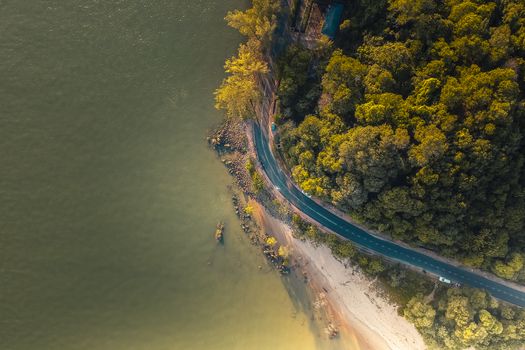
The Sky's the Limit: Unlocking the World's Best-Kept Drone Secrets (Responsibly, Of Course!)
The sun dipped below the horizon, painting the sky in fiery oranges and purples over a remote, mist-shrouded valley in Northern Vietnam. My drone, "Peregrine," a loyal companion on countless adventures, hummed softly as it ascended, capturing a tapestry of emerald rice terraces carved into the mountainside, a scene so pristine, so utterly breathtaking, it felt like I was witnessing a dream. Below, a small village stirred, smoke curling lazily from thatched roofs. There wasn't another tourist in sight, just the quiet rhythm of local life unfolding. This wasn't a spot I found on Instagram; this was a place a local guide, after days of earning his trust, reluctantly pointed me towards, with a gentle warning: "Don't tell everyone."
That moment, etched forever in my memory and on my SD card, perfectly encapsulates the thrill of drone photography. It’s not just about getting a cool shot; it’s about accessing a perspective previously reserved for birds, for pilots, for the imagination. It’s about seeing the world with fresh eyes, discovering hidden geometries, and sharing a story that’s truly unique. But let’s be honest, in an age where every iconic landmark is swarmed by drones, finding those truly untouched, awe-inspiring aerial vistas feels like searching for a needle in a digital haystack.
And that's where the "locals don't want tourists to know" part comes in. It's not about being secretive or disrespectful; it's about understanding that some places retain their magic precisely because they aren't overrun. It's about finding those elusive spots, flying them with utmost respect, and preserving their integrity. This isn't a list of GPS coordinates to flood with tourists. This is a guide to the mindset and methods for discovering such places, coupled with general regions and examples where the potential is immense – and always, always, with a strong emphasis on responsible, ethical flying.
Are you ready to elevate your drone game and capture images that truly stand apart? Let's dive in.
1. The Ethos of the Responsible Drone Explorer: More Than Just a Pilot
Before we even talk about specific regions, let’s talk about the golden rule: Respect. The "locals don't want tourists to know" sentiment often stems from a desire to preserve peace, privacy, and cultural integrity. Our goal isn't to exploit these feelings but to understand them and operate within their bounds.
My Personal Mantra:
Fly with a light touch, leave no trace, and earn your shot.
- Research, Research, Research: Before you even pack your drone, dive deep into the local regulations for your destination. Many countries have strict no-fly zones (near airports, military bases, national parks, government buildings). Some require permits, registration, or even a local pilot's license. Ignorance is not an excuse, and a hefty fine or confiscated drone will quickly ruin your trip. My go-to resources include official aviation authority websites, drone-specific travel forums, and even local expat groups on Facebook.
- Seek Local Guidance (The Right Way): This is paramount for finding those "secret" spots. Don't just walk up to someone and ask, "Where can I fly my drone that no one knows about?" Instead, build rapport. Hire a local guide for a day or two, learn about their culture, genuinely engage. Explain your passion for photography and your commitment to respecting their environment. Often, after you've shown you're a respectful traveler, they might casually mention a "beautiful spot up the valley" or a "hidden waterfall" that would be perfect for aerial views. This is how I found that Vietnamese rice terrace gem – it was a trust built over several days of hiking and sharing meals.
- Privacy First: Even in seemingly empty landscapes, people live, work, and worship. Avoid flying over private residences, religious sites, or gathering places without explicit permission. The last thing you want is to be seen as an intrusive eye in the sky. If you see people, maintain a respectful distance and altitude.
- Environmental Awareness: Drones can disturb wildlife. Avoid flying low over nesting birds, sensitive ecosystems, or areas known for wildlife activity. Be mindful of noise pollution. The goal is to capture beauty, not disrupt it.
Remember, the goal isn’t just to find a spot, but to preserve its magic for future generations, and to leave a positive impression as a drone pilot.
2. Unlocking Hidden Gems: Strategies for Discovery & Responsible Exploration
So, how do you actually find these elusive locations without being a nuisance? It's a blend of old-school travel savvy and modern tech.
- Beyond the Hashtags: While Instagram can be inspiring, it's also a signal for places that are already popular. Instead, look for travel blogs focusing on "off-the-beaten-path" destinations, national geographic articles about remote cultures, or even historical maps that show forgotten routes or abandoned structures. These often hint at landscapes ripe for aerial exploration.
- Satellite Imagery is Your Friend: Before you even leave home, spend hours on Google Earth. Zoom in on remote regions. Look for interesting geological formations, winding rivers, unique agricultural patterns, abandoned quarries, or coastal features that aren't easily visible from ground level. These are often indicators of stunning drone potential. I once found an incredible network of ancient irrigation channels in Peru this way, miles from any tourist trail.
- The Power of Local Knowledge (Again!): Once on the ground, engage with locals. Not just guides, but guesthouse owners, restaurant staff, market vendors. Ask them about their favorite viewpoints, places they go for peace, or local legends about hidden spots. Frame it as wanting to see the "real" [country name], not just the tourist traps. This genuine interest often opens doors.
- Permit & Permission Pathways: For truly unique locations like indigenous lands or protected areas, you might be able to get special permits. This often involves contacting local authorities, indigenous councils, or park rangers well in advance. It's a lengthy process, often with fees (which can range from $50 to several hundred dollars, depending on the exclusivity and duration), but it can grant you access to truly unparalleled vistas. My permit to fly over certain parts of the Atacama Desert took months to secure but was worth every penny.
3. Regional Deep Dives: Where to Seek Your Aerial Masterpiece
Instead of pinpointing exact coordinates (which would defeat the purpose of "secret" and potentially lead to over-tourism), I'll highlight regions and types of locations where, with the right approach, you can uncover truly unique drone photography opportunities.
A. Southeast Asia: Beyond the Temples and Beaches
While places like Ha Long Bay or Bali are stunning, they're also incredibly popular. For those seeking less trodden paths:
- The Unseen Rice Terraces of Northern Laos & Vietnam: Beyond Sapa or Mu Cang Chai, there are countless smaller, equally magnificent terraced valleys. Regions like Phongsali Province in Laos or the more remote parts of Ha Giang Province in Vietnam offer incredible, intricate patterns of rice paddies, often carved into impossibly steep mountainsides. These are often inhabited by ethnic minority groups, whose traditional villages add a poignant human element to the vast landscapes.
- The Vibe: Authentic, challenging terrain, incredible cultural immersion.
- How to Find: Hire a local motorbike guide for multi-day treks. They know every hidden path and often have family in remote villages. Trust is key here.
- Cost: Local guides can range from $30-70 USD per day, including accommodation and food in homestays. Be prepared for basic facilities.
- My Anecdote: I spent a week in a tiny Hmong village in Ha Giang. After helping with harvest, the village elder gave me permission to fly over their ancestral lands. The shots of their community nestled amongst the vibrant green terraces were priceless, far more meaningful than any tourist postcard.
- Forgotten Islands of the Philippines/Indonesia: While Palawan and Raja Ampat are famous, the Philippines and Indonesia boast thousands of islands. Many smaller, uninhabited or sparsely populated islets offer pristine coastlines, hidden lagoons, and dramatic cliffs.
- The Vibe: Tropical paradise, untouched beauty, sense of discovery.
- How to Find: Charter a local boat (a bangka in the Philippines, a jukung in Indonesia) from a less-visited island. Ask the captain to take you to "quiet places" or "islands without people."
- Cost: Boat charters vary wildly but expect $50-150 USD for a day trip, depending on the size of the boat and the distance.
- My Anecdote: Near Coron, I convinced a boat captain to take me to a tiny, unnamed rock formation that jutted out of the turquoise sea like a dragon's spine. The drone footage of its dramatic contours, untouched by human footsteps, was otherworldly.
B. South America: Ancient Echoes and Untamed Wilderness
Beyond Machu Picchu and Patagonia's famous peaks, this continent holds incredible secrets.
- The High Andean Plateaus of Bolivia & Peru (Away from Tourist Routes): Think vast, stark landscapes, multi-hued lagoons, and ancient ruins not yet fully excavated or restored. The Altiplano offers incredible textures, from salt flats (beyond Uyuni) to volcanic peaks and high-altitude wetlands.
- The Vibe: Mystical, desolate, raw nature, challenging conditions.
- How to Find: Off-road tours with experienced local drivers/guides are essential. Look for companies specializing in adventure or archaeological expeditions, not just standard tourist routes. Be specific about wanting to visit less-known sites.
- Cost: Multi-day tours can be $300-800 USD, but they provide access, logistics, and safety in remote areas.
- My Anecdote: I once stumbled upon a small, pre-Incan ruin complex in the Bolivian Altiplano, its stone walls perfectly aligned with celestial bodies. From above, its geometric precision against the vast, empty plain was breathtaking, a silent testament to a forgotten civilization. No fences, no gift shops, just raw history.
- The Amazon Basin (Specific Areas with Indigenous Permission): This is highly sensitive, but incredibly rewarding if done right. Flying over the endless green canopy, spotting winding rivers, or even small clearings of indigenous villages (with explicit permission) can be profound.
- The Vibe: Lush, vibrant, powerful, a true wilderness experience.
- How to Find: This requires significant pre-planning and trust-building. Contact reputable eco-lodges or indigenous community tourism initiatives that actively work with and benefit local communities. They can facilitate cultural exchange and guide you on where and if flying is appropriate. Never fly over indigenous lands without explicit, community-level permission.
- Cost: Eco-lodges and community stays can range from $100-300+ USD per night, often all-inclusive.
C. Eastern Europe: Fairytale Forests and Forgotten Castles
Often overlooked by mainstream tourism, countries like Romania, Bulgaria, and the Baltic states offer incredible drone potential.
- The Carpathian Mountains of Romania: Beyond Bran Castle, these mountains hold ancient forests, dramatic gorges, and countless lesser-known medieval fortresses and monasteries perched on impossible cliffs.
- The Vibe: Mythical, rugged, historical, untouched nature.
- How to Find: Rent a car and explore rural areas. Use detailed topographical maps (or Google Earth) to spot interesting geological features or isolated historical sites. Engage with locals in small villages; they'll often point you to "old ruins" or "beautiful viewpoints."
- Cost: Car rental is relatively affordable ($20-50 USD/day). Local guesthouses are cheap ($20-40 USD/night).
- My Anecdote: Driving through Maramureș, I spotted a tiny, wooden church, centuries old, nestled deep in a valley surrounded by vibrant autumn foliage. My drone revealed its intricate wooden steeple rising like a spire from the ancient forest, a scene straight out of a Grimm's fairytale.
4. Gear Up: Essential Drone Photography Kit & Tips
Having the right gear and knowing how to use it is crucial for capturing those once-in-a-lifetime shots, especially in remote areas.
- Your Drone (of course!): My go-to is a DJI Mavic series (currently the Mavic 3 Pro). It balances portability, excellent camera quality, and robust flight performance. For truly discreet flying, a Mini series drone is fantastic due to its sub-250g weight, often exempting it from stricter regulations in some countries.
- Extra Batteries (Lots of Them): This is non-negotiable. In remote areas, charging opportunities are scarce. I carry at least 4-5 batteries for a full day of shooting.
- ND Filters: Essential for cinematic video and long-exposure photography in bright conditions. They help control shutter speed for that buttery smooth motion blur.
- Portable Power Bank/Solar Charger: For charging your controller, phone, and even a drone battery if you're truly off-grid.
- MicroSD Cards (High Speed, High Capacity): You don't want to run out of storage mid-flight. Always carry spares.
- Cleaning Kit: Lens pen, microfiber cloths – dust and smudges are your enemy.
- Hard Case: Protect your investment from bumps, dust, and moisture, especially during rough travel.
- Offline Maps: Crucial for navigation in areas without cell service. Download Google Maps areas or use apps like Maps.me.
- First-Aid Kit & Emergency Gear: When exploring truly remote areas, safety is paramount.
5. Mastering the Shot: Creative Aerial Storytelling
It's not just about flying; it's about telling a story.
- Look for Patterns & Textures: From above, the world reveals incredible abstract art – the swirl of a river, the grid of a city, the organic lines of a mountain range. My favorite is capturing the stark contrast between human intervention (like terraced fields) and wild nature.
- Golden Hour is Your Best Friend: Just like ground photography, the hour after sunrise and before sunset provides the most magical light, casting long shadows and creating dramatic depth.
- Vary Your Altitude & Angles: Don't just fly straight up. Experiment with low-altitude fly-throughs, dramatic revealing shots from behind a ridge, or sweeping panoramic vistas from high above.
- Focus on the "Why": Why are you flying here? What story does this landscape tell? Is it solitude, human resilience, the power of nature? Let that narrative guide your composition.
- Practice, Practice, Practice: The more you fly, the more intuitive it becomes. Master your drone's controls in a safe, open area before attempting complex shots in tricky environments.
6. Beyond the Lens: Giving Back and Leaving No Trace
The privilege of accessing these incredible, often untouched places comes with a responsibility.
- Support Local Economies: Hire local guides, stay in local guesthouses, eat at local restaurants, buy local crafts. Your tourism dollars can make a tangible difference.
- Share Your Knowledge (Responsibly): When you return, share your beautiful images, but consider how you share them. Instead of pinpointing exact locations, talk about the region or the experience of discovery. Encourage others to explore responsibly rather than just following a GPS trail. This helps prevent over-tourism in sensitive spots.
- Leave it Better Than You Found It: Pack out all your trash, avoid disturbing flora and fauna, and respect any local customs or rules.
- Educate Others: If you see other drone pilots flying irresponsibly, gently educate them on best practices and local regulations. We are all ambassadors for the drone community.
Conclusion: Your Next Aerial Adventure Awaits
The world is still full of wonders waiting to be seen from above, places where the silence is broken only by the hum of your drone and the whispers of the wind. These aren't just "secret spots"; they're opportunities for deeper, more respectful travel. They are chances to connect with landscapes and cultures in a profound way, to capture images that resonate with authenticity and wonder.
So, charge your batteries, pack your sense of adventure, and embark on your quest for those truly unforgettable aerial perspectives. Remember, the journey to discover these hidden gems is just as rewarding as the images you bring home. Fly safe, fly smart, and most importantly, fly with respect.
What's the most incredible, off-the-beaten-path place you've ever flown your drone? Share your stories (without revealing too many secrets!) in the comments below! And don't forget to tag #TripsoraDrones on your next aerial masterpiece!
---