The Hook: A New Era of Transit
I stepped off the plane at Milan Linate, bracing myself for the familiar, grim sensory assault of the old terminal: the screech of metal baggage carts on cracked linoleum, the blinding glare of flickering yellow fluorescent tubes, and that distinct, stale scent of cheap aviation fuel mixed with microwaved paninis.
Instead, I was met with absolute silence. Or rather, a curated, acoustic hush.
My boots glided over matte-black volcanic stone tiles. The air smelled faintly of fresh espresso and white tea, pumped subtly through state-of-the-art HEPA filtration systems. Overhead, a sweeping canopy of sculptural wood panels diffused a soft, warm glow that felt more like a boutique hotel lobby in the Brera district than an airport terminal. I didn't even have to pull out my passport; a biometric camera scanned my face in 0.2 seconds, the glass barrier slid open silently, and I was out on the curb before my brain could register that I had actually cleared security.
This is not a futurist dream. This is the reality of the post-closure aviation boom. While the world was staying put, these five global hubs underwent massive, ground-up overhauls. They didn’t just paint the walls; they completely re-engineered the human transit experience.
---
1. Milan Linate Airport (LIN): The Haute Couture Terminal
```
[ Old Linate: Chaotic, Cramped, Outdated ]
│
(Total Closure)
▼
[ New Linate: Biometric, Matte-Black, Fashion-Forward ]
```
When Milan Linate shut down its sole runway and boarded up its terminal doors, the aviation world watched with bated breath. As Milan’s city-center airport, LIN had always been convenient but notoriously cramped. The goal of the closure was simple: strip the entire facility down to its concrete bones and rebuild it as a love letter to Italian design.
The Architecture of Speed and Style
The redesign discarded the sterile white plastics common in modern airports. Instead, the architects utilized local Lombardy materials. You’ll find walls clad in dark, sound-absorbing felt, accents of brushed brass, and furniture designed by iconic Italian brands like Kartell and Moroso.
But the real magic lies in the technology. Linate is one of the first airports in Europe to fully integrate FaceBoarding technology. By registering your document at a kiosk once, your face becomes your boarding pass from security to the gate.
Inside Linate's Culinary Revolution
No more sad, pre-packaged sandwiches. The renovated terminal features a curated selection of Milanese culinary institutions.
* The Highlight: Caffè Milano, where you can get a flawless ristretto pulled from a custom-built La Marzocco machine, served alongside a warm, flaky pistachio cornetto.
> Pro-Tip: Skip the main duty-free rush. There is a quiet, design-centric reading nook tucked behind the Briciole bakery on the first floor. It features lounge chairs with integrated wireless charging pads and a curated library of design monographs you can read for free.
---
2. Singapore Changi Terminal 2 (SIN): The Biophilic Digital Wonderland
```
[ Changi T2 (Pre-2020): Functional, 1990s Aesthetic ]
│
(3-Year Lockdown)
▼
[ Changi T2 (Now): 14m Digital Waterfall, Living Walls, Zen Gardens ]
```
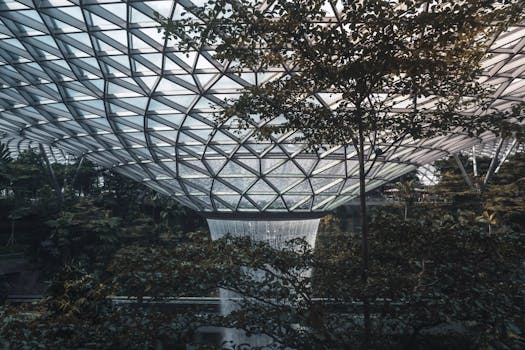
Singapore Changi has long held the crown for the world’s best airport, but its Terminal 2 was lagging behind the futuristic splendor of Jewel and Terminal 4. Taking advantage of multi-year closure periods, Changi’s engineers embarked on a massive expansion project that added 21,000 square meters of space, wrapped entirely in a lush, biophilic embrace.
The Wonderfall and the Dreamscape
As you enter the departure hall, you are greeted by The Wonderfall: a 14-meter-tall, 17-meter-wide curved LED wall that depicts a hyper-realistic, digital waterfall cascading over real, living tropical plants. The water crashes over virtual boulders in real-time, responding to the ambient noise and movement of travelers below.
Step further inside, and you’ll find yourself in the Dreamscape, an indoor garden beneath a digital sky that changes color based on Singapore’s real-time weather conditions. It is an astonishing synthesis of technology and nature.
- The Scent: The terminal has its own signature ambient fragrance, a custom blend of orchid, tea tree, and sandalwood.
- The Sound: Acoustic panels are hidden behind the living walls, dampening the high-frequency din of rolling suitcases and PA announcements.
> Pro-Tip: Head to the upper mezzanine level of the transit area to find the Gourmet Garden. Here, a robotic bartender named Toni mixes complimentary mocktails for transit passengers, while floor-to-ceiling windows offer an unobstructed view of the southern runway.
---
3. Zayed International Airport (AUH): Abu Dhabi’s Sci-Fi Masterpiece
Previously known as Abu Dhabi International, the newly christened Zayed International Airport finally opened its gargantuan Terminal A this year. Originally delayed, the airport authority used the extended downtime to completely recalibrate the terminal's tech stack and interior footprint.
```
▲ [Undulating Steel Canopy] ▲
/ \ / \
/ \ / \
/ \ / \
[ Oasis ] ─── [ Biometrics ] ─── [ Pearl Lounge ]
```
A Cinematic Sense of Scale
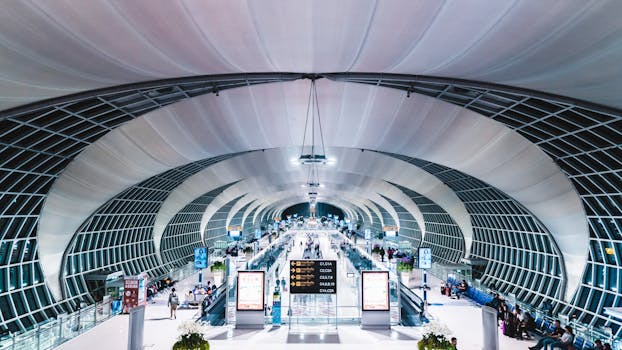
If this terminal looks like something out of a science-fiction epic, that’s because it is. Before its public opening, it served as the filming location for Mission: Impossible – Dead Reckoning. The terminal features a single, undulating roof that spans over 315 meters, supported by massive, curved steel arches that mimic the rolling dunes of the Liwa Desert.
The sheer scale is designed to prevent crowding. Even at peak departure hours, the terminal feels remarkably empty, a feat achieved by distributing check-in desks across massive, isolated "islands" rather than one long, chaotic counter.
Luxury Redefined
The duty-free zone is designed to look like a high-end souk, featuring vaulted ceilings illuminated by soft, golden-hour LED programming.
* The Culinary Star: Todd English’s Olives, offering fresh Mediterranean flatbreads baked in a wood-fired oven right in the center of the terminal.
> Pro-Tip: You don't need a first-class ticket to experience the luxury. The Pearl Lounge offers walk-in access for approximately $60 USD. It features private sleeping pods, hot showers, and a buffet of gourmet Middle Eastern mezze that rivals any five-star hotel in the city.
---
4. Bengaluru Kempegowda Terminal 2 (BLR): The Garden Terminal
Bengaluru (Bangalore) is India’s high-tech capital, but its newest terminal is a breathtaking homage to the city’s historic moniker: "The Garden City." Built and refined during a period of heavily reduced international operations, Terminal 2 is a triumph of sustainable engineering.
```
[ Engineered Bamboo Ceiling ]
│
[ Indoor Forest & Streams ]
│
[ Local Red Brick Cladding ]
```
Engineered Bamboo and Hanging Gardens
Terminal 2 is constructed almost entirely using locally sourced, engineered bamboo. The ceiling is a complex, woven lattice of bamboo strips that filters natural light, creating the illusion of walking through a sun-dappled forest canopy.
- The Greenery: Over 150,000 individual plants, including 150 species of trees and shrubs, are integrated directly into the terminal’s structure.
- The Air Quality: The plants act as natural air purifiers, resulting in a terminal that smells of fresh earth, jasmine, and wet stone.
The Sensory Experience
The floors are made of local granite and red clay bricks, giving the terminal a warm, grounding texture underfoot. Water features, including miniature indoor streams and stepping-stone paths, run parallel to the passenger walkways, providing a calming soundtrack to your journey.
> Pro-Tip: Avoid the crowded main seating areas. Walk toward Gate 15, where you’ll find a series of quiet, semi-private wooden cabanas nestled inside a grove of indoor palm trees. It is the single best spot in the airport to catch up on emails or meditate before a long-haul flight.
---
5. New York JFK Terminal 4 & 6 Previews: The Renaissance of Queens
For decades, JFK was the airport locals loved to hate. However, a massive, multi-billion dollar redevelopment plan—which involved shutting down entire taxiways, rerouting traffic, and consolidating gates during low-occupancy periods—is finally delivering a world-class gateway.
```
[ JFK (Past): Fragmented, Low Ceilings, Endless Queues ]
│
(Tactical Construction)
▼
[ JFK (Today): Queens-Centric Art, Local Craft Beer, Rooftop Views ]
```
A Love Letter to NYC
The newly opened expansions of Terminal 4 (and the highly anticipated previews of Terminal 6) reject the generic corporate aesthetic. Instead, the Port Authority partnered with the Queens Museum to commission massive, site-specific art installations by local New York artists.
The design features high, airy ceilings, industrial-chic brass fittings, and expansive glass curtain walls that flood the gates with natural light.
Hyper-Local Dining
Forget the dry burgers of the past. The new terminal spaces celebrate New York’s diverse culinary landscape.
* The Highlight: Grab a fresh, hand-rolled bagel from a local Queens bakery outpost, or sip a locally brewed IPA at the Mi Casa Cantina.
> Pro-Tip: If you are departing from Terminal 4, look for the hidden outdoor pet relief area near Gate B31. Even if you don't have a dog, this open-air terrace offers some of the most spectacular, unobstructed views of the runway, completely free of dirty terminal glass.
---
Quick Facts & Transit Logistics
To help you plan your next layout or departure, here is a breakdown of the logistics, costs, and key highlights of these newly emerged architectural marvels:
| Airport & Terminal | Key Architectural Highlight | Best Time to Experience | Hidden Spot | Transit Cost to City Center |
| :--- | :--- | :--- | :--- | :--- |
| Milan Linate (LIN) | Biometric FaceBoarding & Matte-Black Italian Design | 10:00 AM – 12:00 PM (Post-morning rush) | Design Reading Nook behind Briciole | ~$2.50 USD (Via Metro M4 line) |
| Singapore Changi (SIN - T2) | The Wonderfall 14m Digital Waterfall | 8:00 PM – 10:00 PM (To see the evening light show) | Gourmet Garden Mezzanine | ~$2.00 USD (Via MRT Train) |
| Abu Dhabi Zayed (AUH - T1) | Undulating desert dune-inspired steel arches | 4:00 PM – 6:00 PM (Golden hour light) | Pearl Lounge (Walk-in sleeping pods) | ~$11.00 USD (Via Airport Express Bus) |
| Bengaluru (BLR - T2) | Woven engineered bamboo ceiling & indoor forest | 6:00 AM – 8:00 AM (When the morning mist hits the gardens) | Garden Cabanas near Gate 15 | ~$3.50 USD (Via Vayu Vajra AC Bus) |
| New York (JFK - T4/T6) | Queens Museum curated local art installations | 2:00 PM – 4:00 PM (Lull between transatlantic banks) | Outdoor Terrace near Gate B31 | ~$11.25 USD (Via AirTrain + Subway) |
---
The Verdict: Why We Must Embrace the Slow Transit
These airports prove that transit doesn't have to be a tax we pay on travel. By utilizing periods of forced closure to radically rethink their purpose, these hubs have transformed themselves into destinations in their own right.
The next time you book a flight, don't just look for the shortest layover. Book the route that lets you wander through Singapore's digital rainforest, sip an espresso in Milan's high-fashion sanctuary, or watch the sunset over the runways of New York. The future of travel has arrived, and it is beautiful.
---