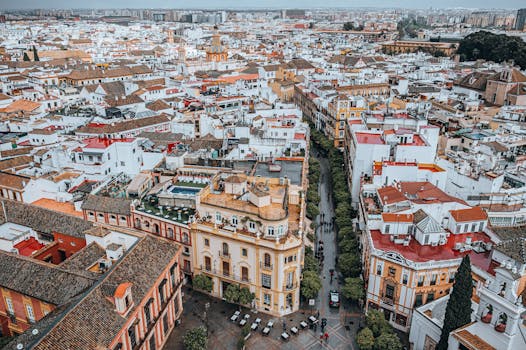
Following a well-planned 4 days in Seville itinerary allows you to experience the rich heritage of the Andalusian capital without rushing. Four days offer the ideal window: two days dedicated to the monumental historic centre and riverside quarters, a third day exploring lesser-known noble palaces and contemporary districts, and a fourth day reserved for deeper museum visits or a brief rail excursion to nearby Córdoba. Seville is compact, mostly flat, and exceptionally walkable, making it one of the most accessible cultural destinations in Southern Europe.
Itinerary at a Glance
| Day | Morning | Afternoon | Evening |
|---|---|---|---|
| Day 1 | Seville Cathedral and La Giralda | Real Alcázar and Gardens | Tapas crawl through Barrio Santa Cruz |
| Day 2 | Plaza de España and María Luisa Park | Torre del Oro and Triana ceramic district | Flamenco show and riverside dinner |
| Day 3 | Palacio de las Dueñas and Casa de Pilatos | Setas de Sevilla and Calle Sierpes | Evening tapas in Alameda de Hércules |
| Day 4 | Day trip to Córdoba (or Seville Fine Arts Museum) | Mezquita-Catedral and Jewish Quarter | Farewell Andalusian dinner in El Arenal |
Note: Prices throughout this guide are approximate estimates in GBP (£) and may fluctuate based on exchange rates and seasonal tariffs. Please check official venue websites to verify current admission fees and operating schedules.
Where to Stay in Seville
Selecting the right neighbourhood shapes your overall experience, as Seville has distinct district profiles within a compact footprint.
- Santa Cruz: The medieval former Jewish quarter places you on the doorstep of the Cathedral and Alcázar. It is pedestrianised, picturesque, and convenient for first-time visitors, though streets can get crowded during midday tour periods.
- El Arenal: Positioned between the historic core and the Guadalquivir River, this area offers classical architecture, traditional bullring heritage, and proximity to fine tapas bars, all while remaining slightly quieter at night than Santa Cruz.
- Triana: Located across the Isabel II Bridge on the west bank of the river, Triana is traditionally renowned for ceramic workshops, maritime history, and flamenco roots. It provides an authentic neighbourhood residential feel, approximately a 15- to 20-minute walk from major sights.
- La Alameda: Centred around a long open plaza north of the centre, this bohemian quarter appeals to travellers seeking relaxed terrace cafes, independent bookshops, and evening dining away from heavy tourist corridors.
Getting Around Seville
Seville is best explored on foot. The vast majority of major sights are clustered within a two-kilometre radius. However, several reliable public transit options are available when you wish to rest your legs:
- Walking: Most routes between the Cathedral, Alcázar, Plaza de España, and Triana take between 5 and 25 minutes on flat terrain.
- MetroCentro (Tram): A single surface tram line runs from Plaza Nueva southwards through the monumental district towards San Bernardo rail station. Standard single tickets cost approx. £1.20.
- Tussam City Buses: The urban bus network covers peripheral districts and train terminals. The circular C3 and C4 lines skirt the historic perimeter, which can be useful on warm afternoons.
- Airport Bus (Line EA): Connects Seville San Pablo Airport (SVQ) to Plaza de Armas in the city centre in roughly 35 minutes. One-way fares are approx. £3.50.
- Bicycles (Sevici): Seville possesses a dedicated network of segregated cycle tracks. Short-term passes for the municipal shared bike system are accessible at automated kiosks across town.
Day 1 of Your 4 Days in Seville Itinerary: Palaces and Old Town
Morning: Seville Cathedral and La Giralda
Begin your trip at the monumental heart of the city with Seville Cathedral (Catedral de Santa María de la Sede), the largest Gothic church in the world. Built on the footprint of a 12th-century Almohad mosque, the interior houses 80 chapels, the tomb of Christopher Columbus, and a massive carved wood altarpiece. After inspecting the nave, ascend the gentle interior ramps of La Giralda—the mosque's preserved minaret turned bell tower—for sweeping views across the terracotta rooftops. Expect to spend 2 to 2.5 hours here. General admission with tower access costs approx. £10 to £14.
Book tickets and tours: Seville Cathedral
Pro tip: Book your entry tickets for the Real Alcázar and Seville Cathedral online several weeks in advance, especially during spring and autumn peak seasons, to avoid queues that can exceed two hours.
Afternoon: Real Alcázar and Barrio Santa Cruz
Cross the Plaza del Triunfo (a 2-minute walk) to the Real Alcázar, an active royal palace showcasing Mudéjar architecture, carved plasterwork, tile courtyards, and expansive Renaissance gardens. Allocate at least 2.5 hours to tour the Palacio del Rey Don Pedro, the Courtyard of the Maidens (Patio de las Doncellas), and the shaded lemon groves. Standard admission runs approx. £12 to £16.
Book tickets and tours: Barrio Santa Cruz
After exiting, wander into the winding labyrinth of Barrio Santa Cruz. Explore Calle Agua, Calle Mateos Gago, and Plaza de Doña Elvira. Stop for a traditional late lunch or midday snack; classic local fare here includes espinacas con garbanzos (spinach with spiced chickpeas) and salmorejo (chilled tomato and garlic soup topped with cured ham and hard-boiled egg).
Evening: Tapas Crawl in the Historic Core
Around 20:30, as local kitchens open for evening service, embark on a tapas crawl through the quiet alleyways of Santa Cruz and neighbouring San Bartolomé. Stand at the timber bars to order small plates: carrillada ibérica (braised pork cheeks in Pedro Ximénez wine), cured Manchego cheese, and dry Manzanilla sherry from nearby Sanlúcar de Barrameda. An evening of generous tapas dining typically costs approx. £18 to £30 per person.
Book tickets and tours: Tapas Crawl
Day 2: Riverside Heritage, Triana, and Flamenco
Morning: Plaza de España and María Luisa Park
From the Cathedral, walk south along Avenida de la Constitución for 15 minutes to reach the Parque de María Luisa. Inside sits the Plaza de España, built for the Ibero-American Exposition of 1929. The grand semi-circular brick complex features tiled alcoves representing every Spanish province, ornate footbridges, and an ornamental canal where rowboats are available for hire (approx. £5 for 35 minutes). Stroll through the shaded orange paths and tiled fountains of the surrounding parkland, which stays pleasantly cool even on sunny mornings.
Book tickets and tours: María Luisa Park
Afternoon: Torre del Oro and Triana
Head northwest along the Paseo de las Delicias along the Guadalquivir River (a 10-minute walk) to the Torre del Oro, a 13th-century military watchtower that houses a compact naval museum (admission approx. £2.50). Cross the iconic Puente de Isabel II (Triana Bridge) into Triana. Spend your afternoon browsing the Mercado de Triana, built atop the ruins of the Castle of San Jorge, and visiting the historic ceramic studios along Calle San Jorge and Calle Antillano Campos. For lunch, sample pescaíto frito (mixed fried fresh fish) and grilled cuttlefish at a riverfront tavern.
Evening: Authentic Flamenco and Calle Betis
Flamenco has deep roots in Triana. Instead of large commercial theatre shows, reserve an intimate performance at a dedicated peña or small cultural venue such as Casa de la Memoria or Teatro Flamenco Triana (tickets approx. £18 to £24). Performances typically last one hour and highlight live guitar, singing, and footwork. Conclude your evening with a leisurely walk down Calle Betis, admiring illuminated views of the Giralda and Torre del Oro reflected on the river waters.
Book tickets and tours: Authentic Flamenco
Day 3: Architecture, Art, and Modern Seville
Morning: Palacio de las Dueñas and Casa de Pilatos
Devote your third morning to Seville's private aristocratic mansions, which blend Mudéjar, Gothic, and Italian Renaissance styles. Begin at the Casa de Pilatos in the San Esteban district (admission approx. £9 to £13), celebrated for its extensive collection of 16th-century glazed tiles (azulejos) and peaceful Roman courtyards. From there, take an easy 12-minute walk north to the Palacio de las Dueñas (admission approx. £10 to £12), former residence of the Duchess of Alba. The palace displays personal art collections, lemon-scented courtyards, and well-preserved private sitting rooms.
Book tickets and tours: Palacio
Pro tip: Many independent cultural sights and churches close between 14:00 and 17:00 for the afternoon break, while dinner services rarely begin before 20:30. Adjust your daily schedule to match local rhythms by planning indoor resting periods during midday heat.
Afternoon: Setas de Sevilla and Centro Shopping
Walk 5 minutes west to the Plaza de la Encarnación to see the Metropol Parasol, locally called Las Setas (The Mushrooms). Completed in 2011, it is among the world's largest timber structures. Take the lift to the winding rooftop walkway (tickets approx. £12 to £14) for panoramic 360-degree views across the city skyline. Below the structure, visit the Antiquarium, an archaeological museum displaying Roman and Moorish ruins excavated during construction. Afterwards, stroll down pedestrian thoroughfares Calle Sierpes and Calle Tetuán for local leather goods and ceramics.
Book tickets and tours: Centro Shopping
Evening: Dining in Alameda de Hércules
Head north for 10 minutes to the Alameda de Hércules, a broad public promenade flanked by Roman columns and leafy trees. This area provides a contemporary contrast to Santa Cruz. Enjoy evening tapas at modern Andalusian bistros serving dishes like tuna tartare, slow-roasted artichokes, and local craft vermouth. The atmosphere here is lively, with outdoor terraces operating late into the evening.
Book tickets and tours: Dining
Day 4: Cultural Deep Dive or a Day Trip to Córdoba
Morning: High-Speed Train to Córdoba (or Fine Arts Museum)
With four days, you have the flexibility to take an easy day trip. Head to Seville Santa Justa station and board a Renfe high-speed train (Avant or AVE) to Córdoba. The journey takes just 40 to 45 minutes, with return tickets typically costing approx. £22 to £40 when booked ahead.
Book tickets and tours: High-Speed Train
Alternative option: If you prefer to stay within Seville, spend your morning at the Museum of Fine Arts (Museo de Bellas Artes) in Plaza del Museo. Housed in a restored 17th-century convent, it holds Spain's second-largest fine arts collection, highlighting masterworks by Murillo, Zurbarán, and Valdés Leal (admission approx. £1.50, free for EU citizens).
Afternoon: The Mezquita-Catedral and Judería
If visiting Córdoba, walk 20 minutes from the rail station into the historic Judería (Jewish Quarter) to reach the Mezquita-Catedral (Mosque-Cathedral). This architectural wonder features a hypostyle hall of over 850 red-and-white double-arched columns, at the centre of which sits a 16th-century Renaissance cathedral nave (tickets approx. £11 to £13). Afterwards, stroll down the famous Calleja de las Flores, visit the Alcázar de los Reyes Cristianos, and enjoy lunch featuring local specialities like flamenquín (cured pork loin rolled with ham, breaded and fried) and thick Cordoban salmorejo.
Evening: Farewell Andalusian Feast in Seville
Catch an early evening train back to Seville Santa Justa. Spend your final night in the El Arenal neighbourhood, near the historic Plaza de Toros de la Maestranza. Reserve a table at a classic tavern for a celebratory multi-course dinner. Indulge in grilled Iberian pork cuts (pluma or secreto ibérico), accompanied by a glass of full-bodied red wine from the neighbouring Ronda hills, completing your Andalusian journey.
Common Mistakes to Avoid
- Visiting in midsummer without planning: July and August temperatures in Seville routinely exceed 40°C (104°F). If visiting during summer, conduct all outdoor activities before 11:30 or after 20:00. Spring (March to May) and autumn (October to November) provide far more temperate weather.
- Not booking the Alcázar in advance: Entry slots are strictly capped. Turning up without a pre-booked time slot frequently leads to disappointment or missed access.
- Arriving for dinner too early: Many quality restaurants do not start dinner service until 20:30 or 21:00. Venues welcoming diners at 18:00 often cater exclusively to tourists and may offer lower-quality reheated dishes.
- Relying on rental cars: Central Seville has narrow streets, extensive pedestrian-only sectors, and strict vehicle emission limits. Cars are an expensive liability in town; use trains and your feet instead.
Plan Your Trip
Designing a smooth Spanish holiday requires balancing advance reservations, transport links, and leisure time for spontaneous tapas stops. Create your custom day-by-day plan with TripBuilder to organise sights, optimise daily routes, and experience Seville at your own pace.
Frequently asked questions
Is 4 days enough time to visit Seville?
Yes, four days is an ideal timeframe to see Seville's headline monuments, including the Cathedral and Real Alcázar, without rushing. It also leaves sufficient time to explore traditional residential quarters like Triana and take a short day excursion to nearby Córdoba.
What is the best month to visit Seville?
Spring (March to May) and autumn (October to November) are typically the best times to visit, offering mild daytime temperatures between 20°C and 26°C. Avoid midsummer months like July and August, when intense daytime heat regularly exceeds 40°C.
Do you need a car for 4 days in Seville?
No, you do not need a car. Seville is a flat, highly walkable city with an efficient tram, local bus system, and high-speed rail connections to neighbouring Andalusian cities from Santa Justa station.
How much does a 4-day trip to Seville cost?
A mid-range traveller can typically expect to spend approx. £70 to £130 per person per day, excluding long-haul flights. This estimate covers boutique hotel accommodation, daily monument admissions, local transit, and generous tapas-style meals with drinks.
Can you do a day trip to Granada or Córdoba from Seville?
Córdoba is very easy to visit, taking just 40 to 45 minutes on the high-speed train. Granada is possible via a direct train taking roughly 2.5 hours each way, though it requires booking Alhambra tickets far in advance and makes for a significantly longer day.