The Hook: 300 km/h and a Glass of Tempranillo
I stepped off the train at Barcelona Sants, and my ears didn’t pop once. There was no luggage carousel wait, no passive-aggressive customs queue, and no €50 taxi ride from a distant runway. Instead, I was greeted by the heavy, sweet aroma of freshly fried churros and the distant hum of Catalan chatter. Just two and a half hours earlier, I had been sitting in Madrid’s Atocha station, watching the morning sun filter through its indoor tropical botanical garden.
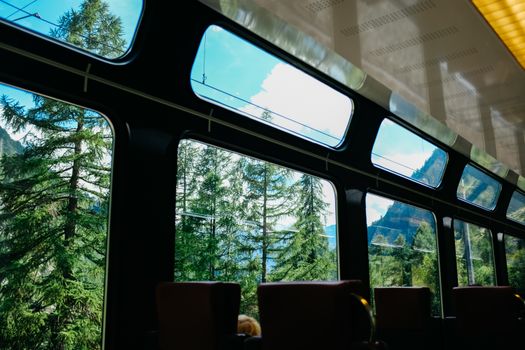
During the journey, the Castilian plateau blurred past at a quiet 310 km/h while I worked on spacious Wi-Fi, sipping a bold Rioja served in an actual glass. No turbulence. No middle-seat elbow wars.
This isn't just a romantic way to travel; it is a highly efficient logistics system. Across the globe, a quiet revolution is taking place. Governments are banning short-haul flights, and travel experts are recommending specific train routes that are faster, cheaper, and infinitely more civilized than flying.
If you are still booking short flights between major hubs, you are losing valuable time and energy. Here are the five definitive train routes that replaced short flights experts are recommending right now.
---
1. Madrid to Barcelona: The Battle of the High-Speed Rails
```
Route: Madrid Puerta de Atocha to Barcelona Sants
Distance: 506 km (314 miles)
Fastest Transit Time: 2 hours 30 minutes
Key Operators: Renfe (AVE/Avlo), Iryo, Ouigo España
```
For decades, the Madrid-Barcelona air corridor was one of the busiest in the world. Today, the high-speed rail line captures over 80% of the passenger traffic between Spain’s two largest cities. It is the ultimate proof of concept for rail replacing aviation.
Because Spain liberalized its rail market, three competing operators now run on these tracks. This competition has driven prices down and quality up. You can choose between the sleek, ultra-premium Iryo (featuring red leather seats and gourmet dining), the classic state-run AVE, or low-cost disruptors like Ouigo and Avlo.
As you depart Madrid, the train quickly accelerates out of the urban sprawl into the arid, dramatic plains of Aragon. Keep your eyes peeled for the rugged red clay canyons near Calatayud and the distant, snow-capped Pyrenees as you approach Catalonia.
- The Expert Insider Tip: Don’t just book the cheapest ticket. If you book Iryo’s "Infinita" class, you get access to the VIP lounges at the station, ultra-wide seats, and a hot meal curated by Spanish chefs delivered directly to your seat with premium local wines.
- The Hidden Detail: At Madrid Atocha, do not use the main modern entrance. Enter through the historic 19th-century canopy building. Inside, you’ll find a massive 4,000-square-meter tropical garden complete with towering palm trees and a humid microclimate that makes you forget you’re in a train station.
---
2. Paris to Bordeaux: The Two-Hour Wine Express
```
Route: Paris Gare de Montparnasse to Bordeaux Saint-Jean
Distance: 500 km (310 miles)
Fastest Transit Time: 2 hours 4 minutes
Key Operators: SNCF (TGV InOui), Ouigo
```
In 2021, France officially banned domestic flights on routes that can be traveled by train in under two and a half hours. The poster child for this green transition is the Paris-to-Bordeaux line.
Before the Lise Océane high-speed line opened, the journey took over three hours, making the flight from Orly to Mérignac highly competitive. Today, the TGV InOui covers the distance in a mere 124 minutes. Flying this route is now functionally slower when you factor in the commute to Paris's outer airports, security checks, and boarding times.
Departing from Gare de Montparnasse, the double-decker TGV Duplex glides through the Loire Valley, crossing historic stone viaducts and passing within sight of ancient châteaux before pulling into Bordeaux Saint-Jean. The station itself is a masterpiece, featuring a massive 19th-century glass roof designed by Gustave Eiffel’s workshop.
- The Expert Insider Tip: Book an upper-deck seat ("Salle Haute") on the TGV Duplex. The elevated vantage point offers superior views over the rolling vineyards of the Aquitaine region.
- The Hidden Detail: When arriving at Bordeaux Saint-Jean, skip the main exit taxis. Walk out of the Belcier exit (south side) and head to Boulangerie Jocteur inside the station hall for a fresh Canelé—Bordeaux’s signature caramelized rum-and-vanilla pastry—baked fresh daily.
---
3. Rome to Milan: Decimating the National Airline
```
Route: Roma Termini to Milano Centrale
Distance: 477 km (296 miles)
Fastest Transit Time: 2 hours 59 minutes
Key Operators: Trenitalia (Frecciarossa), Italo
```
The Rome-to-Milan air route was once the crown jewel of Italy’s former national carrier, Alitalia. Today, that air market is practically non-existent. The introduction of the Frecciarossa 1000 (the "Red Arrow") and the private competitor Italo turned a painful travel day into a sleek commuter run.
Traveling at speeds up to 300 km/h, the train cuts straight through the spine of Italy. You will watch the Tuscan hills, dotted with cypress trees and rustic stone farmhouses, give way to the flat, fertile Po Valley, before arriving directly in the heart of Milan.
Milano Centrale station is an architectural marvel in itself—a monumental blend of Art Deco and Liberty styles designed to inspire awe. You step off the train directly into the fashion capital, with the metro waiting just floors below.
- The Expert Insider Tip: If traveling on Trenitalia’s Frecciarossa, look for the "Silent" (Silenzio) area in Business Class. It is strictly monitored, meaning no loud phone calls or noisy video games—just the quiet hum of the rails and complimentary Italian espresso.
- The Hidden Detail: The Frecciarossa’s Executive Class features a private meeting room with a conference table and rotatable leather armchairs. If you want to travel like a corporate magnate or a high-end diplomat, this is the gold standard of European rail.
---
4. Tokyo to Kyoto: The Gold Standard of Precision
```
Route: Tokyo Station to Kyoto Station
Distance: 513 km (318 miles)
Fastest Transit Time: 2 hours 15 minutes (Nozomi Shinkansen)
Key Operators: JR Central (Tokaido Shinkansen)
```
While Europe is currently undergoing a rail renaissance, Japan has been perfecting the art of the high-speed train since 1964. The Tokaido Shinkansen line between Tokyo and Kyoto is the busiest high-speed rail line in the world, completely eliminating any logical need to fly between these two cultural capitals.
The Shinkansen operates with a legendary average delay of less than a minute. It is quiet, exceptionally clean, and remarkably spacious, offering legroom that rivals international first-class flights.
As the train speeds out of Tokyo’s neon sprawl, the landscape shifts to coastal towns, green tea plantations, and steep forested mountains. On a clear day, the highlight of the trip appears approximately 45 minutes after departure: a majestic, unobstructed view of Mount Fuji rising above the horizon.
- The Expert Insider Tip: When booking your ticket (specifically the Nozomi train), always request Seat E in Ordinary Class (or Seat D/E in Green Car). These are the window seats on the right side when traveling west from Tokyo to Kyoto, offering the iconic view of Mount Fuji.
- The Hidden Detail: Do not buy generic snacks for this trip. Arrive at Tokyo Station 30 minutes early and visit Ekibenya Matsuri in the central passage. This shop stocks over 200 types of Ekiben (station bento boxes) sourced from regional stations across Japan, featuring local delicacies like Wagyu beef, fresh sea urchin, and seasonal vegetables.
---
5. London to Amsterdam: The Undersea City-Linker
```
Route: London St Pancras International to Amsterdam Centraal
Distance: 541 km (336 miles)
Fastest Transit Time: 3 hours 52 minutes
Key Operators: Eurostar
```
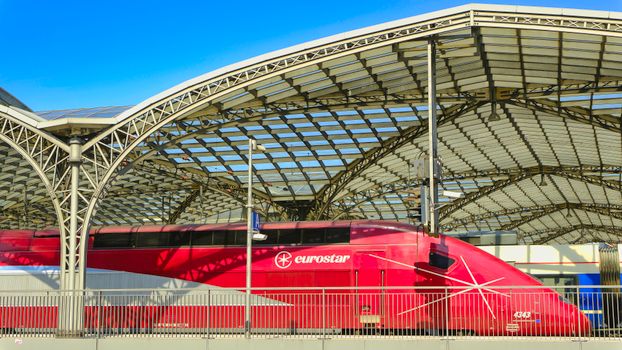
Historically, the flight from London to Amsterdam was a notorious bottleneck of delays, security queues, and turbulent crossings over the North Sea. The direct Eurostar link changed everything, connecting two of Europe’s most vibrant capitals in under four hours.
Departing from the Gothic revival masterpiece of London St Pancras, the train plunges through the Channel Tunnel, zips across the flat plains of northern France, bypasses Brussels, and glides through the Dutch countryside before terminating at the water-facing Amsterdam Centraal.
When you factor in the journey to Heathrow or Gatwick, the two-hour pre-flight arrival window, the flight time, and the train ride from Schiphol into Amsterdam, the Eurostar easily wins the door-to-door time battle.
- The Expert Insider Tip: Book Eurostar Premier (formerly Business Premier). Not only do you get a three-course meal designed by Michelin-starred chefs, but you also gain access to the exclusive lounges in London and Amsterdam, which feature self-serve cocktail bars, premium draft beers, and quiet workspaces.
- The Hidden Detail: At London St Pancras, skip the crowded main concourse cafes. Head to the Searcys Champagne Bar—the longest champagne bar in Europe—located right alongside the Eurostar tracks. You can enjoy a glass of vintage bubbly right up until your boarding call.
---
Budget, Logistics & Quick Facts
To help you plan your next flight-free adventure, here is a comprehensive breakdown of the key logistics for these expert-recommended routes.
| Route | Average One-Way Cost (Standard) | Best Time to Book | How to Get Tickets | Expert Rating |
| :--- | :--- | :--- | :--- | :--- |
| Madrid to Barcelona | €19 - €89 | 30-60 days in advance | iryo.eu, renfe.com, ouigo.com | ⭐⭐⭐⭐⭐ (5/5) |
| Paris to Bordeaux | €25 - €110 | 90 days in advance | sncf-connect.com | ⭐⭐⭐⭐☆ (4.5/5) |
| Rome to Milan | €39 - €95 | 30 days in advance | trenitalia.com, italotreno.it | ⭐⭐⭐⭐⭐ (5/5) |
| Tokyo to Kyoto | ¥14,000 (~$95 USD) | Fixed price (book anytime) | smart-ex.jp or JR Station | ⭐⭐⭐⭐⭐ (5/5) |
| London to Amsterdam | £50 - £180 | 120-180 days in advance | eurostar.com | ⭐⭐⭐⭐☆ (4.5/5) |
---
The Verdict: Why the Experts are Right
The era of the casual 45-minute flight is drawing to a close. Choosing the train over a short flight is no longer just an environmental sacrifice; it is a lifestyle upgrade.
By choosing high-speed rail, you gain downtown-to-downtown convenience, generous luggage allowances, reliable Wi-Fi, and the physical space to relax. The next time you plan a journey between these major global hubs, skip the airport search engines. Go straight to the rails—your peace of mind will thank you.
---