The Great Rail Shift: Why Short-Haul Flights Are Dying
I stepped off the train at Bordeaux Saint-Jean, inhaling the warm, buttery aroma of freshly baked canelés drifting from a station kiosk, and checked my watch. Exactly two hours and four minutes ago, I was standing beneath the glass vaulting of Paris Gare Montparnasse. No body scanners, no liquid limits, no crammed airport transfer buses, and zero jet fuel burned.
While air passengers on the same corridor were likely still waiting at Charles de Gaulle’s baggage carousel after enduring security queues and tarmac delays, I was already walking toward a tram bound for the historic city center.
This isn't an anomaly; it is a seismic shift in global travel infrastructure.
According to recent data from the European Rail Timetable, the Centre for Aviation (CAPA), and national transport ministries, travelers are abandoning short-haul regional flights at unprecedented rates. The European Union's push to slash transport emissions, combined with France’s legislative ban on domestic flights where a direct train under 2.5 hours exists, has accelerated a trend that market forces were already driving. When rail operators deliver 300 km/h (186 mph) speeds alongside city-center departures, free Wi-Fi, and generous luggage policies, the airline value proposition crumbles.
The "Door-to-Door Math" tells the real story:
* Short-Haul Flight: 45-min city-to-airport transit + 120-min pre-flight buffer + 60-min flight time + 45-min taxi/baggage wait = 4 hours, 30 minutes.
* High-Speed Rail: 15-min city-center subway + 15-min platform walk + 120-min direct train ride = 2 hours, 30 minutes.
Below are the six primary routes where recent traffic data demonstrates that high-speed rail has successfully crushed short-haul air travel.
---
1. Paris to Bordeaux (TGV InOui)
* Pre-Rail Flight Share: ~65% | Current Rail Share: ~85%
When France officially banned domestic flights on routes serviced by rail alternatives under 2.5 hours, the Paris-to-Bordeaux corridor became the international poster child for green transit policy. The opening of the South Europe Atlantic high-speed line reduced travel time from over three hours to a blistering 2 hours, 04 minutes. Air France subsequently slashed its domestic schedule on this corridor, yielding almost total market dominance to SNCF’s double-decker TGV InOui fleets.
The experience onboard is effortless. Sleek, dark-gray TGV sets glide across the Loire Valley at speeds reaching 320 km/h. Smooth pneumatic suspension neutralizes any sensation of speed, allowing you to drink an espresso in the upper-deck bar car without spilling a drop.
- Pro-Tip: Book a seat on the Upper Deck (Voiture Directe, Deck 2) on the left side of the train when leaving Paris. You will get elevated, unobstructed views of the rolling vineyards of the Aquitaine region.
- Hidden Station Hack: Skip the overpriced chain cafes inside Gare Montparnasse. Walk across the street to La Brioche Chaude on Rue de la Gaîté for a fresh ham-and-cheese croissant before passing through the electronic boarding gates.
---
2. Madrid to Barcelona (AVE, Iryo, & Ouigo Spain)
* Pre-Rail Flight Share: ~85% | Current Rail Share: >80%
For decades, the Puente Aéreo (Air Bridge) between Madrid-Barajas and Barcelona-El Prat was one of the busiest air routes in Europe. Today, that route is a shadow of its former self. The introduction of aggressive rail competition—where Spanish national operator Renfe (AVE/Avlo) competes head-to-head with French-backed Ouigo and Italian-backed Iryo—has slashed ticket prices and boosted train passenger numbers to historic highs.
Trains now whisk passengers between Madrid's Atocha Station and Barcelona's Sants Station in just 2 hours, 30 minutes. With three competing rail brands, prices drop as low as €9 for advance bookings.
- Pro-Tip: If comfort is your priority, book Iryo’s "Infinita" Class. It features wide, plush red-leather seats, dedicated at-seat hot meals cooked by onboard staff, and access to private lounge facilities before departure.
- Authentic Hack: Arrive at Madrid Atocha 40 minutes early. Skip the crowded main terminal waiting area and walk inside the tropical botanical garden constructed right inside the old station building. Grab a café con leche at the tucked-away counter on the upper mezzanine overlooking 7,000 plants and turtle ponds.
---
3. Rome to Milan (Frecciarossa 1000)
* Pre-Rail Flight Share: ~50% | Current Rail Share: ~80%
The Rome–Milan route was once the crown jewel of Italy’s national airline, Alitalia. Today, high-speed rail has effectively crippled air travel along Italy's primary economic spine. The introduction of the Frecciarossa 1000—capable of commercial operating speeds of 300 km/h—connects Roma Termini to Milano Centrale in a non-stop 2 hours, 59 minutes.
By eliminating airport security, luggage drop delays, and the long suburban trek from Milan Malpensa or Rome Fiumicino, Trenitalia and its private high-speed competitor, Italo, captured over 80% of total passenger traffic on the route. Alitalia's successor, ITA Airways, was forced to dramatically downsize its regional frequency as a result.
- Pro-Tip: Select the Area Silenzio (Quiet Zone) in Business Class on Trenitalia's Frecciarossa. Mobile phone calls and loud music are strictly prohibited, giving you three hours of uninterrupted productivity or rest.
- Insider Detail: Upon arrival at Milano Centrale, bypass the chaotic main taxi queue out front. Follow signs down to the metro mezzanine level, exit toward the side portal near Via Vitruvio, and flag down cabs at the secondary taxi stand—it usually cuts wait times by 20 minutes.
---
4. Tokyo to Osaka (Tokaido Shinkansen)
* Pre-Rail Flight Share: ~40% | Current Rail Share: >85%
Long before Europe began passing flight bans, Japan perfected high-speed rail. The Tokaido Shinkansen line, operated by JR Central, connects Tokyo Station to Shin-Osaka in 2 hours, 21 minutes via the top-tier Nozomi express service. Trains depart every three to five minutes during peak hours, matching the frequency of an urban subway system.
With an average delay measured in seconds per year, the Shinkansen rendered short-haul flights between Tokyo’s Haneda/Narita airports and Osaka’s Itami airport largely irrelevant for domestic travelers.
- Pro-Tip: When booking your seat, request Seat E in Economy or Seat D in Green Car (First Class) on the right side traveling west from Tokyo to Osaka. Exactly 45 minutes after departure, as the train blasts past Shin-Fuji Station, you will get a pristine, direct view of Mount Fuji.
- Culinary Detail: Never board empty-handed. Head to Ekiben Ya Matsuri on the ground level of Tokyo Station near the Central Passage. This massive market stocks over 200 varieties of fresh Ekiben (station bento boxes), regional sake, and warm green tea crafted specifically for train journeys.
```
[TOKYO STATION]
│ (Nozomi Express - 2h 21m)
▼
[MOUNT FUJI VIEWPOINT] (Seat E / Right Side)
│
▼
[SHIN-OSAKA]
```
---
5. Berlin to Munich (ICE Sprinter)
* Pre-Rail Flight Share: ~60% | Current Rail Share: ~75%
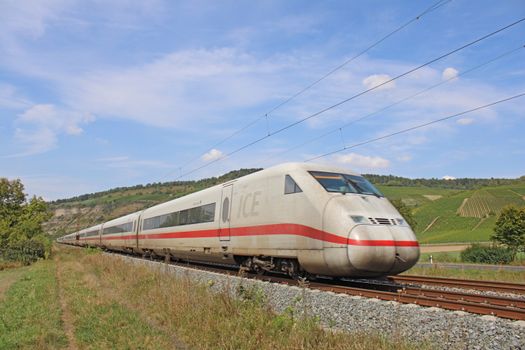
When Deutsche Bahn opened the reconstructed high-speed rail line through the Thuringian Forest, the journey time between Germany's political capital and its southern industrial hub plummeted from six hours to 3 hours, 55 minutes on non-stop ICE Sprinter services.
Data from Deutsche Bahn indicates that rail market share on the route doubled almost overnight, stripping hundreds of thousands of annual passengers away from Lufthansa's regional flights between Berlin Brandenburg (BER) and Munich Airport (MUC).
- Pro-Tip: Book the ICE Sprinter specifically (indicated by an "IS" designation on booking apps). These elite trains bypass intermediate stations like Erfurt and Nuremberg, carving nearly 30 minutes off standard InterCityExpress routes.
- Hidden Hack: Deutsche Bahn ICE trains feature a dedicated Bordrestaurant (dining car). Unlike packaged food on airplanes, you can sit at a table set with real porcelain and silverware and order a draft Pilsner along with fresh Currywurst or Kässpätzle while watching the German countryside fly past at 300 km/h.
---
6. London to Edinburgh (LNER Azuma & Lumo)
* Pre-Rail Flight Share: ~55% | Current Rail Share: >60%
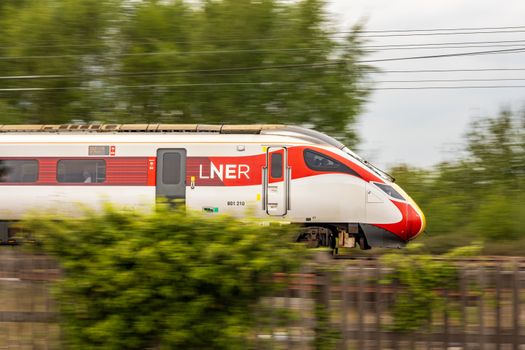
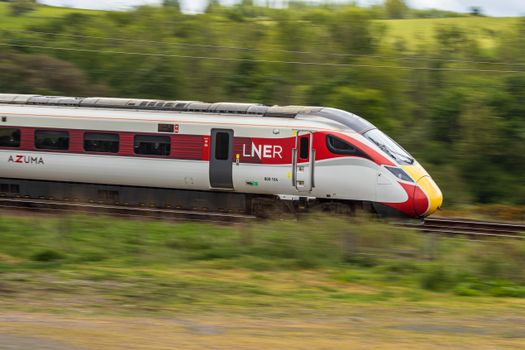
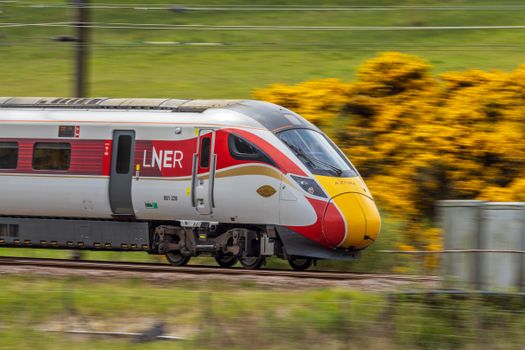
The East Coast Main Line connecting London King’s Cross to Edinburgh Waverley has historically been dominated by budget airlines operating out of Gatwick, Luton, and Stansted. However, the introduction of LNER’s bi-mode Azuma trains—and more recently, the launch of Lumo, an all-electric, low-cost open-access rail operator—has turned the tide.
Covering the 393-mile trip in 4 hours, 15 minutes, trains deliver travelers directly from central London into the heart of Edinburgh's Old Town, beneath the shadow of Edinburgh Castle. Lumo’s budget-friendly pricing structure forced airlines like EasyJet and British Airways to rethink their scheduling as environmental consciousness among UK commuters hit an all-time high.
- Pro-Tip: Reserve a seat on the RIGHT side of the train (Seats A/B) facing direction of travel when heading north from London. Between Newcastle and Berwick-upon-Tweed, the tracks run directly along coastal cliffs, providing dramatic views of the North Sea and Holy Island.
- Station Trick: At London King's Cross, skip the main concourse board crowds. The LNER app releases platform numbers roughly 5 minutes before they flash on the big screens. If you keep the live train tracker open on your phone, you can walk directly to the gate line before the general rush.
---
Master Route Comparison & Logistics Guide
| Route | Primary High-Speed Train | Fastest Transit Time | Carbon Reduction vs Flight | Avg Advance Ticket ($/€/£) | Best Booking Platform |
| :--- | :--- | :--- | :--- | :--- | :--- |
| Paris ➔ Bordeaux | TGV InOui | 2h 04m | -95% | $19 - $45 | SNCF Connect |
| Madrid ➔ Barcelona | Iryo / AVE | 2h 30m | -90% | $10 - $35 | Trainline / Iryo.eu |
| Rome ➔ Milan | Frecciarossa 1000 | 2h 59m | -88% | $35 - $65 | Trenitalia |
| Tokyo ➔ Osaka | Tokaido Shinkansen (Nozomi) | 2h 21m | -85% | $95 - $110 | SmartEX App |
| Berlin ➔ Munich | ICE Sprinter | 3h 55m | -82% | $25 - $55 | DB Navigator |
| London ➔ Edinburgh | Lumo / LNER Azuma | 4h 15m | -80% | $25 - $50 | LNER / Lumo App |
---
How to Book Rail Routes Like an Insider
Navigating foreign rail systems can be daunting if you don't know the rules of yield management. Apply these three golden principles to secure the best seats and lowest prices:
1. Master the 90-Day Booking Window
Unlike airfares, which often fluctuate unpredictably over a year, rail ticket pricing is tied strictly to rolling release windows. Operators like SNCF (France), Trenitalia (Italy), and Deutsche Bahn (Germany) release cheap advance tickets (Prem's, Super Economy, or Sparpreis) exactly 90 to 120 days before departure. Setting a calendar reminder for the release date can net you First Class seats for lower costs than standard airfare.
2. Avoid Third-Party Markup Traps
While aggregator sites are convenient for route planning, always complete your final purchase directly through the official national rail operator's app (e.g., DB Navigator, SNCF Connect, SmartEX). Third-party booking engines frequently add booking fees, omit seat selection maps, and fail to send real-time SMS alerts if a platform changes or a delay occurs.
3. Embrace Luggage Freedom
One of the key competitive advantages rail holds over air travel is the absence of restrictive baggage fees. Most high-speed operators do not weigh bags or limit liquids. However, train storage racks fill up quickly on sold-out routes.
* The Golden Strategy: Arrive on the platform 15 minutes before departure. Board as soon as the train doors open to secure space in the floor-level luggage racks located at the end of each car, keeping your heavy suitcases within easy sight.
The data is clear: high-speed rail is no longer just an alternative to short-haul flying—it has officially surpassed it. By choosing the track over the tarmac, you don't just reduce your personal carbon footprint by up to 95%; you reclaim time, space, and the sheer pleasure of watching the world unfold through your window.
---