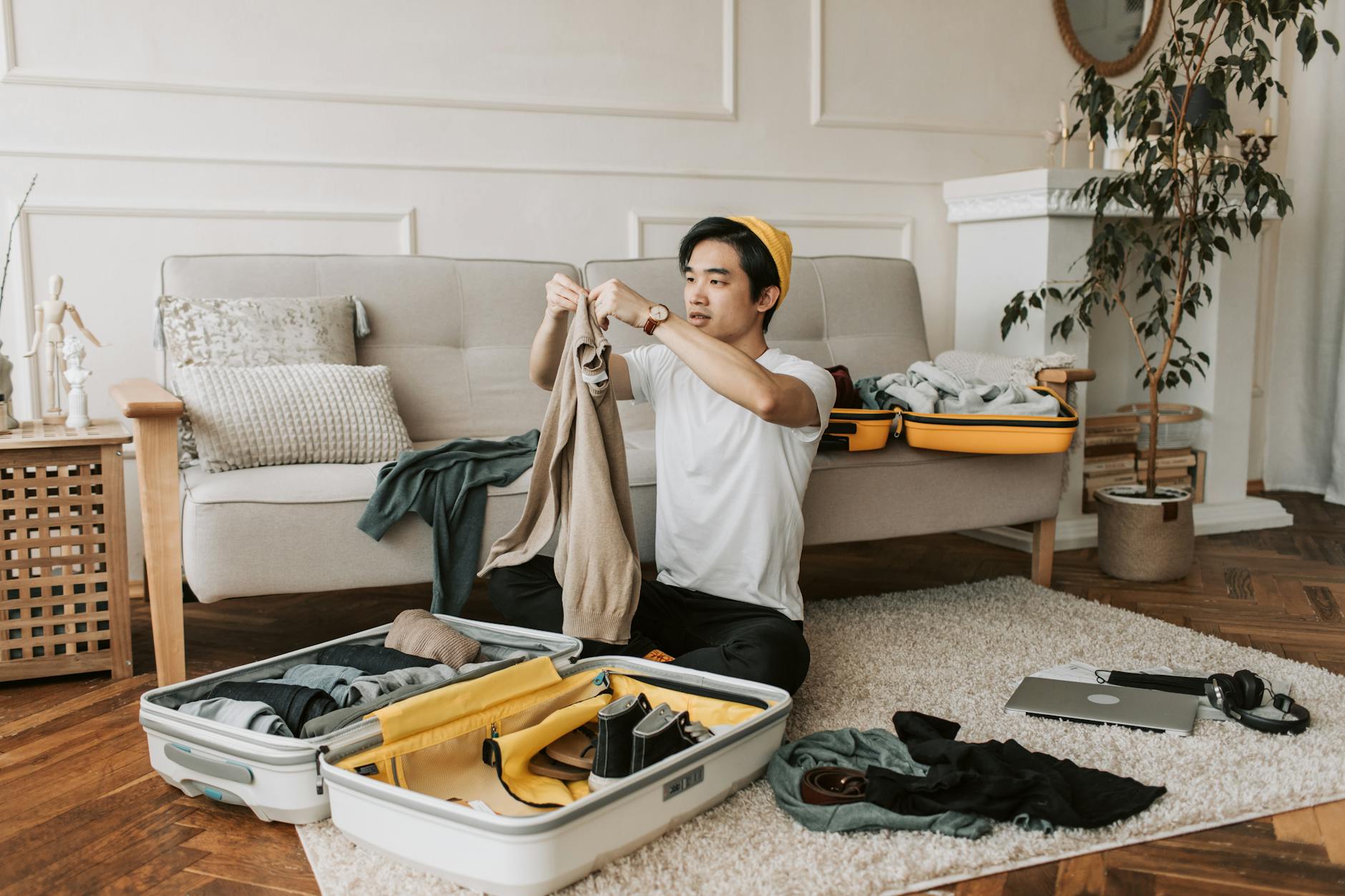
Oh, the memories! Picture this: a sweltering August afternoon in Rome, the cobblestone streets radiating heat, and me, a fresh-faced, wildly optimistic traveler, attempting to drag a monstrous 25kg suitcase up the Spanish Steps. My face was crimson, my arms ached, and my meticulously planned "chic Roman holiday" outfit was drenched in sweat. I distinctly remember a group of Italian nonnas chuckling at my plight, probably wondering why anyone would inflict such torture upon themselves. That day, amidst the ancient grandeur and the mocking laughter, I had an epiphany: there had to be a better way.
That embarrassing, sweat-soaked struggle was the catalyst. It was the moment I vowed to become a packing ninja, a minimalist marvel, a carry-on conqueror. Over countless trips, from backpacking through Southeast Asia to city breaks in Europe and road trips across the Americas, I've experimented, failed, learned, and refined. And today, I’m thrilled to share the packing hacks that didn't just change my travel life, but genuinely blew my mind. These aren't just tips; they're travel commandments that will liberate you from baggage fees, backaches, and travel stress. Ready to have your mind blown? Let's dive in!
1. The Mindset Shift: Your Travel Identity & The "What If" Trap
Before you even think about opening your suitcase, you need to open your mind. This is arguably the most crucial hack of all. For years, I was a victim of the "what if" trap. "What if it rains?" (pack three jackets). "What if I get invited to a fancy dinner?" (pack a cocktail dress). "What if I decide to go hiking and swimming and visit a museum all in one day?" (pack gear for all three). The result? A suitcase bursting at the seams with items I’d never use.
The Revelation:
Most "what ifs" never happen. And if they do, you can almost always buy or borrow what you need at your destination. Think about it: unless you're heading to the remote Amazon, most places have shops!
My Personal Anecdote:
On a trip to Kyoto, Japan, I packed a heavy rain jacket and waterproof boots, fearing the notorious Japanese rainy season. It barely drizzled for an hour. Meanwhile, I found myself desperately needing a lighter, more stylish jacket for the cool evenings and ended up buying one for about ¥4,000 (roughly $30 USD) from a local store. The heavy gear I lugged across the Pacific? Untouched.
Actionable Advice:
- Define Your Trip's Purpose: Is it an adventure trip? A relaxing beach holiday? A cultural city exploration? Your packing list should reflect this primary purpose.
- Embrace the 3-Day Rule (and mix-and-match): For clothes, think about a maximum of 3-4 outfits that can be mixed and matched to create more looks. Plan to do laundry (even just handwashing in a sink) every few days.
- The "One Week" Challenge: Try to pack for any trip, no matter the duration, as if it's only one week. You'll be amazed how much you can condense.
- The "Buy It There" Philosophy: For non-critical items, especially bulky ones like sunscreen (if you're not picky about brands) or an extra scarf, consider buying them upon arrival. This saved me €15 in baggage fees on a budget flight from Berlin to Lisbon when I realized I could just grab a cheap umbrella there if needed.
2. The Rolling Revolution & The Power of the Cube
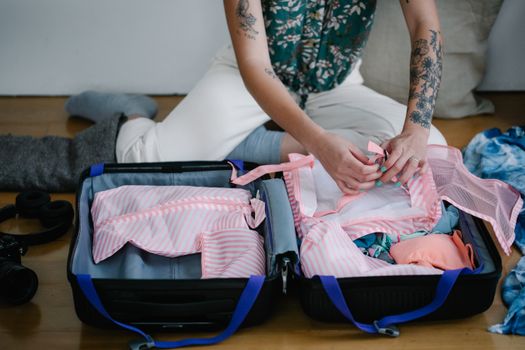
This is where the magic truly begins. If you're still folding clothes flat, stop. Just stop. You're wasting precious space and inviting wrinkles. And if you're not using packing cubes, you're missing out on a fundamental level of organization that will change your life.
The Revelation:
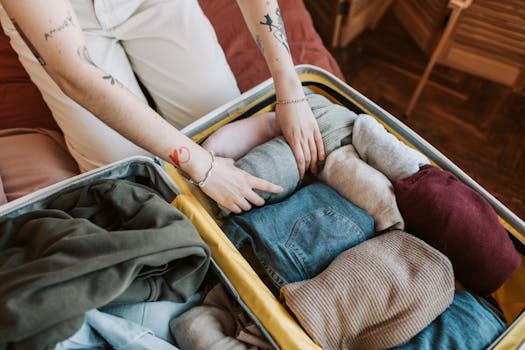
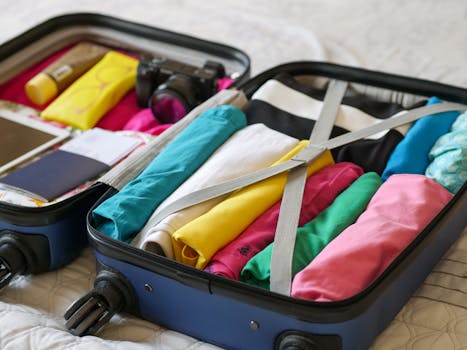
Rolling clothes tightly not only saves space but also minimizes wrinkles. Packing cubes then take that efficiency and amplify it, turning your chaotic suitcase into a beautifully organized dresser drawer.
My Personal Anecdote:
My first experience with packing cubes was on a three-week backpacking trip through Vietnam and Cambodia. Before, my backpack was a black hole of clothes. With cubes, I could pull out my "tops" cube, grab a shirt, and put it back without disturbing anything else. It felt like I had a tiny, portable wardrobe. When my hostel room in Hoi An was tiny, I just pulled out my cubes and lived straight from them. It was pure genius!
Actionable Advice:
- Master the Roll:
- T-shirts & Tops: Fold sleeves in, then roll tightly from the bottom hem upwards.
- Pants & Shorts: Fold in half lengthwise, then roll from the cuff to the waistband.
- Delicates: Roll underwear and socks into small bundles.
- Sweaters/Bulkier Items: Roll these too, but perhaps not as tightly to avoid stretching.
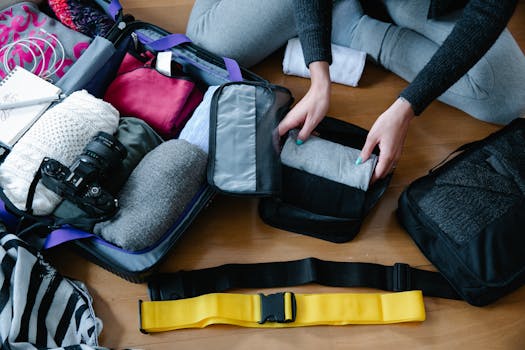
- Invest in Quality Packing Cubes:
- Variety of Sizes: Get a set with different sizes. I typically use a large one for bottoms/dresses, a medium for tops, a small one for underwear/socks, and an extra-small for swimsuits/accessories.
- Compression Cubes (Game Changer!): For bulkier items like jackets, fleeces, or extra sweaters (e.g., for a winter trip to Iceland or Patagonia), compression cubes are a revelation. They have an extra zipper that squishes out air, reducing volume by up to 50%. I fit a puffer jacket and two fleeces into one medium compression cube for my trip to the Canadian Rockies!
- Designated Purposes: Assign each cube a purpose (e.g., "clean clothes," "dirty laundry," "tech gear," "swimwear"). This makes finding things a breeze and keeps dirty clothes separate.
- Strategic Placement: Place rolled clothes snugly into cubes. Fill any gaps with smaller items like socks or belts. Then, arrange the cubes in your suitcase like Tetris blocks, utilizing every inch.
3. Toiletries Tamed: Small Bottles, Big Impact
The bathroom bag can be a silent killer of precious luggage space and weight allowance. Full-sized bottles are a no-go for light travel. Plus, who wants to deal with a shampoo explosion mid-flight? (Been there, done that, cleaned conditioner out of my camera bag in Thailand – not fun!).
The Revelation:
Most of your personal care routine can be condensed, decanted, or swapped for solid alternatives.
My Personal Anecdote:
After the aforementioned shampoo explosion incident (which, by the way, happened on a bus from Bangkok to Chiang Mai, making the clean-up extra challenging), I declared war on liquid toiletries. My first win was discovering solid shampoo bars. I took one on a two-month journey through South America, from the humid Amazon to the dry Atacama Desert, and it performed beautifully, lasting almost the entire trip and saving me from countless plastic bottles.
Actionable Advice:
- Decant, Decant, Decant:
- Invest in a good set of TSA-approved (under 100ml/3.4oz) reusable travel bottles. Don't just buy the cheapest; look for leak-proof designs. I've found silicone squeeze bottles to be excellent.
- Only fill them with the amount you actually need. A week's worth of shampoo is not a full 100ml bottle for most people.
- Embrace Solid Toiletries:
- Shampoo & Conditioner Bars: These are eco-friendly and last ages. Brands like Lush or Ethique offer great options.
- Solid Sunscreen/Deodorant Sticks: No liquid limits, no mess.
- Toothpaste Tablets/Powder: A fantastic alternative to paste.
- Solid Moisturizer/Balm: Many brands now offer solid lotions or multi-purpose balms that can be used for lips, skin, and even minor cuts.
- Multi-Purpose Products: Look for items that do double duty:
- Castile soap (can be body wash, shampoo, laundry soap).
- Tinted moisturizer with SPF (combines foundation, moisturizer, sun protection).
- Hair oil that can also be used as a body moisturizer.
- Travel-Sized Essentials: For items you can't decant or find in solid form (e.g., specific medications, contact lens solution), buy genuine travel-sized versions. They are designed to be compact.
- Leave Bulky Items Behind: Unless you have a specific need, leave heavy body lotions, full-sized hairsprays, or large containers of specific creams at home. You can often buy these at your destination if absolutely necessary.
4. The Capsule Wardrobe: Mix, Match, & Conquer
This hack is about being smart with your clothing choices, not just how you pack them. The goal is to maximize outfits while minimizing individual items. Think of it as creating a mini-wardrobe that works seamlessly together.
The Revelation:
A well-planned capsule wardrobe means you can create dozens of different looks with just a handful of versatile items, making you feel stylish without the baggage bulk.
My Personal Anecdote:
For a two-week trip to Paris and the French Riviera, I challenged myself to pack only a carry-on. My secret weapon? A carefully curated capsule wardrobe. I chose a palette of black, white, and navy, with a couple of accent pieces in emerald green. I had one pair of comfortable black pants, a pair of dark jeans, a versatile black midi dress, a white t-shirt, a striped top, a silk scarf, and a lightweight cardigan. With just these few items, I felt chic strolling along the Seine, comfortable exploring museums, and elegant enough for a nice dinner in Nice, all without a single checked bag. It saved me €40 on Ryanair and countless headaches!
Actionable Advice:
- Choose a Color Palette: Stick to 2-3 neutral base colors (black, navy, grey, white, beige) and 1-2 accent colors. This ensures everything matches everything else.
- Focus on Versatility:
- Convertible Items: A dress that can be dressed up or down, pants that zip off into shorts, a scarf that doubles as a sarong.
- Layering Pieces: Think lightweight cardigans, versatile jackets, long-sleeved tops that can go under short sleeves. This is crucial for adapting to varying temperatures, whether you're transitioning from a cool morning in Edinburgh to a sunny afternoon, or from a chilly plane cabin to a tropical destination.
- Embrace Smart Fabrics:
- Wrinkle-Resistant: Look for travel-specific fabrics like merino wool, Tencel, modal, or blends that resist wrinkles. You'll spend less time ironing (or looking rumpled).
- Quick-Dry: Essential for active trips or if you plan to do laundry on the go. Synthetics (polyester, nylon) and merino wool are excellent for this. I hiked the Inca Trail with quick-dry pants and shirts, and they were a lifesaver!
- Odor-Resistant: Merino wool is fantastic for this; you can wear it multiple times without it smelling. This means fewer items needed!
- Wear Your Bulkiest Items: Always wear your bulkiest shoes (boots, hiking shoes) and heaviest jacket/sweater on the plane. This frees up significant space in your luggage. Don't underestimate this simple hack; it's a lifesaver for winter travel.
- Accessorize Smartly: Scarves, lightweight jewelry, and belts can completely transform an outfit without taking up much space.
5. The Tech & Tangibles Tamer: Cables, Chargers, & Digital Detox
In our hyper-connected world, tech gear can quickly become a tangled, heavy mess. Laptops, phones, cameras, drones, and all their accompanying chargers and cables can eat into your weight allowance and precious space.
The Revelation:
You can significantly streamline your tech load and keep it organized, making your digital life on the road much smoother.
My Personal Anecdote:
I once arrived at a tiny hostel in Lisbon, exhausted, and spent 15 frustrating minutes untangling a spaghetti monster of cables just to charge my phone. Never again! Now, my tech pouch is a thing of beauty and efficiency. On a recent road trip through Portugal, I had all my essentials neatly organized, ready for quick access.
Actionable Advice:
- Consolidate Chargers & Cables:
- Universal Adapter with USB Ports: Instead of multiple wall plugs, get one good universal travel adapter that has several USB-A and USB-C ports. This allows you to charge multiple devices from one outlet.
- One Power Bank: A high-capacity power bank is crucial. Choose one that can charge your phone multiple times and possibly even a tablet or small laptop.
- Minimize Cables: Only bring the essential cables for the devices you must have. If possible, use devices that share charging cables (e.g., USB-C for phone, tablet, and laptop).
- Dedicated Tech Pouch/Organizer: Invest in a small, padded pouch with compartments or elastic loops. This keeps all your cables, adapters, and small gadgets (earbuds, USB drives) neatly organized and protected, preventing tangles and damage.
- Digitalize Documents: Store copies of your passport, visas, flight/hotel confirmations, and travel insurance digitally (e.g., in Google Drive, Dropbox, or a secure cloud service). This reduces paper clutter and provides backups.
- Consider a "Tech-Free" Day: While not a packing hack, it's a travel hack. Try to leave one device at home, or commit to a day without constant scrolling. You'll be amazed how much more present you are.
6. The Carry-On Crusader: Your Personal Item is Gold
The carry-on is your primary defense against lost luggage and checked bag fees. But often overlooked is the personal item – that small backpack or tote bag that fits under the seat in front of you. This is not just overflow; it's prime real estate for your most critical items.
The Revelation:
Your personal item is a carefully curated emergency kit and convenience hub, ensuring you have essentials even if your carry-on gets gate-checked or your checked bag goes rogue.
My Personal Anecdote:
On a flight to Reykjavik, Iceland, my checked bag (yes, I broke my own rule for a winter trip!) was delayed. I spent three days exploring the stunning landscapes with only what was in my personal item and carry-on. Thanks to my strategic packing, I had a change of clothes, essential toiletries, medications, and even my camera gear. It wasn't ideal, but it was manageable, and I was SO grateful I hadn't packed all my eggs in one basket.
Actionable Advice:
- Essentials First:
- Medications: Always carry prescription medications and any essential over-the-counter meds (painkillers, allergy pills) in your personal item.
- Valuables: Passport, wallet, important documents, jewelry, and expensive electronics (camera, laptop) should always be with you.
- Change of Clothes: Pack at least one full change of clothes (underwear, socks, top, bottom).
- Essential Toiletries: A small bag with your toothbrush, travel-sized deodorant, face wipes, and contact lens solution.
- Entertainment: Book, e-reader, headphones, fully charged phone/tablet for the journey.
- Strategic Placement for Security:
- Keep your liquids bag and laptop easily accessible at the top of your carry-on or in an external pocket of your personal item for quick removal at security checkpoints. This saves time and stress.
- An empty reusable water bottle is a must. Fill it up after security to stay hydrated without buying expensive airport water.
- Comfort Items: A travel pillow, lightweight scarf (doubles as a blanket), and eye mask can make a long flight infinitely more bearable.
7. The "Just-in-Case" Trap & The Souvenir Strategy
This hack brings us full circle back to the mindset, but with a practical twist for the end of your trip. Many travelers pack for "just in case" scenarios, but few pack for the actual souvenirs they might buy.
The Revelation:
Consciously leaving a little bit of empty space in your luggage, or having a plan for souvenirs, will save you from last-minute desperate repacking or exorbitant overweight baggage fees.
My Personal Anecdote:
I learned this the hard way after a trip to Morocco. I fell in love with a beautiful hand-woven rug in Marrakech and, naturally, bought it. My suitcase was already packed to the brim, and I spent a frantic hour sitting on my luggage trying to zip it shut, eventually having to discard some clothes just to fit the rug. The next time I went to Bali, I purposefully left about 10-15% of my main packing cube empty, anticipating some local purchases. When I bought a gorgeous wooden carving and some sarongs, they slipped right in without a problem.
Actionable Advice:
- The 10-15% Rule: When you finish packing, mentally or physically aim to have 10-15% of your luggage capacity still empty. This buffer is for unexpected purchases, gifts, or just a bit of breathing room.
- Souvenir Strategy:
- Buy Small & Light: Prioritize souvenirs that are compact and lightweight.
- Ship It: For larger, heavier, or fragile items (like that Moroccan rug!), research shipping options from your destination. Often, it's cheaper than paying overweight baggage fees, and certainly less stressful. Many shops in tourist areas offer shipping services.
- Pack a Foldable Bag: A lightweight, foldable duffel bag or tote can be a lifesaver. If you end up buying more than anticipated, you can use it as a secondary carry-on (if airline rules permit) or even check it if necessary, spreading the weight. I always tuck one into my luggage, just in case.
- The "One In, One Out" Rule: If you buy a new piece of clothing, consider donating an old one you brought, or simply leaving it behind if it's worn out. This prevents accumulation.
---
There you have it, fellow adventurers! These packing hacks aren't just about saving space; they're about saving stress, money, and your sanity. They’re about embracing the freedom of movement, the joy of discovery, and the liberation of knowing you have everything you need, and nothing you don't.
From dragging a monster suitcase up the Spanish Steps to effortlessly navigating airports with just a carry-on, my travel life has been utterly transformed. Now it's your turn. Try one, try all, and watch your travel experience elevate to a whole new level.
What's your ultimate, mind-blowing packing hack? Share your wisdom in the comments below! Let's build a community of smart packers who travel lighter, smarter, and happier.
Happy travels, and may your bags always be light!