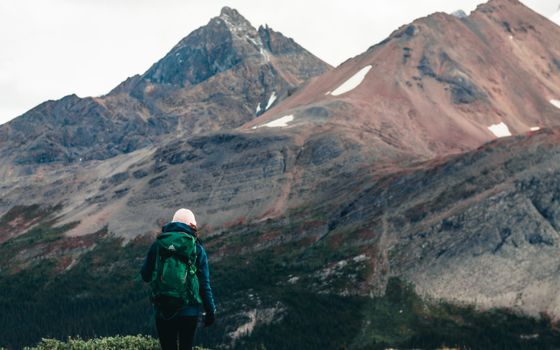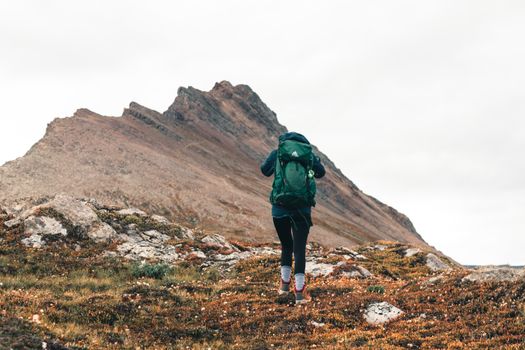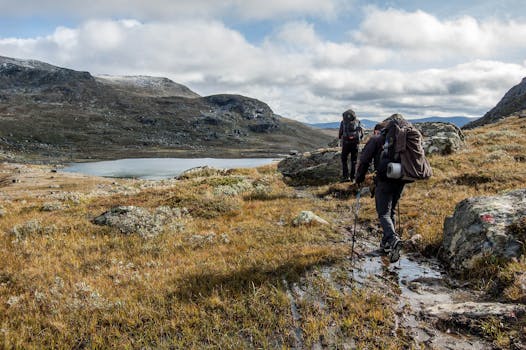
The Freeze Before the Fire: Why Sunrise Hits Different from a Ridge
I zipped open my tent fly at 4:18 AM, and the frozen condensation rained straight down my neck like crushed glass. My fingers—stiff from sub-zero winds blowing across the volcanic saddle—fumbled violently with the piezo igniter on my Jetboil. The air smelled of sulfur, pulverized basalt, and wet alpine wool.
Around me, the world was an oppressive, monochrome charcoal. Then, without warning, the eastern horizon cracked open.
A razor-thin line of electric violet split the darkness, bleeding instantly into molten amber. Below us, an unbroken ocean of cloud inversion glowed from underneath, pierced only by the jagged black apex of neighboring peaks. In that solitary, shivering minute, every blister, every screaming quadricep muscle from the 4,000-foot vertical slog the night before was completely forgiven.
Day hikers arrive when the sun is flat, harsh, and washed out. But when you hike in with your shelter on your back, spend the night listening to the ridge hum in the wind, and wake up already at the summit, you experience a completely different planet.
If you are ready to trade a night in a hotel bed for the most cinematic mornings on Earth, here are the world-class overnight hikes to sunrise viewpoints you should be targeting right now.
---
1. Volcán Acatenango to Fuego Ridge (Guatemala)
```
Trailhead: La Soledad, Chimaltenango
Distance: 18 km (11.2 miles) out-and-back
Elevation Gain: 1,600 m (5,150 ft)
Peak Elevation: 3,976 m (13,044 ft)
Permits/Guide: Guide legally required; Q50 park entrance fee
```
```{r}
# Elevation Profile Snapshot:
# La Soledad (2,400m) ──> Farmland ──> Cloud Forest ──> High Alpine Scree ──> Base Camp (3,600m) ──> Summit (3,976m)
```
There is sunrise, and then there is sunrise illuminated by 1,200-degree volcanic bombs exploding every twenty minutes. Pitching a tent on the cold shoulder of Acatenango puts you directly opposite Volcán de Fuego—one of the most consistently active stratovolcanoes on the planet.
The ascent starts brutally through loose volcanic dust (arenal) and farmlands before plunging into a dripping cloud forest. By mile four, the vegetation gives way to gnarled, alpine dwarf trees and sweeping views of the Antigua valley.
The Dawn Breakdown
Set your alarm for 3:45 AM. The final push from base camp to the true summit takes roughly an hour of soul-testing, two-steps-forward-one-step-back climbing through loose scree. At the top, the dawn breaks over Lake Atitlán to the west, while Fuego throws massive black ash plumes backlit by fiery orange rays to the south.
*