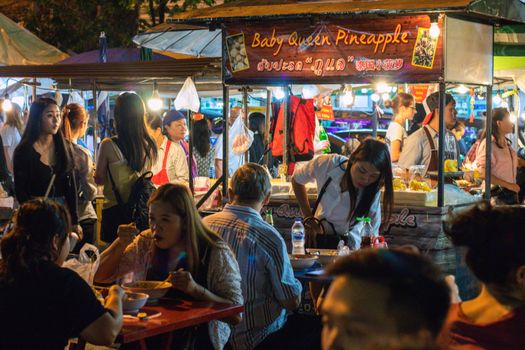
The first time I truly understood the magic of a local night market, I was drenched in sweat, jostling amidst a sea of chattering strangers, and utterly lost in the labyrinthine alleys of Chiang Mai. The air was thick with the intoxicating perfume of grilled meats, simmering broths, and exotic spices – a symphony for the senses that no Michelin-starred restaurant could ever replicate. I had just devoured a bowl of Khao Soi (a northern Thai curry noodle soup) that tasted like pure sunshine and spicy comfort, bought from a smiling woman who’d been stirring the same pot for decades. My eyes scanned the scene: families laughing, friends sharing skewers, vendors calling out their wares. Not a single tourist in sight, just pure, unadulterated local life.
That night, something shifted within me. It wasn't just a meal; it was an immersion. It was the moment I realized that if you truly want to know a place, to understand its soul, you have to eat where its people eat. You have to embrace the chaos, the heat, the unknown, and let your taste buds lead the way. This wasn't about fine dining; it was about fine living, experienced through the most delicious and authentic lens possible. My life as a traveler, and a foodie, was forever changed.
Since then, chasing these authentic night markets has become my pilgrimage. They are more than just places to eat; they are vibrant cultural hubs, living museums of culinary tradition, and the most honest expression of a city’s heart. They are where stories are shared, friendships are forged, and every single dish tells a tale. And trust me, these aren't the sanitized, tourist-trap versions you might find near major attractions. These are the real deal, where the flavors are bold, the prices are ridiculously low, and the experience is utterly unforgettable.
The Epiphany: Why Local Night Markets Are the Ultimate Travel Destination
Before I dive into my absolute favorite local night markets that have left an indelible mark on my soul (and my stomach!), let's talk about why these places are so vital for any true traveler. Most guidebooks will point you to popular spots, and while those can be fun, they often lack the genuine grit and character that define a local market.
Local night markets offer:
- Authenticity: You're eating what the locals eat, prepared how they've prepared it for generations. This isn't watered down for Western palates; it's the real deal.
- Cultural Immersion: Beyond the food, you're witnessing daily life unfold. You see families, friends, and neighbors interacting, haggling, and enjoying themselves. It's a window into the local rhythm.
- Unbeatable Value: Prepare for your jaw to drop. You can feast like royalty for mere dollars, often tasting multiple dishes for the price of one mediocre restaurant meal.
- Sensory Overload (in the best way): The sights, sounds, smells, and tastes combine into an intoxicating symphony that awakens every sense. It's an adventure before you even take a bite.
- Human Connection: Despite language barriers, a shared meal transcends words. A smile from a vendor, a nod from a fellow diner – these are the moments that truly enrich travel.
So, if you're ready to ditch the tourist traps and embark on a culinary journey that will reshape your understanding of food and travel, grab your appetite and let's go!
1. Chiang Mai, Thailand: Warorot Market (Kad Luang) – Where History Meets Flavor
My love affair with local night markets began here, specifically around the perimeter of Warorot Market (Kad Luang) once the main indoor market closes, and the street food stalls truly come alive. While many tourists flock to the Night Bazaar, Warorot is where Chiang Mai's heart truly beats after dark. It’s less about souvenirs and more about sustenance.
The Vibe:
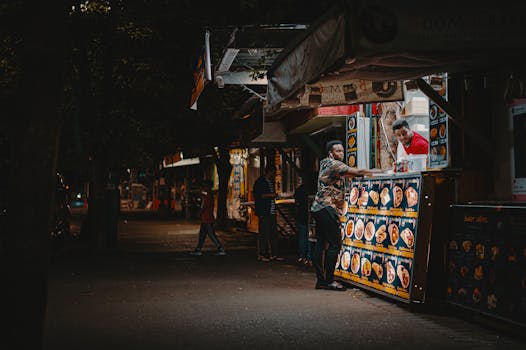
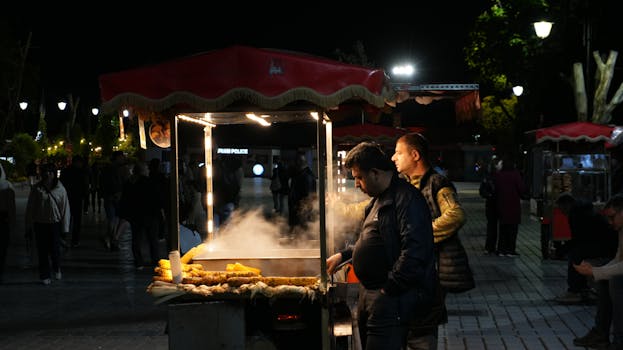
Imagine a bustling, historic market area transforming into an outdoor food court under a canopy of stars and flickering fluorescent lights. The air is thick with the aroma of sizzling woks, fragrant curries, and sweet desserts. It’s loud, it’s vibrant, and it’s gloriously authentic.
My Personal Anecdote:
That Khao Soi I mentioned? It was from a stall near the Ping River, just off Thapae Road, that didn't even have a name, just a line of locals patiently waiting. The older woman, with a mischievous twinkle in her eye, handed me a bowl for about 50 THB ($1.50). The rich coconut curry, tender chicken, crispy noodles, and a side of pickled mustard greens and shallots exploded in my mouth. It was spicy, sweet, savory, and utterly perfect. I sat on a tiny plastic stool, surrounded by strangers, feeling utterly at home. I went back every single night I was in Chiang Mai.
Must-Try Dishes & Prices:
* Khao Soi: Northern Thai curry noodle soup. Expect to pay 50-70 THB ($1.50 - $2.00). Look for stalls with long lines of locals.
* Sai Oua: Northern Thai sausage, grilled to perfection, bursting with herbs and spices. About 30-50 THB ($1.00 - $1.50) per skewer/piece.
* Kanom Krok: Coconut pancakes, crispy on the outside, creamy on the inside. A sweet treat for 20-30 THB ($0.60 - $0.90) for a small plate.
* Moo Ping: Grilled pork skewers, marinated in a sweet and savory sauce. 10-20 THB ($0.30 - $0.60) per skewer.
Practical Tips:
* Getting There: Take a red songthaew (shared taxi) or a Grab (Southeast Asia's Uber) to Warorot Market.
* Best Time: Stalls start setting up around 5:00 PM and are in full swing by 7:00 PM, staying open until late.
* What to Look For: Follow your nose, and look for stalls with a high turnover of customers – a sure sign of freshness and popularity. Don't be shy to point at what you want.
2. Taipei, Taiwan: Raohe Street Night Market – Culinary Wonders & Temple Grandeur
Taipei is a street food paradise, and while Shilin Night Market gets all the tourist attention, Raohe Street Night Market is where many locals go for an authentic, bustling experience. It's a linear market, easy to navigate, and bookended by a stunning temple, adding a spiritual dimension to your feast.
The Vibe:
Picture a vibrant, narrow street packed shoulder-to-shoulder with eager eaters, neon signs glowing, and the constant sizzle and clang of cooking. The air is alive with the chatter of Mandarin and the irresistible scent of fried delicacies and simmering broths.
My Personal Anecdote:
My first visit to Raohe was a sensory explosion. I was overwhelmed but determined. I spotted a vendor with a massive brick oven, pulling out what looked like golden, crispy buns. It was the famous Fuzhou Pepper Buns (Hújiāo Bǐng). The line was long, but the anticipation was palpable. When I finally got my bun (about 60 TWD / $2.00), the first bite was pure magic: crispy, flaky crust, juicy marinated pork, spring onions, and a fiery kick of black pepper. I burned my tongue, but it was worth every glorious second. I vividly remember leaning against the wall of the Ciyou Temple, watching locals pray, and savoring every last crumb.
Must-Try Dishes & Prices:
* Fuzhou Pepper Buns (Hújiāo Bǐng): Iconic, baked in a clay oven. 60-70 TWD ($2.00 - $2.30).
* Oyster Vermicelli (Orh Ah Mee Sua): A comforting, savory bowl of thin noodles with oysters. 50-80 TWD ($1.70 - $2.70).
* Stinky Tofu (Chòu Dòufu): Don't let the name deter you! It's an acquired taste, but a true Taiwanese experience. Usually fried, served with pickled cabbage. 50-70 TWD ($1.70 - $2.30).
* Lu Rou Fan (Braised Pork Rice): A simple yet deeply satisfying bowl of rice topped with savory braised pork. 30-50 TWD ($1.00 - $1.70).
Practical Tips:
* Getting There: Take the MRT Green Line to Songshan Station (Exit 5). The market entrance is right there, next to the Ciyou Temple.
* Best Time: Opens around 5:00 PM, gets very busy between 7:00 PM and 9:00 PM. Closes around midnight.
* Payment: Mostly cash-based, so have small denominations ready.
* Embrace the Stink: If you see Stinky Tofu, just try it. It’s part of the adventure!
3. George Town, Penang, Malaysia: Chulia Street Hawker Stalls – A Multi-Cultural Feast
Penang is often hailed as the food capital of Malaysia, and for good reason. Its unique blend of Malay, Chinese, and Indian cultures has created a culinary melting pot like no other. While there are many hawker centers, the street stalls along Chulia Street and its surrounding alleys in George Town truly capture the essence of local dining.
The Vibe:
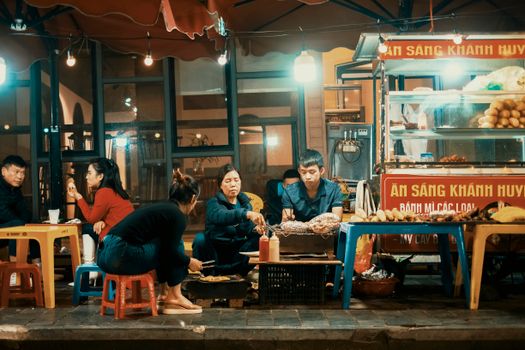
Imagine a historic street lined with colonial buildings, now transformed into an open-air food court as dusk falls. Plastic tables and chairs spill onto the sidewalks, illuminated by the glow of portable lamps and the fiery woks of passionate cooks. The air is a rich tapestry of spices, chili, and sweet coconut.
My Personal Anecdote:
One evening, I was walking down Chulia Street, overwhelmed by choices. I decided to challenge myself and try something I'd never heard of: Assam Laksa. I found a stall with a particularly long queue, which is always a good sign. The vendor, a cheerful man with a perpetually stained apron, served me a bowl for about 8 MYR ($1.70). The first spoonful hit me like a revelation: a tangy, spicy, fish-based noodle soup, brimming with shredded mackerel, pineapple, cucumber, and a generous dollop of prawn paste. It was complex, refreshing, and utterly addictive. I sat there, wiping my brow, watching the world go by, and feeling like I’d stumbled upon a secret society of flavor.
Must-Try Dishes & Prices:
* Assam Laksa: A sour, spicy, fish-based noodle soup. 8-12 MYR ($1.70 - $2.50).
* Char Kway Teow: Stir-fried flat rice noodles with prawns, cockles, bean sprouts, and egg. 8-15 MYR ($1.70 - $3.20).
* Nasi Kandar: A glorious pile of rice with your choice of curries, meats, and vegetables. Prices vary greatly, but you can get a good plate for 10-20 MYR ($2.10 - $4.20).
* Cendol: A refreshing dessert with shaved ice, coconut milk, palm sugar syrup, and green rice flour jelly. 4-6 MYR ($0.80 - $1.30).
Practical Tips:
* Getting There: Chulia Street is in the heart of George Town, easily walkable from most central accommodations.
* Best Time: Stalls typically open from 6:00 PM onwards and stay open late. Peak hours are 7:00 PM - 9:00 PM.
* Hygiene: Look for stalls with visible cooking areas and clean surfaces. Most hawker stalls in Penang are very reputable.
* Share & Conquer: With so many amazing dishes, go with friends and order several to share!
4. Seoul, South Korea: Gwangjang Market – Where Tradition Comes Alive
While Seoul boasts many vibrant food scenes, Gwangjang Market stands out as one of Korea's oldest and largest traditional markets, a place where time seems to slow down, and culinary heritage is celebrated with every dish. It's less a "night market" in the typical sense (it closes earlier than some others) but its evening buzz is absolutely legendary, making it a must-visit for local eats.
The Vibe:
Imagine a sprawling indoor market, brightly lit, with rows upon rows of food stalls, each presided over by a ajumma (middle-aged woman) who has perfected her craft over decades. The air vibrates with friendly chatter, the clatter of chopsticks, and the enticing aromas of sizzling pancakes and spicy stews. It’s warm, inviting, and feels like stepping into a beloved grandmother’s kitchen.
My Personal Anecdote:
On a chilly Seoul evening, I ventured into Gwangjang Market. The sheer volume of food was astounding. I found a stall specializing in Bindaetteok (mung bean pancakes). The ajumma gestured for me to sit on a tiny stool at a communal counter. She handed me a freshly fried, crispy pancake, drizzled with soy sauce, for about 5,000 KRW ($3.70). As I bit into the savory, slightly crunchy perfection, she poured me a small bowl of makgeolli (rice wine). I sat amongst Korean families, sharing food and laughter, despite not understanding a word. It was a moment of pure, unadulterated connection – a simple meal, a shared smile, and a profound sense of belonging. That Bindaetteok wasn't just food; it was a warm hug from Korea.
Must-Try Dishes & Prices:
* Bindaetteok (Mung Bean Pancakes): Crispy, savory pancakes, often served with makgeolli. 5,000 - 8,000 KRW ($3.70 - $6.00).
* Mayak Gimbap (Drug Gimbap): Small, addictive seaweed rice rolls served with a mustard dipping sauce. Around 3,000 - 5,000 KRW ($2.20 - $3.70) for a plate.
* Tteokbokki: Spicy rice cakes. 4,000 - 6,000 KRW ($3.00 - $4.50).
* Kalguksu (Hand-Cut Noodle Soup): Freshly made noodles in a clear, comforting broth. 6,000 - 8,000 KRW ($4.50 - $6.00).
Practical Tips:
* Getting There: Take the Seoul Subway Line 1 to Jongno 5-ga Station (Exit 8). The market entrance is right there.
* Best Time: While it’s open during the day, the evening buzz (until about 8:00 PM-9:00 PM) is fantastic. Go around 6:00 PM for dinner.
* Payment: Mostly cash-only, so have plenty of Korean Won.
* Embrace the Communal Seating: Don't be shy to squeeze in next to strangers at the counters. It's part of the experience!
The Unwritten Rules: How to Eat Like a Local (and Not Look Like a Tourist)
Now that you're armed with some incredible destinations, here's my essential playbook for navigating these local night markets like a seasoned pro:
- Follow the Locals (and the Lines): This is the golden rule. If a stall has a long queue of locals, it's usually a sign of fantastic, fresh food. Join the line!
- Look for Cleanliness (within reason): While these aren't sterile environments, observe the stall. Are the surfaces reasonably clean? Is the food being handled hygienically? Trust your gut.
- Don't Be Afraid to Point: Language barriers are real, but a smile and a pointing finger are universally understood. Most vendors are incredibly patient and friendly.
- Carry Cash & Small Notes: Many stalls are cash-only, and they appreciate smaller denominations. Break larger bills at convenience stores beforehand if you can.
- Embrace Communal Seating: You'll often be sharing tables or counters with strangers. It's part of the charm and a great way to people-watch.
- Be Adventurous (But Smart): Try things you've never seen before! But if something looks undercooked or has been sitting out too long in the heat, politely pass.
- Hydrate! The heat and spice can be intense. Grab bottled water or a local beverage.
- Learn Basic Phrases: "Hello," "Thank you," and "Delicious!" in the local language go a long way in showing respect and appreciation.
- Patience is a Virtue: These markets are busy. Service might not be lightning-fast, but it’s part of the authentic experience. Enjoy the wait!
- Go with an Open Mind (and an Empty Stomach): Leave your preconceived notions at home. Be ready for new flavors, textures, and a truly immersive experience.
Beyond the Plate: The True Heart of Night Markets
While the food is undoubtedly the star, the real magic of these local night markets extends far beyond the plate. It's in the symphony of sounds – the sizzling woks, the rhythmic chopping, the friendly banter of vendors, the laughter of families. It's in the kaleidoscope of colors – the vibrant produce, the glowing lanterns, the artfully arranged dishes. It's in the sheer human connection – sharing a meal, even silently, with people from all walks of life.
These markets are living, breathing entities, pulsating with the energy of a community. They represent resilience, tradition, and the enduring power of good food to bring people together. They are not just places to fill your belly; they are places to fill your soul. They changed my life forever by showing me that the most profound travel experiences often lie off the beaten path, in the heart of local life, and tasted best with a little bit of grit and a lot of flavor.
So, what are you waiting for? Pack your bags, bring your biggest appetite, and prepare to embark on a culinary adventure that will redefine your understanding of travel. Go forth, explore, and let these incredible night markets change your life forever. And when you do, don't forget to share your favorite finds with us!
---