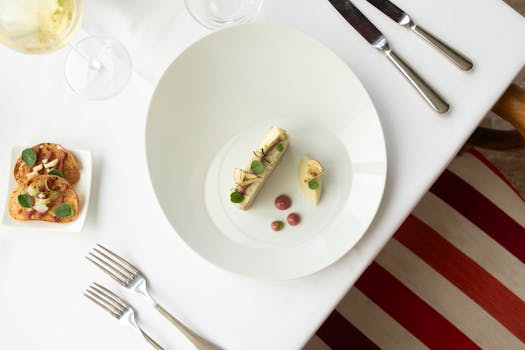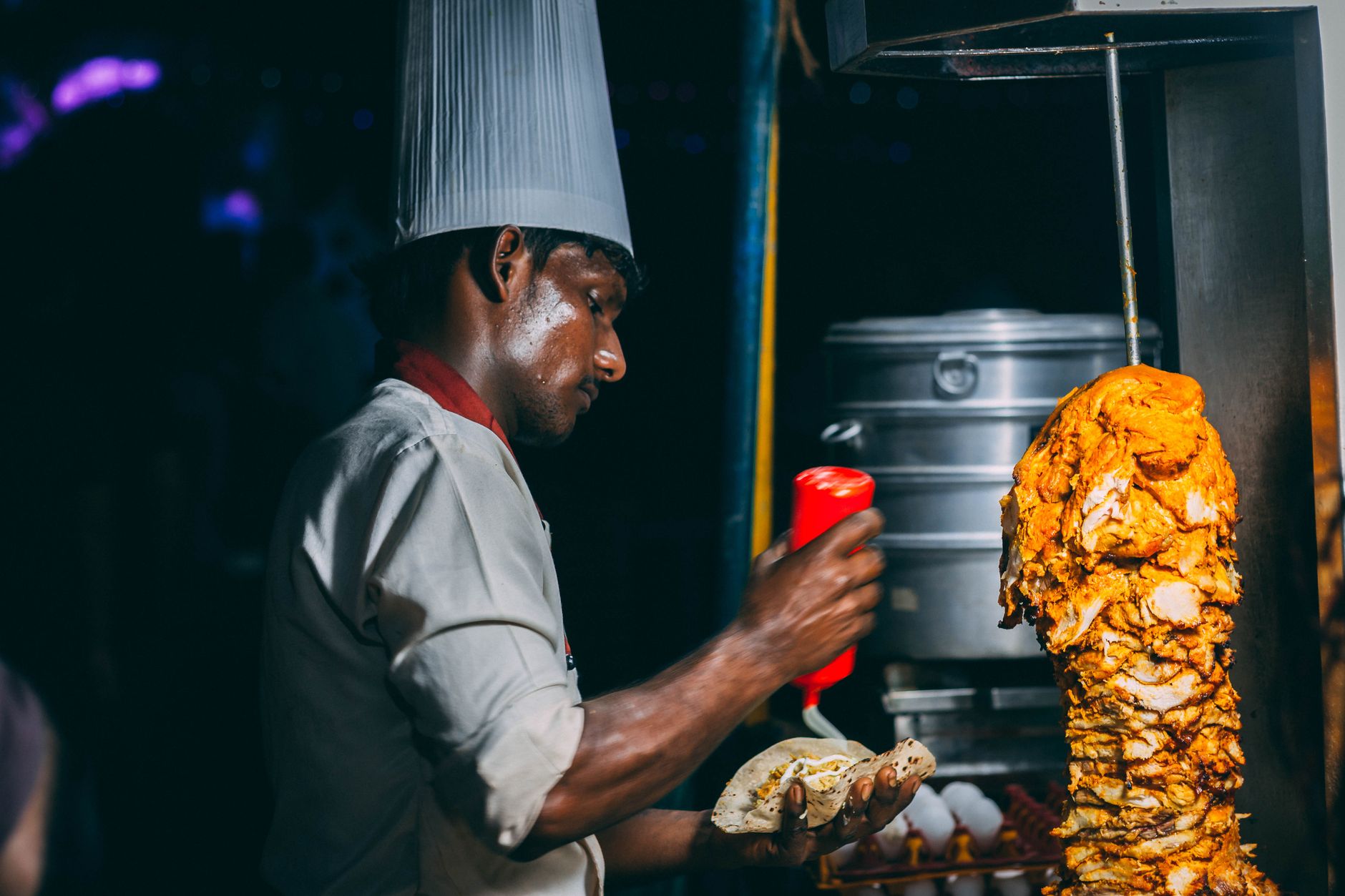
Let’s be honest. For most of us, the phrase "Michelin-starred dining" conjures images of white tablecloths, hushed conversations, tiny portions, and a bill that could rival a month's rent. It’s a dream for many, a reality for few, and often feels miles away from the backpacking, street-food-loving adventurer I am (and I bet, many of you are!).
I remember my first time thumbing through a Michelin Guide – all those gleaming stars, all those eye-watering prices. I sighed, closed the book, and went back to researching the best hawker stalls. "One day," I thought, "one day I'll save up for a proper Michelin experience."
But then, something shifted. A whisper started circulating in the foodie travel circles: "You can get a Michelin star meal for under $20." My ears perked up. Was this a myth? A cruel joke? Or was there a secret world of affordable gourmet waiting to be discovered?
Spoiler alert: It’s real. And it’s glorious.
The Michelin Guide, in its infinite wisdom, isn't just about fancy establishments. It’s about quality food, regardless of the setting. And sometimes, that quality food comes from a humble stall in a bustling hawker center or a tiny ramen shop tucked away on a Tokyo side street. These are the places that have earned their stars not with crystal chandeliers, but with pure, unadulterated flavor.
So, pack your bags (and your appetite!), because I’m taking you on a personal tour of some of the most mind-blowing, genuinely Michelin-starred meals I’ve had the privilege of devouring, all for less than a twenty-dollar bill. Get ready to screenshot, bookmark, and add these gems to your ultimate foodie bucket list.
The Original Game Changer: Liao Fan Hong Kong Soya Sauce Chicken Rice & Noodle (Hawker Chan), Singapore
My journey into the world of budget Michelin began in the steamy, vibrant heart of Singapore. The legendary Hawker Chan – officially known as Liao Fan Hong Kong Soya Sauce Chicken Rice & Noodle – was the first hawker stall in the world to be awarded a Michelin star. When I first heard about it, I was skeptical. A star for chicken rice? For a few dollars? It sounded too good to be true.
I arrived at their original stall in the Chinatown Complex Food Centre around 10 AM, and already, a formidable queue snaked out from the front. This wasn't a tourist gimmick; this was a pilgrimage. The air was thick with the scent of roasted meat and soy, and the rhythmic chop-chop-chop of cleavers on cutting boards was a constant symphony. After a good 45-minute wait (which felt like an eternity when hunger pangs set in), I finally reached the front.
"Soya Sauce Chicken Rice, please," I stammered, pointing to the glistening rows of chickens hanging in the display. The vendor, efficient and no-nonsense, dished out a generous portion. The price? A staggering SGD $3.80 (approx. US$2.80). I almost laughed – in disbelief and pure joy.
Finding a spot at a communal table, I took my first bite. Oh. My. Goodness. The chicken skin was impossibly glossy, the meat tender and infused with a deep, savory soy marinade. The rice, fragrant and perfectly cooked, absorbed every drop of the rich sauce. It was simple, yes, but executed with such perfection that it transcended mere chicken rice. It was an explosion of umami, a masterclass in texture and flavor. This wasn't just good food; it was art.
My Pro Tip for Hawker Chan:
Go early, ideally before 11 AM or after 2 PM, to beat the worst of the lunch rush. Don't be shy about sharing a table – it's part of the authentic hawker experience. And definitely get extra chili sauce!
Noodle Nirvana: Tai Hwa Pork Noodle (Hill Street Tai Hwa Pork Noodle), Singapore
Just when I thought Singapore couldn't impress me more with its affordable Michelin stars, I discovered Tai Hwa Pork Noodle. This place is a different beast from Hawker Chan, but equally deserving of its single star. Specializing in bak chor mee, a Teochew-style minced pork noodle dish, Tai Hwa has been a local institution for generations.
My visit was a similar story of patient queuing, though perhaps a little less frenzied than Hawker Chan. Located in a more modest coffee shop setting, the atmosphere was distinctly local, with families and office workers patiently waiting their turn. The aroma here was different – a pungent, vinegary tang mixed with savory pork.
When my bowl of Bak Chor Mee arrived, it was a work of edible art. Springy egg noodles tossed in a secret sauce (a magical concoction of black vinegar, chili, soy, and lard), topped with slices of tender pork, minced pork, bouncy meatballs, crispy fried sole fish, and a single, perfectly cooked dumpling. The "Small" bowl cost me around SGD $6 (approx. US$4.40), with the "Large" just a dollar or two more.
Each mouthful was a symphony of textures and flavors: the chewiness of the noodles, the crunch of the fried fish, the savory burst of the pork, and that incredible vinegary kick that wakes up every single taste bud. It’s comfort food elevated to an extraordinary level, a dish that tells a story of tradition and mastery. I left feeling utterly satisfied and immensely grateful for Singapore’s commitment to culinary excellence at every price point.
My Pro Tip for Tai Hwa:
The queue can be daunting, sometimes over an hour, but it moves steadily. Bring a book or chat with fellow foodies. Order the dry version (Mee Pok) – it’s the classic and allows the sauce to truly shine.
Dim Sum Dreams Come True: Tim Ho Wan (Hong Kong)
From the bustling hawker centers of Singapore, my quest took me to the vertical city of Hong Kong, home to another champion of affordable Michelin dining: Tim Ho Wan. Famously dubbed "the world's cheapest Michelin-starred restaurant," Tim Ho Wan originally earned its star at its tiny Mong Kok location, and has since expanded globally. But for an authentic experience, I sought out one of their Hong Kong branches.
I visited their Sham Shui Po location, a slightly larger but still bustling eatery. The vibe was quintessential Hong Kong: fast-paced, noisy, and incredibly efficient. You grab a menu card, tick off your choices, and within minutes, steaming baskets of dim sum start arriving at your table.
The absolute must-try here is their Baked BBQ Pork Buns. I ordered a plate (three buns for HKD $28, approx. US$3.60), and with my first bite, I understood the hype. These aren't your average steamed char siu bao. These are golden, crumbly, slightly sweet, baked buns, with a rich, savory, slightly sticky BBQ pork filling that just melts in your mouth. They are addictive. Seriously, I could have eaten a dozen.
But Tim Ho Wan offers so much more. I also indulged in their Pan-Fried Carrot Cake (crispy on the outside, soft and savory within, HKD $23, approx. US$3), Steamed Egg Cake (impossibly light and fluffy, HKD $21, approx. US$2.70), and some delicate Shrimp Dumplings (Har Gow, HKD $33, approx. US$4.20). My entire meal, a veritable feast of dim sum, came to well under $20. It was an absolute steal for such high-quality, perfectly executed Cantonese delicacies.
My Pro Tip for Tim Ho Wan:
Don't be intimidated by the crowds. The turnover is quick. Go with a few friends so you can order a wider variety of dishes to share. And whatever you do, DO NOT skip the Baked BBQ Pork Buns!
Ramen Royalty: Tsuta (Tokyo)
Ah, Tokyo. A city synonymous with culinary excellence, where even the simplest bowl of ramen can be a work of art. But a Michelin-starred ramen? That was a revelation. Tsuta, located in a quiet residential area of Sugamo, was the first ramen shop in the world to be awarded a Michelin star.
My visit to Tsuta was a lesson in Japanese precision and dedication. The process is streamlined: arrive, get a timed ticket (often hours in advance), return at your designated time, order from a vending machine outside, and then enter the small, immaculate shop. It feels less like a casual ramen joint and more like a sacred culinary space.
I opted for their signature Shoyu Soba (soy sauce ramen) for ¥1,500 (approx. US$10). As the bowl was placed before me, I was struck by its beauty. The broth was a clear, dark amber, adorned with delicate slices of chashu pork, a perfectly soft-boiled egg, bamboo shoots, and a drizzle of fragrant truffle oil.
The first spoonful of broth was a revelation. It was deep, complex, and incredibly refined, far beyond any ramen broth I'd tasted. The noodles, made in-house, were springy and absorbed the flavors beautifully. The truffle oil added an unexpected, luxurious aroma that elevated the entire experience. It was a symphony of umami, a testament to the fact that even a seemingly simple dish can achieve gastronomic perfection. I savored every single drop.
My Pro Tip for Tsuta:
Check their website or social media for current operating hours and ticket distribution methods, as they can change. Arrive early, even before opening, to secure a ticket for later in the day. Be respectful of the quiet atmosphere inside.
Another Bowl of Brilliance: Nakiryu (Tokyo)
Not content with just one Michelin-starred ramen experience, my Tokyo quest led me to Nakiryu, another one-star ramen shop, this time located in Otsuka. While Tsuta excels in elegant shoyu ramen, Nakiryu is renowned for its Tantamen (a Japanese take on Dan Dan noodles) and its incredibly flavorful shio (salt) ramen.
The queue at Nakiryu was equally serious, stretching down the street even on a chilly morning. The ordering process was similar to Tsuta – a vending machine inside the entrance. I chose their signature Tantamen for ¥900 (approx. US$6) – an unbelievable price for a Michelin-starred dish.
The Tantamen arrived, a vibrant bowl of rich, reddish-orange broth, topped with spicy minced pork, a sprinkle of spring onions, and a perfectly cooked egg. The aroma alone was intoxicating – nutty, spicy, and deeply savory.
My first slurp was exhilarating. The broth was creamy, intensely flavorful, with a perfect balance of chili heat, sesame richness, and a subtle tang. The thin, straight noodles clung to the sauce, delivering an explosion of flavor with every bite. It was a comforting yet exciting bowl, a completely different experience from Tsuta, but equally masterful. Nakiryu proved that Michelin stars aren't limited to one style of ramen, and that incredible value can be found in diverse culinary expressions.
My Pro Tip for Nakiryu:
Like Tsuta, queues are common. Be prepared to wait, especially during peak lunch and dinner times. Don't be afraid to try their other ramen styles if Tantamen isn't your preference; their Shio (salt) ramen is also highly acclaimed.
The Art of the Affordable Star: Practical Tips for Your Michelin Hunt
So, you're convinced that Michelin stars aren't just for the ultra-rich. Excellent! Now, how do you find these hidden (and not-so-hidden) gems on your next trip? Here are my tried-and-true tips for navigating the world of budget Michelin:
- Embrace the Michelin Guide App/Website: This is your holy grail. Use the filters! You can often filter by price range, cuisine type, and even "Bib Gourmand" (more on that below). While the official app may not have a direct "under $20" filter, you can browse restaurants in cities known for street food or casual dining and check their menu prices.
- Focus on Asia: Let's be real, the vast majority of genuinely Michelin-starred meals under $20 are found in Asian cities like Singapore, Hong Kong, and Tokyo. Their vibrant street food and casual dining scenes are fertile ground for star-worthy cuisine.
- Look for "1-Star" and "Bib Gourmand" (with a caveat):
- 1-Star: These are the true stars of this article. A single star means "a very good restaurant in its category." Often, for street food or casual eateries, "their category" means incredibly affordable.
- Bib Gourmand: This designation means "good quality, good value cooking." While not a Michelin star, Bib Gourmand restaurants offer excellent food at a reasonable price (typically a three-course meal for a set maximum price, which varies by country). They are fantastic for budget-friendly gourmet, but remember, they aren't starred in the same way the places above are. If your goal is strictly "starred," stick to the 1-star places.
- Go for Lunch or Specific Dishes: Sometimes, a full dinner at a Michelin-starred restaurant might be out of budget, but a lunch set or a specific signature dish could sneak in under $20. Always check the menu online if possible.
- Be Prepared for Queues: Popular, affordable Michelin spots often have lines. See it as part of the adventure! Bring a portable charger, a book, or make friends with fellow foodies.
- Cash is King (Often): Especially at smaller, traditional establishments, cash payments are preferred or even required. Always have some local currency on hand.
- Order Smart: Stick to the signature dish or what they're famous for. These are the dishes that earned them their star, and they're usually the best value.
- Don't Forget the Experience: Remember, these aren't fancy restaurants. The "experience" is often the bustling atmosphere, the communal tables, the simple setting, and the sheer joy of discovering world-class flavors in an unexpected place. Embrace it!
The Star-Spangled Conclusion: Your Budget Gourmet Journey Awaits!
There you have it. Proof positive that the world of Michelin-starred dining isn't an exclusive club reserved for those with bottomless wallets. It's a vibrant, diverse landscape where culinary genius can be found in the most unassuming of places, often for less than your daily coffee run.
My experiences at Hawker Chan, Tai Hwa, Tim Ho Wan, Tsuta, and Nakiryu weren't just about eating incredible food; they were about shattering preconceived notions, embracing local culture, and discovering the pure, unadulterated joy of a truly exceptional meal. These are the moments that make travel so incredibly rewarding – the unexpected delights, the sensory explosions, the stories you'll tell for years to come.
So, what are you waiting for? It's time to ditch the fancy restaurant reservations and embark on your own budget Michelin adventure. Head to Singapore for that life-changing chicken rice, savor dim sum in Hong Kong, or slurp up some star-worthy ramen in Tokyo. Trust me, your taste buds (and your wallet!) will thank you.
Have you discovered any other Michelin-starred gems for under $20? Share your finds in the comments below! Let's build the ultimate list of affordable gourmet experiences together. And don't forget to tag #TripsoraBudgetStars on Instagram with your delicious discoveries!
---