The Unseen Roar: Discovering Waterfalls Influencers Don't Want You to Know
There’s a specific kind of frustration only a true wanderer understands. You scroll through your feed, eyes wide, as another influencer posts from a “secret, untouched paradise”—a waterfall with impossibly turquoise waters, framed by lush jungle. You bookmark it, plan your trip, fight through traffic, and arrive… only to find a queue of twenty people waiting for their turn at the exact same photo op. The magic? Evaporated. The solitude? A distant dream.
I’ve been there. My most recent disillusionment came in Bali, at a waterfall that was once genuinely off-the-grid. Years ago, I’d spent an entire afternoon there, just me, the thundering water, and the occasional monkey. This time, it was a full-blown tourist circus: pop-up shops, a designated photo platform, and a drone buzzing overhead. It hit me then: the true "hidden gems" are no longer found by following hashtags. They're found by unlearning how we've been taught to travel.
This isn't a guide to the most popular, geotagged waterfalls. This is your blueprint for escaping the curated, commercialized version of nature. This is about finding the waterfalls that truly whisper, not roar with the echoes of a hundred camera clicks. These are the places that demand a little more effort, a little more grit, and offer infinitely more reward. Because the best waterfalls? They're the ones you earn.
The Allure of the Unseen: Why Go Off-Grid for Waterfalls?
Why bother with the extra effort? Why not just join the masses at the easily accessible, well-documented spots? The answer, for me, lies in the experience itself.
Firstly, solitude. There’s an unparalleled peace that comes with standing before a natural wonder, knowing you’re the only human witness for miles around. The sound of the water isn’t competing with chatter or music; it’s a symphony of pure, untamed nature. It’s a moment of profound connection, a reset button for the soul.
Secondly, authenticity. When you step off the beaten path, you step into a more genuine interaction with the environment and, often, with local communities. These experiences aren't designed for mass consumption; they're raw, unfiltered, and deeply enriching. You see the world as it is, not as it’s packaged for tourists.
Finally, there’s the thrill of discovery. In an age where every corner of the globe seems mapped and cataloged, the act of finding something truly unknown, something you’ve only seen on a faded local map or heard about in hushed tones, is an adventure in itself. It taps into a primal sense of exploration that social media can never replicate. It’s a story you’ll tell for years, not just a photo you'll post for likes.
Your Compass to the Unknown: How to Find Hidden Waterfalls
So, how do you find these elusive cascades? It requires a blend of old-school sleuthing, modern tech savvy, and a willingness to be wrong sometimes.
1. Local Wisdom is Gold:
This is your number one asset. When you arrive in a new region, strike up conversations. Talk to guesthouse owners, local shopkeepers, farmers, or even bus drivers. Don't ask, "Where's the best waterfall?" (That usually gets you the tourist spot). Instead, try, "Are there any small waterfalls nearby that only locals know about?" or "Is there a stream or river that gets interesting further upstream?" Be genuinely curious, respectful, and prepared to pay for a guide if a local offers to show you. Their knowledge is invaluable.
2. Map Mastery (and Satellite Vision):
* Topographical Maps: These are your best friends. Look for squiggly blue lines (rivers/streams) that cross over closely packed contour lines (indicating steep elevation changes). These are prime waterfall territory. Many countries have excellent national mapping agencies with online resources or physical maps you can buy.
* Google Earth Pro: This free desktop application is a game-changer. You can zoom in incredibly close, tilt the view, and literally scout potential routes. Look for changes in vegetation, rock formations, and, of course, the tell-tale white froth of falling water. I often spend hours virtually hiking before I even pack my bags.
* Offline Maps Apps: Apps like Maps.me, Gaia GPS, or AllTrails (even for less popular trails) allow you to download maps for offline use, essential when you're beyond cell service. Cross-reference what you see on Google Earth with these apps for potential trailheads or access points.
3. The Power of Obscurity:
Don't just search for "waterfalls near [big city name]." Instead, research smaller towns, regional parks, or even specific mountain ranges. Look for local hiking blogs (often in the local language, so be ready to use translation tools), community forums, or even old travel guides. Sometimes, the less information you find, the more promising the lead.
4. Timing is Everything:
Even a somewhat known waterfall can feel "hidden" if you visit at the right time.
* Shoulder Seasons: Avoid peak tourist season. The weather might be a little less predictable, but the crowds will be significantly thinner.
* Weekdays: Always prefer weekdays over weekends.
* Early Mornings: Be the first one there. The light is often beautiful, and you'll beat any lingering crowds.
My Secret Stashes: Waterfalls That Whisper, Not Roar
Let me share a few of my own experiences with waterfalls that demanded effort but paid off in unforgettable moments. These aren't precise GPS coordinates (because that would defeat the purpose!), but rather examples of the kind of places you can find and the adventures they entail.
1. Whisper Creek Cascades, Oregon, USA
My first truly "earned" waterfall was deep in the temperate rainforests of Oregon. I was on a solo road trip, frustrated by the packed trails to the Columbia River Gorge’s famous falls. I pulled into a small, nondescript town, grabbed a coffee, and asked the barista if there were any local secrets. She drew me a crude map on a napkin, pointing to a barely visible turn-off, warning, "It's not marked, and the trail disappears in places."
The Journey:
Following her directions, I found the turn-off—a gravel road barely wide enough for one car. After a few miles, it ended abruptly at a dilapidated logging gate. From there, it was a 4-mile hike through dense, moss-covered forest. The "trail" was more of an animal path, overgrown and muddy in sections. I had to scramble over fallen logs, navigate around thickets of salmonberry, and constantly check my offline map to ensure I wasn't completely lost. The air was thick with the scent of damp earth and pine, and the only sounds were birdsong and the distant murmur of water.
The Reward:
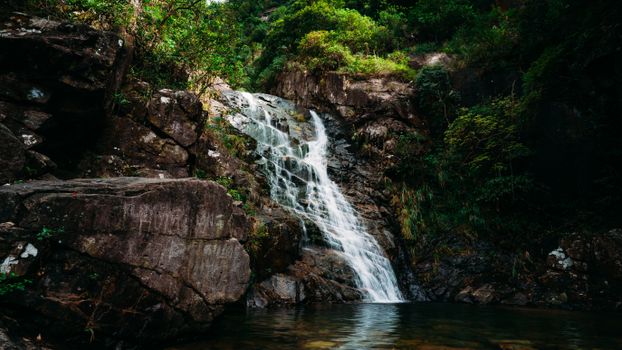
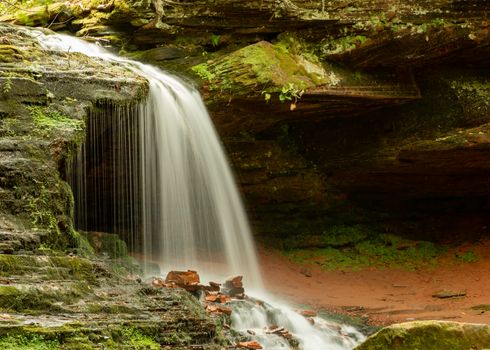
After two hours of pushing through the undergrowth, the forest suddenly opened up. There it was: Whisper Creek Cascades. Not a single, massive drop, but a series of delicate, multi-tiered falls, each spilling into a clear, emerald pool. The water was icy, fed by snowmelt, and the spray misted the entire clearing, making the moss and ferns glow a vibrant green. I spent hours there, sketching in my journal, listening to the water, and feeling an incredible sense of accomplishment. I didn't see another soul.
Practical Tips:
* Gear: Waterproof hiking boots are non-negotiable. Layers are key in temperate rainforests. A small first-aid kit, plenty of water, and high-energy snacks.
* Navigation: A fully charged phone with offline maps (Gaia GPS or Maps.me) and a compass are crucial. Know how to use them.
* Solitude Preparedness: Tell someone exactly where you're going and when you expect to be back. Cell service is non-existent.
2. Emerald Veil Falls, Northern Laos
This one required a plane, a bus, a tuk-tuk, and a two-day trek. I was in a remote corner of northern Laos, near the border with Vietnam, seeking out a village known for its traditional weaving. While staying with a local family, I noticed a faded photograph on their wall: a stunning waterfall. Through broken English and hand gestures, I learned it was "far, far away," and accessible only by a difficult path and a bamboo raft.
The Journey:
I hired the village elder's son, a quiet, strong young man named Somsak, as my guide. We set out at dawn, trekking through dense jungle, crossing shallow rivers, and climbing steep, muddy slopes. The heat and humidity were relentless. We camped overnight in a small clearing, cooking sticky rice and fresh-caught river fish over an open fire. The next morning, we reached the river, where Somsak expertly lashed together a bamboo raft. The final stretch involved poling the raft upstream, fighting against the current, until the roar of the falls grew deafening.
The Reward:
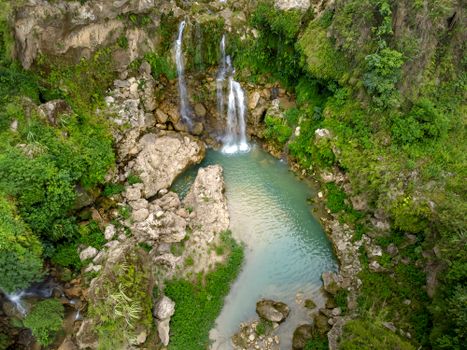
Emerald Veil Falls lived up to its name. It wasn't one massive drop, but a series of cascades tumbling down a sheer cliff face, shrouded in mist, creating a shimmering, emerald-green curtain. Below, several deep, clear pools invited a refreshing swim. The air was alive with the buzz of unseen insects and the calls of exotic birds. We were the only ones there for the two hours we spent swimming and exploring. The gratitude I felt towards Somsak and the sheer beauty of the place were overwhelming.
Practical Tips:
* Local Guide: Absolutely essential in remote regions with unmarked trails and language barriers. Be prepared to pay a fair wage and show respect.
* Respect Local Customs: Dress modestly, ask permission before taking photos of people, and be mindful of local traditions.
* Pack Light & Smart: You'll be carrying everything. Bring quick-drying clothes, mosquito repellent, water purification tablets, and a basic medical kit.
* Cultural Exchange: Embrace the opportunity to learn from your guide and the community. It’s part of the adventure.
3. Serpent's Coil Falls, Colombian Andes
My most challenging waterfall pursuit took me high into the cloud forests of the Colombian Andes. I'd heard whispers of a powerful waterfall, sacred to an indigenous community, that few outsiders had ever seen. The information was scarce, found only in an obscure academic paper about local folklore.
The Journey:
After weeks of trying to make contact, I finally secured a permit through a local conservation NGO and was granted permission to visit with a designated guide from the community. The trek began at over 3,000 meters (around 9,800 feet) and involved an ascent through increasingly dense cloud forest. The air was thin, the trails often slick with mud and hidden roots, and the fog could roll in without warning, reducing visibility to a few feet. We spent three days hiking, navigating through a landscape that felt ancient and mystical, learning about the local flora and fauna from my guide.
The Reward:
On the third morning, after a steep final climb, we emerged onto a rocky outcrop. Below us, a single, powerful column of water plunged hundreds of meters into a swirling pool, disappearing into the mist at its base. Serpent's Coil Falls was immense, awe-inspiring, and humbling. The sheer force of the water created its own weather system, sending spray high into the air. My guide performed a short blessing, a quiet acknowledgment of the sacredness of the place. Standing there, feeling the vibration of the water through the rock, I felt utterly insignificant yet profoundly connected to something ancient and powerful. It was a moment of pure, unadulterated awe.
Practical Tips:
* Acclimatization: If hiking at high altitudes, spend a few days at a lower elevation to acclimatize.
* Proper Gear: Warm, waterproof layers, sturdy hiking boots, and a good backpack are essential. A sleeping bag rated for cold temperatures if camping.
* Respect Sacred Sites: If a waterfall is sacred to a local community, follow their rules and customs implicitly. Don't take photos if asked not to, and certainly don't leave any trash or disturb the area.
* Support Conservation: If working with an NGO or community, consider making a donation or participating in their efforts.
The Unwritten Code: Responsible Exploration & Safety
Finding these hidden gems comes with a responsibility to protect them.
1. Leave No Trace:
This is paramount. Pack out everything you pack in, including organic waste like fruit peels. Stay on existing (even faint) trails to avoid trampling delicate vegetation. Don't carve initials into trees or rocks. Leave the place exactly as you found it, or better.
2. Safety First, Always:
* Tell Someone: Always inform a trusted person of your itinerary, including your route, expected return time, and who you're with.
* Carry Essentials: Water, food, first-aid kit, headlamp, multi-tool, navigation tools (map, compass, fully charged phone with offline maps), fire starter, emergency shelter (space blanket).
* Know Your Limits: Don't attempt a hike that's beyond your physical capabilities or experience level. Turn back if weather conditions worsen or if you feel unsafe.
* Water Safety: Be cautious around waterfall pools. Currents can be surprisingly strong, and rocks can be slippery. Never dive into unknown waters.
3. Respect Local Culture and Wildlife:
* Permission: In many remote areas, land might be privately owned or sacred. Always seek permission before entering.
* Observe Wildlife from a Distance: Never feed or approach wild animals.
* Dress Appropriately: Especially in conservative cultures, modest clothing can go a long way in showing respect.
Capturing the Magic (Without Spoiling It): Photography Tips for the Discerning Explorer
You’ve found your hidden paradise. Of course, you want to capture the moment. But how do you do it without contributing to the very problem you’re trying to escape?
1. Focus on the Journey, Not Just the Destination:
Instead of just a perfect shot of the waterfall, capture the essence of the adventure. Show the muddy boots, the challenging climb, the misty forest path, the local guide. These tell a more compelling and authentic story than a perfectly posed selfie.
2. Composition Over Clicks:
Take fewer, more thoughtful photos. Really see the scene before you press the shutter. Look for unique angles, play with light, and try to convey the feeling of solitude and wonder. A wide-angle lens can help capture the grandeur of the landscape. A tripod is invaluable for long exposure shots that create that silky, ethereal water effect.
3. Embrace Imperfection:
Forget trying to get that "flawless" influencer shot. Rain, mist, mud, sweat—these are all part of the authentic experience. They add character and truth to your images.
4. No Selfies with Coordinates:
This is a big one. When sharing online, be mindful of geotagging sensitive, truly hidden spots. Share the feeling and the story, not the exact location. You can tag the general region or country without giving away the precise coordinates. Encourage others to embark on their own discovery, rather than just following in your exact footsteps.
5. Gear Protection:
A waterproof bag or dry sack is essential for protecting your camera gear from spray, rain, and accidental dips.
The True Reward of the Path Less Taken
The journey to a truly hidden waterfall is more than just a hike; it’s an expedition into the heart of wild nature and, often, into yourself. It's about trading convenience for challenge, crowds for quietude, and curated experiences for raw, authentic discovery.
When you finally stand before that untouched cascade, the cool mist on your face, the roar of the water filling your ears, you won’t be thinking about how many likes your photo will get. You’ll be thinking about the effort it took, the beauty you found, and the profound sense of peace that washes over you. This is the real reward, far more valuable than any viral post.
So, the next time you dream of a waterfall, close your Instagram. Open a topographical map. Talk to a local. And prepare to embark on an adventure that influencers don't want you to know about, because it's an experience they can't sell. It's yours to find.
What's your most memorable off-the-beaten-path discovery? Share your stories (without revealing your secret spots!) in the comments below, or better yet, go plan your next adventure and create one!