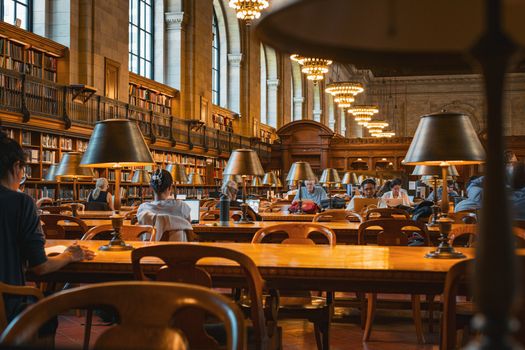
From the moment I first cracked open "Harry Potter and the Sorcerer's Stone" as a wide-eyed ten-year-old, I was utterly captivated. Not just by the spells and the friendships, but by the sheer magic of Hogwarts itself. And central to that magic, for me, was the library. A vast, echoing sanctuary of ancient knowledge, forbidden sections, and endless possibilities. It wasn't just a room; it was a portal to understanding, a place where history whispered from dusty tomes, and the future was written in ink.
For years, I chased that feeling. I visited grand public libraries, revered university archives, but none quite captured the ethereal, life-altering aura of what I imagined the Hogwarts library to be. Until I started traveling, that is. My journey wasn't just about seeing famous landmarks; it became a quest for these hidden literary havens, places where the air hummed with untold stories and the architecture itself felt imbued with magic. And let me tell you, when I finally found them, they didn't just meet my expectations – they shattered them, and in doing so, changed my life forever.
These aren't just buildings filled with books; they are cathedrals of human thought, time capsules of knowledge, and truly, some of the most awe-inspiring places I've ever set foot in. They remind you of the enduring power of stories, the beauty of human craftsmanship, and the profound connection we share across centuries through the written word. Ready to step into your own real-life Hogwarts? Grab your imaginary wand, because we're going on an adventure.
---
The Allure of the Ancient Scrolls: Why These Places Cast a Spell
Before we dive into specific locations, let's talk about why these libraries feel so magical. It’s more than just the sheer volume of books. It's the sensory symphony: the faint, sweet scent of aging paper and polished wood, the way dust motes dance in sunbeams piercing stained-glass windows, the hush that falls over visitors – a collective reverence for the knowledge contained within. These spaces are often architectural masterpieces, designed not just to house books, but to elevate the act of learning and reflection.
Walking into one of these libraries is like stepping back in time. You’re surrounded by the thoughts of countless generations, a tangible connection to the past. It’s humbling, inspiring, and frankly, a little overwhelming in the best possible way. The sense of history, the dedication of the monks, scholars, and patrons who built and maintained them, creates an atmosphere that truly feels enchanted. It’s a magic that transcends fantasy, rooted in the very real power of human intellect and creativity.
---
My First Spellbound Sanctuary: Trinity College Library, Dublin, Ireland
My quest for a real-life Hogwarts library truly began in Dublin, Ireland, with the iconic Long Room of Trinity College Library. I’d seen countless photos, but nothing, nothing, prepares you for the sheer scale and majesty of walking into that space.
I remember the day vividly. It was a crisp autumn morning, and after navigating the bustling streets of Dublin, I found myself in the serene courtyard of Trinity College. I had pre-booked my ticket online (a non-negotiable tip, trust me!), which saved me from a lengthy queue. The entrance fee was around €18-€25, depending on the time of year and whether you combine it with other exhibits like the Book of Kells.
As I ascended the final flight of stairs and stepped through the archway into the Long Room, I literally gasped. It stretched before me, 65 meters (213 feet) of dark, gleaming oak shelves towering three stories high, packed with over 200,000 of the library’s oldest books. Busts of philosophers, writers, and academics lined the central aisle, their marble eyes seemingly following me as I walked. The air was thick with the scent of ancient parchment and history, a hush broken only by the soft shuffling of feet and the occasional whispered awe.
It felt exactly like the section of the Hogwarts library where Hermione would lose herself for hours, poring over texts. The sheer volume of knowledge, the intricate details of the carved wood, the way the light filtered through the high windows – it was pure magic. And of course, at the end of the Long Room, under protective glass, lay the Book of Kells, an illuminated manuscript from the 9th century. Seeing such an ancient, beautifully crafted text felt like touching a piece of history, a relic from a time when books were truly treasures.
Practical Tip:
Book your tickets for Trinity College Library well in advance online. Go as early as possible in the morning (first slot) to experience it with fewer crowds and capture those truly Instagram-worthy, serene shots. Flash photography is generally not allowed, but you can usually take photos without flash. Don't rush; take your time to absorb the atmosphere.
---
Beyond the Emerald Isle: Europe's & Beyond's Enchanted Stacks
My experience at Trinity ignited a passion. I realized there were more of these secret sanctuaries waiting to be discovered. Here are a few more that left an indelible mark on my soul:
1. Strahov Monastery Library, Prague, Czech Republic:
Prague itself feels like a fairytale, and the Strahov Monastery Library is its crown jewel. Tucked away on Petřín Hill, this 12th-century monastery houses two breathtaking Baroque halls: the Theological Hall and the Philosophical Hall.
I arrived late morning, after a delightful stroll through the monastery grounds. Entry to the library requires a ticket, typically around 150-200 CZK (approx. €6-€8), and you view the halls from the doorways – direct entry isn't allowed to preserve the delicate interiors. But believe me, the view is more than enough.
The Theological Hall (built 1679) is a vision of ornate stucco and vibrant frescoes depicting theological allegories. The shelves groan with ancient religious texts, and in the center, a collection of beautiful globes adds to the scholarly charm. The air here felt thick with centuries of contemplation.
But it was the Philosophical Hall (built 1785) that truly took my breath away. It’s grander, taller, and filled with over 40,000 philosophical texts. The ceiling frescoes, painted by Franz Anton Maulbertsch, depict the "Intellectual Progress of Humanity," vibrant and dynamic, drawing your eye upwards. Standing at the threshold, gazing into these halls, felt like peering into Dumbledore's own private study, brimming with esoteric knowledge. It’s a place that makes you feel profoundly small and yet utterly connected to the vastness of human thought.
Practical Tip:
You can only view these halls from the entrance. No touching the books (obviously!). Consider a guided tour of the monastery for deeper insights into its history. It's easily accessible by tram from central Prague.
2. Real Gabinete Português de Leitura, Rio de Janeiro, Brazil:
Now, this one might surprise you, as it's not in Europe, but it absolutely belongs on this list. The Royal Portuguese Reading Room in Rio de Janeiro is a neo-Manueline masterpiece that transports you straight into a gothic fantasy.
I stumbled upon this gem during my first trip to Rio, trying to escape the midday heat. It’s located in the bustling city center, a stark contrast to the serene beauty inside. What makes it so magical is its unexpectedness. You walk in off a busy street, and suddenly, you’re in a towering, three-story atrium bathed in golden light from a stained-glass skylight.
The shelves, crafted from dark wood, rise dramatically to the ceiling, overflowing with Portuguese literature. Ornate carvings, statues, and intricate details are everywhere. It’s like a secret library hidden within a bustling metropolis, a forgotten treasure chest of books. The first time I saw it, I gasped. It’s smaller than Trinity, but no less impactful, feeling intimate yet grand. It’s also completely free to enter, which is a wonderful bonus!
Practical Tip:
It's generally open to the public during weekdays, usually from 9 AM to 6 PM. Check their official website for current hours before visiting. Photography is allowed and encouraged, making it an Instagram dream! It’s a short walk from the Uruguaiana metro station.
3. Admont Abbey Library, Admont, Austria:
Often hailed as the largest monastic library in the world, the Admont Abbey Library is a Rococo wonderland that feels less like a dusty archive and more like a heavenly vault of knowledge.
My visit here was part of a road trip through Austria's stunning Styrian region. The abbey itself is beautiful, nestled amidst mountains, but the library is the star. Entry is part of the abbey museum ticket, typically around €16-€20.
Stepping into this hall is like entering a dream. Unlike the darker, more solemn libraries, Admont is gloriously bright and airy. Seven cupolas with breathtaking frescoes by Bartolomeo Altomonte depict stages of human knowledge and divine revelation. The library's main hall is 70 meters long, with gleaming white and gold shelves filled with 200,000 volumes. Sculptures by Josef Stammel, representing the Four Last Things (Death, Judgment, Heaven, and Hell), add a philosophical depth to the stunning aesthetics.
It feels like a library designed by angels, a place where enlightenment and beauty converge. The sheer scale, the intricate artistry, and the profound sense of peace made it an unforgettable experience. It truly felt like a sacred space dedicated to the pursuit of wisdom.
Practical Tip:
Admont Abbey is a bit off the beaten path, making it a perfect stop on a scenic road trip. Plan to spend a good amount of time exploring not just the library, but also the other museum sections within the abbey.
---
Unlocking the Secrets: How to Find Your Own Literary Wonderland
So, how do you find these magical places? They aren’t always on the top 10 tourist lists, which is part of their charm. Here’s my strategy for uncovering hidden library gems:
- Go Beyond the Obvious: While places like the British Library or the New York Public Library are magnificent, look for "monastery libraries," "abbey libraries," "historic university libraries," or "private collections open to the public" in your destination.
- Dig Deeper with Google: Don't just search "libraries in X city." Try "most beautiful libraries in X," "hidden gems X city books," or even "Baroque libraries," "Rococo libraries," etc., depending on your architectural preferences.
- Explore Local Resources: Check out local tourism boards, historical societies, or university websites for lesser-known archives. Sometimes, small towns have incredibly well-preserved historical libraries.
- Ask the Locals: This is invaluable! When you're in a city, chat with booksellers, museum staff, or even your hotel concierge. They often know about unique spots that aren't widely advertised.
- Instagram and Pinterest Exploration: Visually driven platforms are great for discovering stunning interiors. Search hashtags like #beautifullibraries #librarylove #bookstagram (with specific location tags).
- Read Niche Travel Blogs: Many travel bloggers specialize in unique interests like literary travel. You might find some excellent recommendations there!
---
Making the Most of Your Magical Library Visit
Once you've found your Hogwarts, here's how to ensure your visit is as enchanting as possible:
- Respect the Hallowed Halls: These are often active research facilities or sacred sites. Maintain silence, speak in hushed tones, and be mindful of other visitors.
- Check Photography Rules: Many libraries prohibit flash photography or even all photography to protect delicate materials. Always check signs or ask staff. When allowed, be discreet and avoid disturbing others.
- Book Ahead, Always: For popular spots like Trinity, pre-booking online is essential to guarantee entry and save time.
- Go Early (or Late): The first hour after opening or the last hour before closing often offers the most peaceful experience, allowing you to truly soak in the atmosphere without crowds.
- Look Up, Look Down, Look All Around: Don't just focus on the books. Admire the ceilings, the floor patterns, the intricate carvings, the globes, and the artwork. Every detail tells a story.
- Research the History: A little background knowledge about the library's founders, its purpose, and its unique collections will deepen your appreciation immensely.
- Bring a Journal: These places inspire reflection. Jot down your thoughts, sketch a detail, or simply sit and meditate on the centuries of knowledge surrounding you.
- Engage with Guides/Staff: If a tour is offered, take it. The insights from knowledgeable guides can bring the history of the library to life in a way you can't get from a guidebook.
---
The Transformative Power of Pages and Places
My quest for these hidden libraries wasn't just about fulfilling a childhood fantasy; it became a profound journey of discovery. Each library I visited felt like a conversation with history, a glimpse into the minds of those who came before us. They showed me that knowledge isn't just found in textbooks; it's embedded in the very fabric of our world, waiting to be discovered in unexpected places.
These experiences didn't just change my travel style; they changed me. They instilled a deeper appreciation for preservation, for the quiet pursuit of wisdom, and for the enduring human desire to learn and create. They expanded my understanding of beauty, not just in nature or art, but in the organized chaos of countless stories bound together.
Stepping into these real-life Hogwarts libraries is an invitation to pause, to reflect, and to reconnect with a sense of wonder. It reminds you that the greatest magic isn't in spells, but in the power of human ingenuity, the enduring legacy of knowledge, and the quiet awe inspired by a room full of books.
So, fellow travelers and bookworms, I urge you: make room on your itinerary for a literary pilgrimage. Seek out these hidden gems. You might just find that a quiet corner in an ancient library holds more magic than you ever imagined, and it might just change your life forever, too.
---
What's your favorite magical library, or which one are you dreaming of visiting? Share your thoughts and tips in the comments below! Let's inspire each other to explore the world's most enchanting literary sanctuaries.
---