The Day Gravity Became My Equalizer
I stepped off the dirt tarmac in Moab, Utah, as the morning sun scorched the red sandstone cliffs. The smell of high-octane aviation fuel blended with the sharp, dusty tang of wild desert sagebrush. My wheelchair tires crunched over the gravel as I approached the open hangar door, where a modified twin-engine airplane idled with a deafening, mechanical roar.
Three years after a spinal cord injury changed how I move through the world, my stomach was doing backflips. But this wasn't about surviving a flight; it was about jumping out of one.
"Ready to trade wheels for terminal velocity?" my tandem instructor shouted over the turbine engine, tightening the extra leg-support straps on my custom adaptive harness. Ten minutes later, hanging out of a plane at 14,000 feet, the wind roaring in my ears and the earth sprawling out below like a sunbaked canvas, I realized something profound: gravity doesn't give a damn if your legs work.
For decades, travel guides for disabled travelers focused on ramps, wide doorways, and museum elevators. That era is done. A revolution in adaptive engineering and radical outfitting has blown the doors off action sports. Here is the definitive guide to the high-adrenaline, extreme sports now possible for disabled travelers right now.
---
1. Freefalling the Desert: Adaptive Skydiving in Moab, Utah
Skydiving was once considered off-limits to wheelchair users due to landing impact risks and leg control requirements. Today, advanced tandem systems, customized side-body harnesses, and specialized leg-strap configurations make skydiving completely accessible for paraplegics, quadriplegics, and amputees.
```
+------------------------------------------------------------------------------------+
| PRO-TIP: Book the first jump slot at 7:00 AM. Desert thermals kick up by noon, |
| causing turbulent landings. Request an instructor certified in adaptive tandem |
| harnesses—such as the FAA-approved Strong Dual Hawk system with leg-lift risers. |
+------------------------------------------------------------------------------------+
```
At Skydive Moab, the team utilizes specialized "drop-bag" legs and dynamic lifting straps that allow the instructor to bring your legs up safely into a seated touchdown angle long before hitting the drop zone.
- The Experience: You’ll freefall at 120 mph directly over the towering arches of Arches National Park and the winding Colorado River.
- The Gear: Custom adaptive harnesses featuring extra abdominal support, foam leg-binders, and quick-release handle placements.
---
2. Carving Swiss Glacier Powder: Sit-Skiing in Verbier, Switzerland
Skiing used to require two functional legs and perfect balance. Enter the Tessier Dualski and Uniski—high-performance sit-skis featuring customized shock absorbers, precise bucket seats, and hand-held outriggers (mini-skis attached to ski poles).
Verbier is renowned for its steep off-piste terrain, and through the European Snowsport Adaptive School, disabled skiers can shred everything from groomed blue runs to deep powder bowls.
Why Verbier Works for Adaptive Skiers:
* Accessible Gondolas: The main Médran cable car features flat-step level boarding and wide doors designed specifically for sit-skis and power chairs.
* Monoski & Dualski Mastery: Instructors are trained to operate tethered pilot setups for high-level quadriplegics or teach independent monoshi-carving for paraplegics.
```
+------------------------------------------------------------------------------------+
| PRO-TIP: The hidden accessible entrance to the Médran gondola isn't the main ramp; |
| it’s located behind the lift-ticket office via a flat subterranean elevator. |
| Contact the lift operators 24 hours prior for fast-track pass activation. |
+------------------------------------------------------------------------------------+
```
---
3. Shredding Pacific Swells: Adaptive Surfing in Puntarenas, Costa Rica
Costa Rica’s warm water and long ocean breaks make it a world capital for adaptive surfing. The International Surfing Association (ISA) now hosts World Adaptive Surfing Championships, and beach towns like Jacó and Puntarenas have responded with hard-pack beach mats, amphibious surf-wheelchairs, and adaptive surf schools.
Outfitters like Adaptive Surf Costa Rica custom-modify foam longboards with carbon-fiber chest-bolsters, side handles, and custom tail-fins to stabilize riders who surf lying prone, kneeling, or using seated wave-ski rigs.
- Sensory Snapshot: The salty spray hitting your face, the smell of woodsmoke and coconut oil from beach stalls, and the rush of sliding down a green face of water at 20 knots.
- The Vibe: Pure Pura Vida. Instructors work in team pairs (a pusher in the lineup and a catcher near the shore) ensuring complete safety even in heavy surf.
---
4. Soaring Over the Himalayas: Adaptive Paragliding in Pokhara, Nepal
Floating thousands of feet above Lake Phewa with the snow-capped Annapurna mountain range jagged against the blue sky is no longer restricted to ambulatory travelers. Pokhara is one of the world's premier paragliding hubs, and local outfits have pioneered wheelchair tandem paragliding.
Using high-strength, lightweight three-wheeled trikes (buggies) built with heavy-duty suspension and integrated flight harnesses, pilot and passenger roll down gentle grassy slopes until the wing catches the thermal currents, effortlessly lifting the trike into the sky.
Key Tactical Details:
1. Launch Point: Sarangkot Hill (elevation 1,600m).
2. Flight Time: 20 to 45 minutes depending on thermals.
3. Landing: Smooth roll-outs on the flat grass banks of Lake Phewa.
```
+------------------------------------------------------------------------------------+
| PRO-TIP: Travel between October and November for peak atmospheric stability. |
| Ensure your operator uses a flight-certified buggy with 360-degree castering front |
| wheels to handle uneven mountain launches safely. |
+------------------------------------------------------------------------------------+
```
---
5. Taming Class IV Whitewater: Adaptive Rafting on Oregon’s Rogue River
Whitewater rafting is an intense, full-body team sport. Down in the canyons of Oregon’s Rogue River, adaptive river guides utilize custom bucket-seat raft rigs, high-backed foam inserts, self-bailing floors, and specialized chest harnesses with quick-release safety lines.
Outfitters like Oregon Adaptive Sports lead multi-day wilderness expeditions where disabled rowers can either steer with custom quad-grip paddles or ride securely in center-mounted adaptive frames while professional guides handle the heavy oars through famous Class IV rapids like Blossom Bar and Mule Creek Canyon.
- The Camp Life: Nighttime stops feature roll-in accessible camp gear, sand-track mats stretched across river beaches, and portable hydraulic lifts for transferring into sleeping setups under the stars.
---
6. Dropping into Concrete Bowls: WCMX in Venice Beach, California
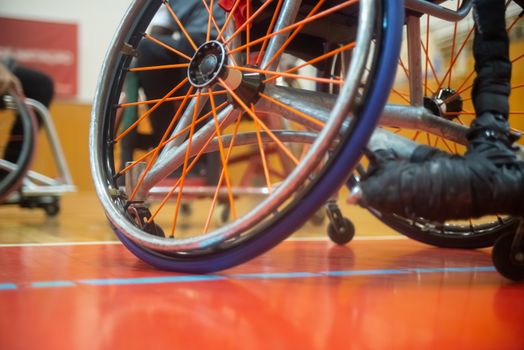
Wheelchair Motocross (WCMX) is the extreme sport born directly out of disability culture. Inspired by skateboarding and BMX, athletes drop into halfpipes, execute handstands on bowl copings, and land backflips using heavy-duty, full-suspension wheelchairs built with heavy shocks, grinding pegs, and reinforced caster wheels.
Venice Beach Skatepark in Los Angeles—with its smooth concrete, ocean views, and legendary skate history—is the ground zero for WCMX travelers.
- The Hardware: Brands like Box Wheelchairs build custom-welded WCMX frames with fox air-shocks that can absorb 10-foot drops.
- Where to Learn: Action Sports Kids (ASK) Foundation and local WCMX crews host open park clinics for visiting athletes looking to drop into their first bowl.
---
7. Logistics, Gear Hacks, & Insurance Strategy for Thrill-Seekers
Navigating the logistics of adaptive extreme travel requires meticulous preparation. Standard travel insurance almost always excludes "extreme or dangerous activities"—and finding policies that cover pre-existing disabilities alongside high-risk sports requires specific strategy.
Essential Extreme Travel Checklist:
- Insurance Coverage: Look into specialized policies like World Nomads (with Adventure Pass add-on) or Allianz Global Assistance. Explicitly declare both your mobility equipment and the specific activity (e.g., adaptive skydiving) in writing before purchasing.
- Air Travel with Gear: If traveling with a custom sports chair or sit-ski, document battery specs (lithium-ion watt-hour ratings for power attachments) and demand that your gear be gate-checked. Take photos of your equipment at the gate before boarding.
- Equipment Spares: Carry spare inner tubes, specialized quick-release axles, high-tensile zip ties, and a portable hex-key set in your carry-on luggage.
---
Logistics & Budget Overview
| Sport / Location | Estimated Cost ($USD) | Best Time to Visit | Accessibility Rating | Primary Logistics & Transport |
| :--- | :--- | :--- | :--- | :--- |
| Adaptive Skydiving<br>Moab, Utah, USA | $280 - $420 per jump | April – May / Sept – Oct | 5/5 (Full Assistance) | Fly into Salt Lake City (SLC), rent an accessible hand-control van, drive 3.5 hrs to Moab. |
| Sit-Skiing<br>Verbier, Switzerland | $650 - $900 / day (Inc. guide & gear) | December – April | 4/5 (High Tech Support) | Train from Geneva Airport directly to Le Châble; take the level-access gondola straight up to Verbier. |
| Adaptive Surfing<br>Jacó / Puntarenas, Costa Rica | $120 - $200 per session | December – April (Dry Season) | 4.5/5 (Matting & Crew) | Fly to San José (SJO); take an accessible private shuttle (approx. 1.5 hours) to Jacó Beach. |
| Wheelchair Paragliding<br>Pokhara, Nepal | $150 - $250 per flight | October – November | 3.5/5 (Rugged Terrain) | Fly to Kathmandu (KTM), connect on a domestic flight to Pokhara (PKR); book local accessible 4x4 transfer to Sarangkot. |
| Adaptive Whitewater Rafting<br>Rogue River, Oregon, USA | $1,200 - $1,800 (Multi-day trip) | July – August | 4/5 (Custom Outfitted) | Fly to Rogue Valley International-Medford Airport (MFR); outfitter provides accessible river basin shuttles. |
| WCMX Skate Park<br>Venice Beach, CA, USA | Free (Gear rental varies) | Year-round | 5/5 (Paved Public Access) | Fly into Los Angeles International (LAX); short 20-minute accessible Metro or ride-share to Venice Beach boardwalk. |
---
Final Thoughts: The Horizon Belongs to Everyone
The shift happening across global travel right now isn't about charity or basic compliance—it’s about engineering freedom. Extreme sports are no longer the exclusive playground of the non-disabled. With the right gear, expert outfitters, and a healthy appetite for adrenaline, the wild corners of the world are wide open. Pack your bags, lock your harness, and drop in.
---