The Zero-Touch Arrival: How Travel Lost Its Friction
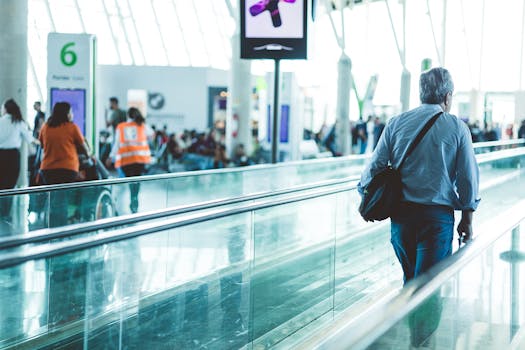
I stepped off the red-eye at Tokyo Haneda at 5:45 AM. My eyes burned, the aroma of piping-hot roasted green tea wafted from a nearby vending machine, and my brain was running on three hours of fitful sleep. Five years ago, this precise moment meant standing in a snake-like queue for 45 minutes, holding a crumpled paper arrival card, holding a physical passport, and praying my thumbprint registered on a dusty optical scanner.
Not today.
I walked toward the international arrivals corridor at a brisk stride. As I approached the slick, stainless-steel barrier, a subterranean sensor caught my approach. An infrared optical array flicked on, matched my face against my pre-registered digital profile in under 800 milliseconds, and the glass wings glided open with a soft, pneumatic whoosh. No physical passport scanned. No paper handed over. No surface touched.
I was through customs and on the platform for the Tokyo Monorail before my brain fully registered that I had officially cleared Japanese border control.
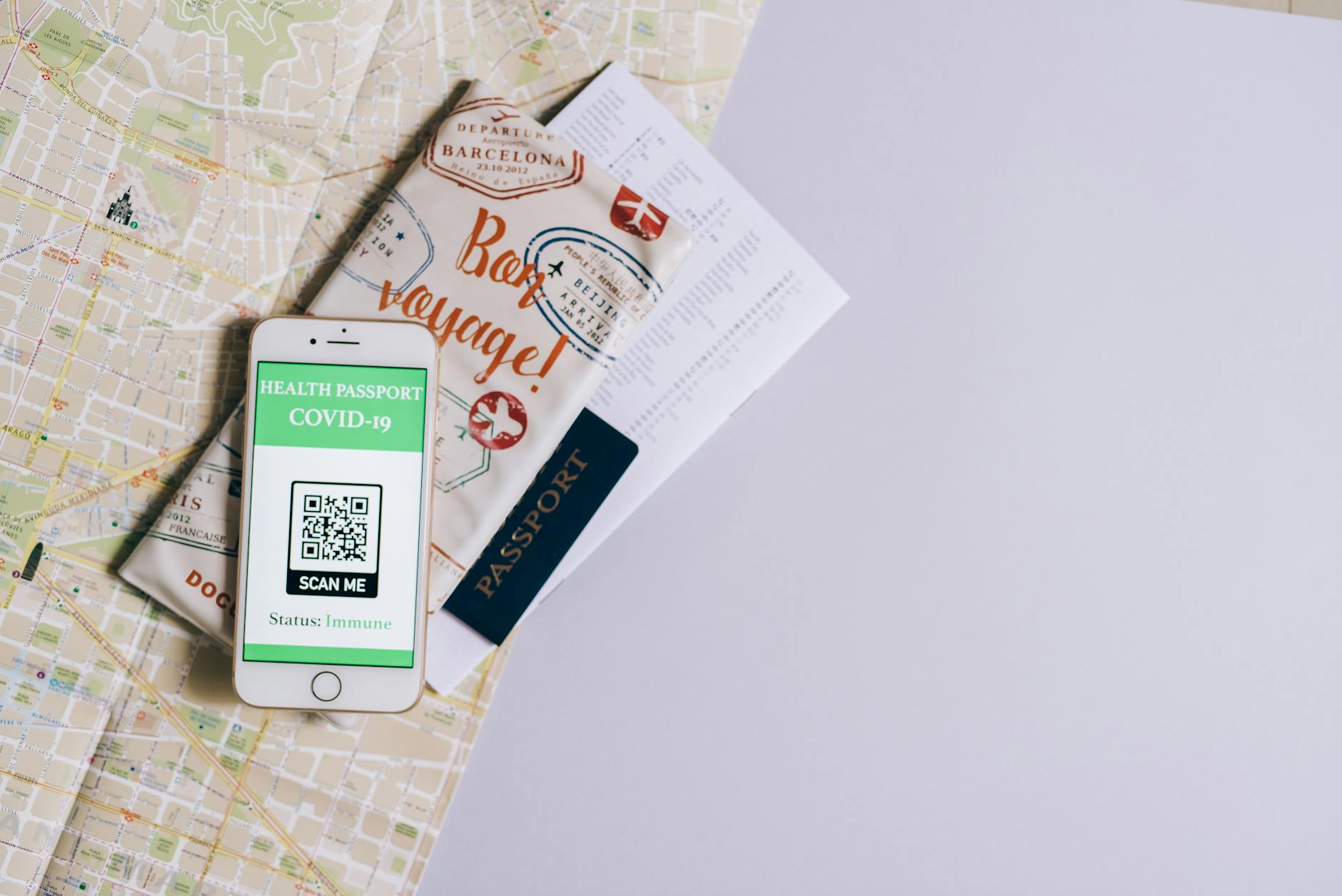
We have officially crossed the threshold into the era of hyper-efficient, zero-touch transit. Across global aviation hubs, municipal rail grids, and boutique hotel lobbies, contactless systems improving efficiency emerging this year are quietly dismantling every traditional bottleneck in travel. Here is how these integrated technologies work, where you will experience them first, and how to harness them on your next trip.
---
1. Biometric Corridors: Your Face is Your Passport
The days of frantically patting down your jacket pockets to find a physical paper boarding pass are rapidly drawing to a close. Airports worldwide are transitioning from traditional paper-and-plastic checks to continuous biometric walk-through corridors.
```
[Check-In / App] ➔ [Drop Bags via RFID] ➔ [Biometric Security] ➔ [Automated Gate Boarding]
(Zero Physical Touchpoints Required)
```
How It Works
Instead of verifying your identity at five separate checkpoints (check-in, bag drop, security, border control, and boarding gate), single-token biometric processing captures your facial geometry at your initial touchpoint. That high-resolution mathematical map becomes your temporary encrypted digital key throughout the airport.
- Singapore Changi (SIN): Terminals 1 through 4 have rolled out passport-free departure clearance for domestic residents and foreign visitors alike.
- Tokyo Haneda (HND) & Narita (NRT): The "Face Express" system allows passengers on participating airlines to drop bags, pass security, and board aircraft using only facial recognition.
- Dubai International (DXB): Smart Gates allow passengers to clear immigration in under 10 seconds using a blend of iris recognition and facial scanning.
> Pro-Tip: Complete your digital immigration cards (such as Japan’s Visit Japan Web or Singapore’s SG Arrival Card) 24 to 72 hours before departure. Upload your passport photo in high resolution to unlock automated e-gate access the moment your flight touches down.
---
2. Open-Loop Transit Nets: The End of Local Paper Tickets
If you have ever stood before a complex, foreign-language ticket machine in Paris, Berlin, or New York trying to figure out zone fares while carrying heavy luggage, you know the pain of legacy urban transit. That friction has been completely dismantled by open-loop contactless payment architecture.
```
+-----------------------------------------------------------------------+
| TRADITIONAL VS. OPEN-LOOP TRANSIT |
+-----------------------------------------------------------------------+
| FEATURE | TRADITIONAL SYSTEM | OPEN-LOOP CONTACTLESS |
+---------------------+------------------------+------------------------+
| Media | Paper Ticket / Smartcard| Smartphone / NFC Card |
| Queueing Required | Yes (At Kiosks) | Zero (Direct Tap) |
| Currency Exchange | Required (Cash/Coins) | Automatic Conversion |
| Daily Fare Capping | Rare / Manual | Automatic via Software |
+---------------------+------------------------+------------------------+
```
The Tap-and-Go Revolution
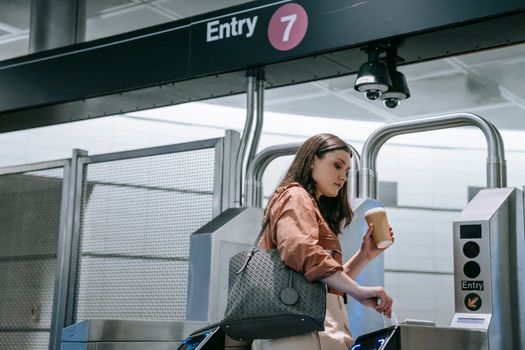
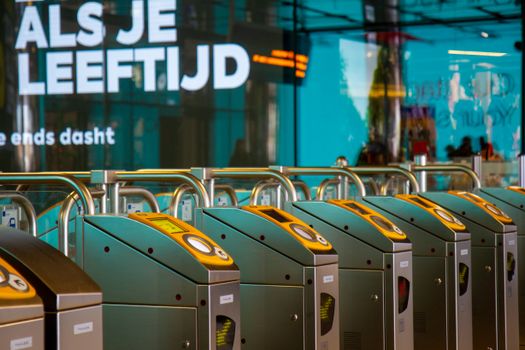
Cities are ditching proprietary transit cards in favor of EMV (Europay, Mastercard, Visa) open-loop networks. You simply tap your existing smartphone wallet or contactless credit card at the turnstile gate.
- London (TfL): The pioneer of open-loop payments, London automatically calculates your daily and weekly journeys, capping the cost so you never overpay.
- New York City (OMNY): Full rollout across all subways and buses allows travelers to tap their phone without touching a single metro machine.
- Milan (ATM): Ride the M1, M2, M3, or airport lines by simply tapping a contactless card at designated orange turnstiles.
> Pro-Tip: Enable Express Transit Mode on your iPhone or Apple Watch (or the equivalent setting on Android). This allows you to tap through transit turnstiles without unlocking your device, opening an app, or using FaceID—even if your phone battery enters low-power reserve mode.
---
3. Keyless Hospitality: Skip the Front Desk Entirely
The 4:00 PM hotel check-in line is where travel joy goes to die. After a ten-hour transatlantic flight, standing behind a family of five sorting out credit card pre-authorizations is brutal. Next-generation hospitality systems have erased this entire interaction.
```
1. Mobile Check-in (En Route) ➔ 2. Cloud Room Assignment ➔ 3. Bluetooth Key Download ➔ 4. Direct Room Access
```
The Seamless Hotel Arrival
Modern properties now push digital keys straight to your smartphone via encrypted Bluetooth Low Energy (BLE) or Near Field Communication (NFC) protocol.
- Pre-Arrival Verification: You upload your ID photo and upload payment details 24 hours prior via the hotel app.
- Cloud Room Assignment: When your room is clean, the PMS (Property Management System) automatically assigns your space and transmits a digital key payload.
- Curb-to-Bed Entry: You bypass the front desk entirely, walk past the lobby, tap your watch or phone against the door handle lock, and hear the latch drop.
- CitizenM Hotels: Offers a 60-second self-service experience or full mobile-app check-in where your phone controls the door, room lighting, blinds, and climate.
- Marriott Bonvoy & Hilton Honors: Both global brands now feature mobile digital keys across tens of thousands of properties worldwide.
---
4. Self-Service Bag Drop 2.0: Bag Ingestion in 15 Seconds
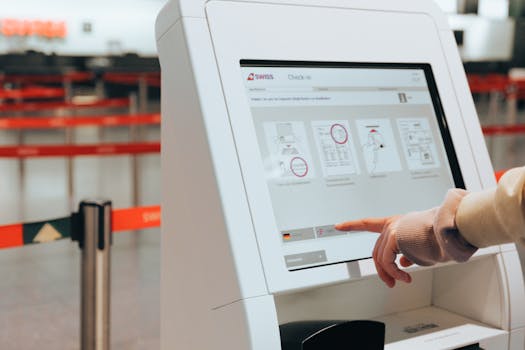
Checking a bag used to involve a lengthy queue to see an agent, a manually printed thermal sticker, and a manual handoff. Current-generation automated bag-drop units have transformed this into a frictionless, self-service micro-action.
```
[Scan Mobile Barcode]
│
▼
[Automated Tag Printer / Smart Tag Attachment]
│
▼
[Conveyor Belt Auto-Scan & Weight Check]
│
▼
[Instant App Push Notification]
```
How the Technology Accelerates Your Flow
1. Barcode Recognition: Place your bag on the smart conveyor scale; the machine instantly scans your mobile boarding pass.
2. Self-Tagging or RFID permanent tags: You attach a quick-peel thermal strip or use your own reusable digital bag tag (like BAGTAG or Lufthansa’s Rimowa Electronic Tag).
3. Automated Induction: High-speed 360-degree laser gantries read the barcode, weigh the bag, verify dimensions, and send it down the sorting chute in under 15 seconds.
4. Real-Time Cellular Tracking: Bluetooth and RFID tags trigger automated app updates as your bag enters the plane belly and hits the carousel on arrival.
---
5. Contactless Micro-Payments in Local Culture
A common fear among travelers is that high-tech efficiency strips away local atmosphere and charm. In practice, the exact opposite is happening: contactless micro-payments are allowing historic local markets and street food vendors to thrive while eliminating transaction delays and foreign currency exchange confusion.
Cashless Street Markets
* Tokyo Street Vendors & Yatai: Cash used to be absolute king. Now, local vendors accept contactless transit cards (Suica/Pasmo) or QR-based payments (PayPay) via micro-terminals.
* Singapore Hawker Centers: The SGQR system unifies over 30 payment schemes into a single visible printed QR code posted at food stalls. You scan, enter the exact dollar amount for your Hainanese Chicken Rice, tap submit, and the hawker gets immediate audio confirmation on their speaker box.
* Nordic Outdoor Flea Markets: Cities like Copenhagen and Stockholm are virtually 100% cashless. From historic flower stands to temporary pop-up bakeries, transactions take less than two seconds via card tap or mobile apps.
---
6. Digital Borders and the Arrival of Unified Border Tech
The ultimate test for travel technology is the border. Governments around the world are unifying immigration databases with front-line optical hardware to create zero-stop border crossings.
```
+-----------------------------------------------------------------------+
| GLOBAL BIOMETRIC ENTRY INITIATIVES |
+-----------------------------------------------------------------------+
| HUB / REGION | SYSTEM NAME | PRIMARY BENEFIT |
+--------------------+------------------------+-------------------------+
| European Union | EES (Entry/Exit System)| Automated facial/finger |
| | | registration at borders |
| United Kingdom | ETA Digital Scheme | Pre-linked electronic |
| | | travel authorization |
| United States | Global Entry Touchless | Zero-touch facial |
| | Express Kiosks | verification, no ticket |
+--------------------+------------------------+-------------------------+
```
What This Means for Your Next Trip
* No Physical Stamp Clutter: Border authorities are phasing out ink stamps in favor of cloud-stored digital entry records linked directly to your passport chip.
* Walk-Through Kiosks: At US arrival halls, Global Entry kiosks no longer require passport scanning or fingerprinting—you simply stand in front of the camera for two seconds, your face matches the flight manifest, and the officer calls you through by name.
---
QUICK FACTS: Master the Contactless Ecosystem
| Category | Recommended Setup / Apps | Estimated Setup Time | Hardware Required |
| :--- | :--- | :--- | :--- |
| Airport Transit | Clear, TSA PreCheck, Global Entry, Airline Native Apps | 15–20 Mins (One-Time) | Smartphone with Camera |
| Urban Rail/Bus | Apple Wallet / Google Wallet with Express Transit On | 2 Minutes | Smartphone / NFC Smartwatch |
| Hotel Access | Marriott Bonvoy, Hilton Honors, CitizenM App | 5 Minutes per Stay | Bluetooth 4.0+ Smartphone |
| Mobile Data | Airalo, Holafly, Nomad (Digital eSIMs) | 3 Minutes | Unlocked eSIM Compatible Phone |
| Local Dining | Wise Card, Revolut, Apple Pay | 10 Minutes | Contactless Debit/Credit Card |
How to Prepare Before Leaving Home:
1. Download Local Transit Apps Early: Before arriving in a new country, pre-load your mobile wallet with a virtual transit card (e.g., adding a digital Suica card directly in Apple Wallet using a Visa/Mastercard).
2. Setup High-Security Passkeys: Enable biometric authentication (Face ID / Touch ID) on your banking and travel apps so you can approve payment verification requests in seconds without waiting for international SMS codes.
3. Carry an eSIM: Purchase and activate a global eSIM before departure. Contactless hotel keys and real-time biometric confirmations require active cloud connectivity the moment you step off the plane.
---
The Verdict: Frictionless Travel Is Finally Here
Travel should be defined by the crisp autumn breeze walking down a cobblestone alley in Kyoto, or the rich aroma of espresso inside a quiet Roman bar—not by the soul-crushing hours spent standing in lines, handling paper vouchers, and filling out carbon-copy arrival slips.
The global shift toward contactless systems improving efficiency emerging this year isn't about replacing human hospitality with cold machines. It is about removing operational friction so you can spend less time managing logistics and more time experiencing the world.
Pre-load your digital wallet, set up your biometric profiles, step up to the gate, and keep moving forward. The world is open, and the doors are swinging open automatically.
---