The World's Best-Kept Secrets: Places So Unreal, They Look Photoshopped
I remember the first time I saw a photo of a place that genuinely made me scoff. "No way," I muttered, zooming in on my phone, convinced it was the work of a skilled digital artist. The colors were too vibrant, the landscape too perfect, the entire scene too… unreal. But then, a quick search, a deeper dive, and the incredible truth emerged: it was real. Every impossible hue, every mind-bending vista, every jaw-dropping detail existed right here on Earth.
That moment ignited a new quest for me. Forget the well-trodden paths and the over-filtered tourist traps. My mission became clear: hunt down these "fake but real" wonders. The places that defy belief, challenge perception, and often, are so incredible that the locals who live beside them would probably prefer they remained a secret – untouched by the Instagram hordes.
Today, I'm pulling back the curtain on some of the planet's most astonishing, almost-too-good-to-be-true photo spots. These aren't just pretty places; they're experiences that will make you question reality, fill your camera roll with otherworldly shots, and give you stories that no one will quite believe until they see your proof. Get ready to explore the impossible and uncover the magic that's waiting just beyond the lens.
1. The Pink Mirage of Hutt Lagoon, Australia: Where the Water Blushes
My first encounter with Hutt Lagoon was purely accidental. We were road-tripping along Western Australia's Coral Coast, chasing sunsets and deserted beaches, when suddenly, a vivid splash of bubblegum pink appeared on the horizon. I slammed on the brakes, convinced my eyes were playing tricks on me after too many hours behind the wheel. But no, there it was: an immense, shimmering lake, radiating a color so intense it looked like a giant had spilled a vat of strawberry milkshake across the landscape.
Hutt Lagoon isn't just a pretty face; it's a scientific marvel. Its vibrant pink hue comes from a specific type of algae, Dunaliella salina, which produces beta-carotene – the same pigment found in carrots! This algae thrives in the lake's extremely high salinity, creating a natural spectacle that changes in intensity depending on the time of day, cloud cover, and season.
Getting the Shot:
* Location: Near Port Gregory, Western Australia, about 6 hours north of Perth. It's a remote area, so a rental car is essential.
* Best Time to Visit: Mid-morning to late afternoon on a clear, sunny day offers the most intense color. Overcast skies can mute the pink.
* Vantage Points: There are several roadside pull-offs along Port Gregory Road that offer fantastic views. For the truly epic, "looks fake" shots, consider a scenic flight or drone photography (check local regulations and permits beforehand). Flying over the lake reveals incredible patterns and variations in color.
* Practical Tips: There are no facilities directly at the lake, so bring water, snacks, and sun protection. The salt can be harsh on shoes if you venture too close to the edge. Don't expect to swim; this is purely for admiring and photographing. The nearest town for supplies is Port Gregory or Kalbarri. Accommodation options are limited, so book in advance.
Why Locals Might Keep it Quiet:
While not entirely secret, its remote location means it doesn't get the same crowds as other Australian icons. Locals who live nearby probably appreciate the tranquility and the fact that it remains a natural, unspoiled wonder without hordes of tourists. It's a place best experienced in relative solitude.
2. Bolivia's Infinite Sky: Salar de Uyuni's Mirror Effect
I'd seen countless photos of Salar de Uyuni's mirror effect before my trip to Bolivia, yet nothing prepared me for the actual experience. Standing on the world's largest salt flat during the rainy season (December to April), with a thin layer of water transforming the entire landscape into a colossal, flawless mirror, was genuinely disorienting. The horizon vanished, the sky melted into the ground, and for a moment, I felt like I was floating in an infinite, ethereal void. It was like stepping into a dream, or perhaps a glitch in the matrix.
This phenomenon is so perfect, so utterly surreal, that it's the ultimate "looks fake but is real" destination. The vastness of the salt flat (over 10,000 square kilometers) means you can play with perspective in ways impossible anywhere else, creating iconic shots where tiny figures appear to hold up giant objects or walk on clouds.
Getting the Shot:
* Location: Southwestern Bolivia, accessible primarily from Uyuni.
* Best Time to Visit: December to April for the mirror effect. If you go during the dry season (May-November), you'll see hexagonal salt patterns and potentially a clearer view of the distant volcanoes, which is also stunning but less "fake."
* Tours: You must go with a guided tour. 3-day/2-night tours are popular, but day trips are also available. Expect to pay anywhere from $150-$300 USD for a multi-day tour, including food and basic accommodation.
* Practical Tips: Bring rubber boots (your tour operator often provides them, but check), sunglasses (the glare is intense), warm layers (it gets cold at night), and plenty of spare camera batteries. A wide-angle lens is your best friend here for capturing the expansive landscape and perspective shots. Don't be afraid to get low to the ground for maximum reflection. Your guide will often know the best spots for mirror shots and perspective tricks.
Why Locals Might Keep it Quiet:
While the Salar is a major tourist draw, locals often have preferred, less-trafficked spots for photography within the vast expanse. They also understand the delicate balance of the ecosystem and might prefer to keep certain pristine areas less exposed to mass tourism, preserving the magic for those who truly seek it out.
3. China's Painted Mountains: Zhangye Danxia National Geopark
Imagine a landscape painted by a whimsical god, brushstrokes of crimson, gold, emerald, and sapphire sweeping across rolling hills. That's Zhangye Danxia National Geopark in China. When I first saw photos of these "Rainbow Mountains," I was convinced it was an elaborate digital painting. Then, standing there, gazing across the undulating, striped terrain, I felt an almost childlike wonder. The sheer scale and vibrant, impossible colors made it feel like I'd stepped onto another planet.
These incredible formations are the result of millions of years of sandstone and mineral deposits being compressed and then uplifted by tectonic plates. Wind and rain then sculpted them into the dramatic peaks and valleys we see today, revealing the layers of color.
Getting the Shot:
* Location: Gansu Province, China, near the city of Zhangye.
* Best Time to Visit: Sunrise or sunset offers the most dramatic and vibrant colors when the low angle of the sun illuminates the mineral layers. A clear day after rain can also intensify the hues.
* Access: There's an entry fee (around 40-60 CNY, plus 20-30 CNY for the mandatory park bus). The park has several viewing platforms connected by a shuttle bus system.
* Practical Tips: Allow at least 3-4 hours to explore all the viewpoints. Each platform offers a different perspective and unique photo opportunities. A tripod is useful for sunrise/sunset shots to capture the rich colors in lower light. Bring a telephoto lens to pick out details and a wide-angle for the grand vistas. Be prepared for crowds, especially during peak season. Comfortable walking shoes are a must as there's a fair bit of walking between bus stops and viewing platforms.
Why Locals Might Keep it Quiet:
While a national park, the best times for photography (sunrise/sunset) are often less crowded than midday. Locals who frequent the area likely know the quieter platforms or even less-official spots that offer unique angles away from the main tourist flow. The sheer scale also means there are always hidden corners.
4. The Wisteria Wonderland of Kawachi Fujien, Japan
Stepping into Kawachi Fujien Wisteria Garden during peak bloom is like walking into a fairytale – or perhaps a dream sequence from an anime movie. I'd seen pictures of these incredible wisteria tunnels, but the reality was far more immersive. Cascading curtains of purple, white, pink, and blue blossoms hung heavy with perfume, creating a living, breathing canopy that felt utterly magical. The light filtering through the petals, the gentle hum of bees, and the sheer volume of flowers made it feel less like a garden and more like a portal to another dimension.
This private garden, tucked away in Kitakyushu, is famous for its two main wisteria tunnels, stretching for hundreds of meters. It’s a seasonal spectacle that’s fleeting but unforgettable.
Getting the Shot:
* Location: Kitakyushu, Fukuoka Prefecture, Japan.
* Best Time to Visit: Late April to early May is prime wisteria season. Check their official website for bloom updates, as it varies slightly each year.
* Access: Tickets must be purchased in advance (often via convenience stores like 7-Eleven or FamilyMart in Japan), especially during peak season. Expect to pay around 1000-1500 JPY depending on the bloom status. Getting there involves a train to Yahata Station, then a shuttle bus or taxi.
* Practical Tips: Go on a weekday and try to arrive right when it opens (or just before closing) to avoid the biggest crowds. A wide-angle lens will help capture the expansive tunnels, but don't forget a macro lens or your phone's macro mode to get detailed shots of the individual blossoms. Look for unique angles, like shooting upwards to emphasize the canopy, or focusing on the light filtering through. The garden is also home to over 150 wisteria plants of 20 different species, so take your time to appreciate the variety.
Why Locals Might Keep it Quiet:
The garden is very popular locally and nationally during bloom season, but its slightly out-of-the-way location compared to major tourist hubs in Japan means it's less known internationally. Locals often know the precise week for peak bloom and how to navigate the ticketing system and transport for the best experience, information that isn't always readily available to first-time foreign visitors.
5. Iceland's Emerald Canyon: Fjaðrárgljúfur
Iceland is full of landscapes that look straight out of a fantasy novel, but Fjaðrárgljúfur (try saying that five times fast!) stands out. This massive, winding canyon, carved by a glacial river over millennia, is an astonishing tapestry of vibrant green moss, dark volcanic rock, and crystal-clear water. When I first peered over the edge, the sheer scale and the almost luminous green of the moss clinging to the cliffs made it feel like I was gazing into a prehistoric world, a place untouched by time. It was so perfectly sculpted, so intensely colored, it defied natural explanation.
The canyon is approximately 100 meters deep and about 2 kilometers long, with steep walls and a meandering river at its base. It's a testament to the raw power of nature.
Getting the Shot:
* Location: Southeast Iceland, off the Ring Road (Route 1), between Kirkjubæjarklaustur and Skaftafell.
* Access: A short, relatively easy hike from the parking lot leads to several viewing platforms along the canyon's edge. The path is well-maintained.
* Best Time to Visit: Any time of year offers unique beauty, but summer brings the most vibrant greens. Golden hour (sunrise/sunset) casts a magical light over the canyon.
* Practical Tips: Wear sturdy, waterproof hiking boots, especially if it's been raining – the paths can get muddy. Dress in layers, as Icelandic weather is notoriously unpredictable. A wide-angle lens is essential to capture the canyon's grandeur. If you have a drone (and are permitted to fly it responsibly), it offers truly breathtaking aerial perspectives. Remember to stay on marked paths to protect the fragile moss and for your own safety. There are no facilities at the canyon itself, so plan accordingly.
Why Locals Might Keep it Quiet:
While it gained some international fame after appearing in a Justin Bieber music video (much to the chagrin of many locals and environmentalists), Fjaðrárgljúfur is still less crowded than more accessible Golden Circle attractions. Locals often cherish these wild, pristine areas and lament the impact of over-tourism. Knowing the best times to visit to avoid crowds, or discovering quieter viewpoints slightly off the main path, are the kinds of "secrets" they might hold dear.
6. The Elusive Swirls of The Wave, Arizona, USA
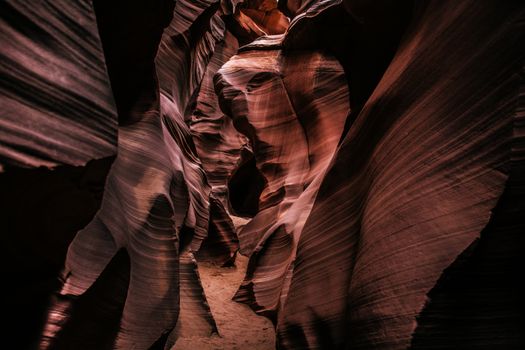
Now, this is a true "locals don't want tourists to know" spot, not because it's physically hidden, but because access is so incredibly restricted. The Wave, located in the Coyote Buttes North wilderness area on the Arizona-Utah border, is one of the most sought-after and elusive natural wonders on Earth. Its hypnotizing, swirling sandstone formations look less like geology and more like a fluid painting, a frozen moment of liquid rock. When I finally saw a friend's permitted photos, I was convinced it was CGI. The reality, however, is a masterpiece of wind and water erosion, a place so fragile and unique that only a handful of people are allowed to visit each day.
The difficulty in obtaining a permit makes visiting The Wave a true pilgrimage, and the reward is an unparalleled photographic opportunity.
Getting the Shot:
* Location: Coyote Buttes North, near Kanab, Utah, and Page, Arizona.
* Access: Extremely limited. Only 64 permits are issued daily (48 online via lottery 4 months in advance, and 16 via a walk-in lottery 2 days prior to the hike). Applying is a must, and winning is pure luck.
* The Hike: There are no marked trails. It's a challenging 6.4-mile (10.3 km) round trip hike over rugged, sandy, and rocky terrain, requiring excellent navigation skills (GPS recommended).
* Practical Tips: If you win a permit, research the hike extensively. Bring at least a gallon of water per person, sturdy hiking boots, sun protection, and a map/GPS. Go with experienced hikers or consider hiring a permitted guide. A wide-angle lens is crucial for capturing the sweeping lines of the sandstone. Early morning or late afternoon light makes the colors pop. Respect the delicate formations; do not climb on them.
Why Locals Might Keep it Quiet:
This is the epitome of a "secret" location due to its permit system. Locals who live in the area and are familiar with the lottery system or the challenging hike might not actively discourage tourism, but they certainly wouldn't broadcast the "easy way in" because there isn't one. The limited access is precisely what preserves its pristine, unreal beauty. It's a prize for the persistent and the lucky.
7. The Bioluminescent Beaches of Vaadhoo Island, Maldives
Imagine walking along a moonlit beach, and with every step, the sand beneath your feet lights up with a celestial glow. That's the magic of the bioluminescent beaches, most famously on Vaadhoo Island in the Maldives. My first experience with this was pure disbelief. It looked like someone had scattered millions of tiny, iridescent blue LEDs into the ocean. It felt like walking through a galaxy, the waves gently lapping and leaving trails of sparkling stardust. It's a natural phenomenon so otherworldly, it challenges every notion of what a beach should be.
This incredible light show is caused by microscopic marine organisms called phytoplankton (specifically dinoflagellates). When disturbed by waves or footsteps, they emit a beautiful blue light as a defense mechanism.
Getting the Shot:
* Location: Vaadhoo Island is one of the Raa Atoll islands in the Maldives. Other islands can also experience this, but Vaadhoo is often cited.
* Best Time to Visit: The phenomenon is unpredictable, but generally occurs more often during warmer months, from late summer to winter (roughly July to February). A new moon or crescent moon phase provides the darkest skies, making the bioluminescence more visible.
* Access: Vaadhoo is a local island, meaning you can stay there without being confined to a resort. You'll need to arrange transport via speedboat or ferry from Malé.
* Practical Tips: This is a challenging shot for photographers. You'll need a fast lens (f/2.8 or wider), a tripod, and manual camera settings (high ISO, long exposure – typically 10-30 seconds). Be patient, as the intensity varies. Avoid using flash, as it will wash out the natural light. Simply walking or splashing in the water can trigger the glow, so be ready! Also, wear water shoes to protect your feet from any sharp objects on the seabed.
Why Locals Might Keep it Quiet:
While some resorts might promote it, the phenomenon itself is fickle. Locals know the best conditions and times to spot it, and perhaps the quieter, less-disturbed stretches of beach where it's most vibrant. They might also appreciate its transient, unpredictable nature, which adds to its mystique and keeps it from becoming a guaranteed, overcrowded attraction. It's a secret shared by nature itself.
Your Next "Fake But Real" Adventure Awaits!
There you have it – seven places around the globe that defy expectations, challenge reality, and offer some of the most unbelievable photo opportunities you'll ever encounter. From the blushing waters of Australia to the starlit sands of the Maldives, these destinations prove that Mother Nature is the ultimate artist, capable of creating wonders that truly look "fake but are real."
These aren't just places to snap a quick photo; they're experiences that will deepen your appreciation for our planet's incredible diversity and beauty. They'll make you pause, wonder, and perhaps, even question what you thought was possible.
So, which impossible landscape will you chase first? Will you wander through a wisteria tunnel, brave the salt flats, or chase the elusive glow of a bioluminescent beach? Remember to travel responsibly, respect local communities and environments, and most importantly, soak in every mind-bending moment.
Share your dream "fake but real" destination in the comments below! And don't forget to tag @Tripsora and use #FakeButReal on your next incredible adventure – we can't wait to see your impossible shots!
---