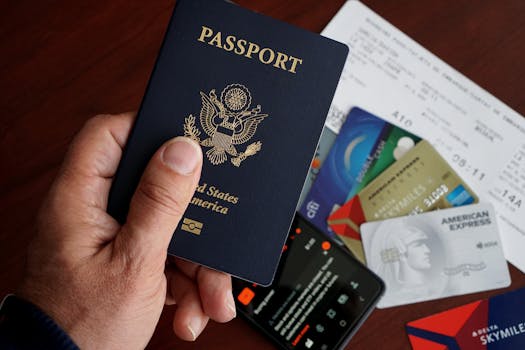
Unlock FREE Travel: Credit Card Hacks That Will Blow Your Mind!
Remember that time I scored a business class upgrade to Tokyo for virtually nothing, or slept in a luxury overwater bungalow in the Maldives on points alone? It wasn't magic, nor did I win the lottery. It was pure, unadulterated credit card wizardry, and today, I'm pulling back the curtain to reveal the secrets that will change how you travel forever.
For years, I thought credit cards were just for emergencies or managing cash flow. Then, a savvy traveler friend, sipping a complimentary champagne in an airport lounge (while I was crammed at the gate), introduced me to the world of points and miles. My jaw dropped as he explained how he hadn't paid for a flight in years. Intrigued, I dove headfirst into the rabbit hole, and let me tell you, it's been the most rewarding financial journey of my life. I've since flown across continents in comfort, stayed in breathtaking resorts, and explored incredible destinations, all while keeping my hard-earned cash in my pocket.
This isn't about going into debt or spending more than you can afford. This is about being strategic, smart, and leveraging the powerful tools already available to you. If you're ready to stop paying full price for your adventures and start unlocking a world of free travel, buckle up. These credit card tricks are about to blow your mind and transform you into a travel hacker extraordinaire!
---
The Golden Ticket: Mastering Sign-Up Bonuses for Instant Travel Riches
Let's cut to the chase: the fastest way to accumulate a mountain of points and miles is through credit card sign-up bonuses. These aren't just small welcome gifts; they are often massive injections of points that can literally fund your next international trip after meeting a minimum spending requirement.
How it works:
Credit card companies offer substantial bonuses (e.g., 50,000 to 100,000 points) if you spend a certain amount within the first few months of opening the card (e.g., $3,000 in 3 months). That might sound like a lot, but think about your everyday expenses: groceries, utilities, rent (if your landlord accepts cards, or through services like Plastiq), car insurance, dining out, even that new gadget you were planning to buy. By strategically timing your applications and funneling your regular spending through new cards, you can easily hit these targets.
Personal Anecdote:
My first big win was with the Chase Sapphire Preferred card. After meeting the $4,000 spend, I earned 60,000 Chase Ultimate Rewards points. I transferred those points to United Airlines and booked a round-trip flight from New York to Rome for less than $100 in taxes! Sipping espresso by the Colosseum, knowing my flight cost me virtually nothing, was an unparalleled feeling. That single bonus saved me over $1,000 on airfare.
Actionable Tip:
Research cards like the Chase Sapphire Preferred/Reserve, American Express Platinum/Gold, or Capital One Venture X. These cards consistently offer high sign-up bonuses and flexible points that can be transferred to multiple airline and hotel partners. Always check the current offers, as they change frequently. And remember the "Chase 5/24 rule" – if you've opened 5 or more personal credit cards across any bank in the last 24 months, you likely won't be approved for new Chase cards. Plan your applications wisely!
---
No More Rip-Offs: Eliminating Foreign Transaction Fees & ATM Woes
Imagine landing in Thailand, excited to explore vibrant markets, only to realize every single purchase you make with your credit card is costing you an extra 3%! That's the insidious foreign transaction fee, a hidden charge that can quickly add up and eat into your travel budget.
The Problem:
Most standard credit cards charge a 2-3% fee on all transactions made in a foreign currency. For a two-week trip where you spend $2,000, that's an extra $40-$60 down the drain. Similarly, using your regular debit card at international ATMs can incur multiple fees: your bank's fee, the foreign ATM's fee, and often a nasty exchange rate markup.
The Solution:
Get credit cards and debit cards with no foreign transaction fees. Many premium travel cards offer this perk, and it's non-negotiable for international adventurers.
Personal Anecdote:
Before I knew better, I once went on a shopping spree in the souks of Marrakech. Upon returning home, I saw an extra $75 added to my statement from foreign transaction fees. It felt like a punch to the gut! That was the last time I traveled without a no-FTF card. Now, whether I'm buying gelato in Florence or souvenirs in Kyoto, I swipe confidently, knowing every cent goes towards my purchase, not hidden fees.
Actionable Tip:
1. Credit Cards: Cards like the Chase Sapphire Preferred/Reserve, Capital One Venture X, American Express Platinum/Gold, and many airline/hotel co-branded cards (e.g., United Explorer, Marriott Bonvoy Boundless) waive foreign transaction fees. Make sure to double-check before you travel.
2. Debit Cards: For ATM withdrawals, consider opening a checking account with banks like Charles Schwab Investor Checking or Fidelity Cash Management. These accounts typically refund all ATM fees worldwide and offer excellent exchange rates, making it incredibly cheap to access local currency.
3. Always Pay in Local Currency: When a merchant abroad asks if you want to pay in local currency (e.g., Euros) or your home currency (e.g., USD), always choose the local currency. This is called Dynamic Currency Conversion (DCC), and paying in your home currency almost always results in a worse exchange rate set by the merchant's bank, essentially another hidden fee.
---
Beyond Points: Unlocking Luxury Perks and Protections That Save You Thousands
While points for flights and hotels are fantastic, credit cards offer a treasure trove of often-overlooked perks and protections that can elevate your travel experience and save you from potential disasters. These aren't just "nice-to-haves"; they are game-changers.
1. Comprehensive Travel Insurance:
Many premium travel cards offer robust travel insurance benefits. This can include:
* Trip Cancellation/Interruption: Reimburses non-refundable expenses if your trip is canceled or cut short due to covered reasons (illness, severe weather).
* Trip Delay: Compensates you for expenses (meals, lodging) if your flight is delayed beyond a certain threshold (e.g., 6 hours).
* Lost/Delayed Baggage: Provides coverage for essential items if your luggage is delayed or lost.
* Primary Car Rental Insurance: This is huge! Many personal car insurance policies only offer secondary coverage, meaning they kick in after your primary insurance. Cards like the Chase Sapphire Reserve offer primary coverage, potentially saving you hundreds on rental car company insurance.
2. Airport Lounge Access:
Imagine your flight is delayed, and instead of battling crowds at the gate, you're relaxing in a quiet lounge, enjoying complimentary food, drinks, Wi-Fi, and comfortable seating. Cards like the American Express Platinum and Capital One Venture X offer access to exclusive lounge networks (Centurion Lounges, Priority Pass, Plaza Premium, etc.), making layovers something to look forward to.
3. Hotel Elite Status & Upgrades:
Some cards offer automatic elite status with hotel chains, leading to perks like complimentary breakfast, room upgrades, late check-out, and bonus points. For example, the Amex Platinum offers Hilton Honors Gold and Marriott Bonvoy Gold Elite status.
4. Global Entry/TSA PreCheck Credit:
Hate waiting in long security lines? Many premium cards offer a statement credit (typically $100) to cover the application fee for Global Entry or TSA PreCheck every 4-5 years. Global Entry even includes TSA PreCheck!
Personal Anecdote:
My flight from Istanbul to Kathmandu was delayed by 8 hours due to a technical issue. Instead of being stressed, I calmly walked into the beautiful Turkish Airlines lounge (accessible via my Priority Pass Select membership from my Chase Sapphire Reserve), enjoyed a delicious buffet, sipped on local tea, and caught up on emails in a quiet corner. While others were frantically searching for seats and snacks, I was in pure bliss. That one experience alone justified the annual fee of my card. Another time, my rental car in Costa Rica got a minor ding. Thanks to my Chase Sapphire Reserve's primary rental car insurance, I filed a claim, and they handled everything directly with the rental company, saving me hundreds and a massive headache.
Actionable Tip:
Don't just look at points; dig into the benefits guide of your premium credit cards. You might be surprised by the incredible value hidden within. These benefits often far outweigh the annual fee if you travel even a couple of times a year.
---
Strategic Spending: Maximizing Everyday Purchases for Travel Rewards
The beauty of travel hacking isn't just about sign-up bonuses; it's about making every dollar you spend work harder for you. This means understanding category bonuses and using the right card for the right purchase.
1. Category Bonuses:
Many cards offer accelerated earning rates on specific spending categories.
* Dining: Some cards offer 3x or 4x points on restaurant spending.
* Groceries: Other cards might give you 3x or 4x points at supermarkets.
* Travel: Specific cards offer 2x, 3x, or even 5x points on travel purchases (flights, hotels, car rentals).
* Gas: Some cards offer bonus points at gas stations.
2. The "Wallet Strategy":
Instead of just using one card, develop a "wallet strategy." Carry 2-3 cards that complement each other's bonus categories.
* Use Card A for dining (e.g., Amex Gold for 4x points on restaurants).
* Use Card B for travel (e.g., Chase Sapphire Reserve for 3x points on travel).
* Use Card C for groceries (e.g., Amex Gold for 4x points on US supermarkets).
* For everything else, use a card that gives a solid 1.5x or 2x points on all purchases (e.g., Capital One Venture X, Chase Freedom Unlimited).
3. Shopping Portals:
Don't forget about shopping portals! Before making an online purchase, check if your credit card issuer (Chase Ultimate Rewards, Amex Membership Rewards, Capital One Shopping) or a third-party portal (Rakuten, TopCashback) offers bonus points or cashback for shopping at that retailer. It's free money/points for purchases you were already going to make.
Personal Anecdote:
My weekly grocery run used to be a mundane chore. Now, it feels like a treasure hunt! By using my Amex Gold card, I earn 4x points on every dollar spent at US supermarkets. That means a $150 grocery bill earns me 600 points. Over a year, that's roughly 30,000 points just from groceries – enough for a domestic flight or a couple of free nights at a mid-tier hotel. I also make it a habit to check Rakuten before any online purchase. I once bought a new camera lens through a portal, earning an extra 5,000 Amex points on top of the points from my credit card! Every dollar spent now gets me closer to my next adventure, even the one I spend on organic kale.
Actionable Tip:
Review your spending habits. What are your biggest categories? Find cards that offer bonus points in those areas. Stick a small label on each card reminding you of its bonus categories, or use an app like MaxRewards to optimize.
---
The Art of the Transfer: Getting Unbelievable Value from Your Points
Earning points is great, but knowing how to redeem them for maximum value is where the true magic happens. Not all points are created equal, and transferring them to airline or hotel partners can unlock redemptions that will literally blow your mind.
1. Understanding Transfer Partners:
Flexible points currencies like Chase Ultimate Rewards, American Express Membership Rewards, and Capital One Miles allow you to transfer your points to a variety of airline and hotel loyalty programs at a 1:1 ratio (or sometimes even better during promotional periods).
2. The "Sweet Spot" Redemption:
This is where you find amazing value. For example, transferring Chase Ultimate Rewards to Hyatt often yields incredible value, as Hyatt's award chart can get you luxury hotels for fewer points than other chains. Similarly, transferring Amex points to ANA (All Nippon Airways) for round-the-world business class tickets or to Singapore Airlines KrisFlyer for their Suites Class can offer astounding value, sometimes 5-10 cents per point!
3. When to Transfer vs. Booking Through a Portal:
* Portal: Booking directly through your credit card's travel portal (e.g., Chase Ultimate Rewards Travel) is often straightforward and offers a fixed value (e.g., 1.25 cents per point for Chase Sapphire Preferred, 1.5 cents for Reserve). This is great for cheap flights or hotels where award space might be limited.
* Transfer Partners: Transferring points to airline or hotel partners usually offers the highest potential value, especially for business/first class flights or luxury hotel stays. However, it requires more research to find award availability.
Personal Anecdote:
I once wanted to fly business class from New York to Lisbon. A cash ticket was easily $3,000. Instead, I transferred 60,000 Chase Ultimate Rewards points to United Airlines (a 1:1 transfer). United is a Star Alliance partner with TAP Portugal, so I booked a business class seat on TAP for those 60,000 points plus about $100 in taxes. That's an incredible 5 cents per point in value! I toasted my complimentary glass of vinho verde in the sky, reflecting on how I had just saved thousands with a few clicks. Another time, I redeemed 25,000 Hyatt points (transferred from Chase) for a night at the Grand Hyatt Bali, a resort that would have cost over $300 cash.
Actionable Tip:
Before booking any major travel, check both your credit card's travel portal and its transfer partners. Learn about "award charts" for specific airlines and hotels to identify sweet spots. Websites like The Points Guy and Doctor of Credit are excellent resources for finding these deals. Be aware that point transfers are usually irreversible, so only transfer when you're ready to book.
---
Credit Score Savvy: Protecting Your Financial Health While Chasing Rewards
All this talk of credit cards might make some people nervous about their credit score. But here's the truth: responsible travel hacking can actually improve your credit score over time, not harm it. The key is being strategic and disciplined.
1. The Importance of a Good Credit Score:
A high credit score (700+) is essential for getting approved for the best travel credit cards. It signals to lenders that you are a responsible borrower.
2. Pay Your Bills On Time, Every Time:
This is the golden rule. Payment history is the most significant factor in your credit score. Set up autopay for all your cards.
3. Keep Credit Utilization Low:
Credit utilization is the amount of credit you're using compared to your total available credit. Keep this below 30% on each card and across all cards. For example, if you have a $10,000 credit limit, try to keep your balance below $3,000. Paying off your balance in full each month is the best strategy.
4. Don't Apply for Too Many Cards Too Quickly:
Each credit card application results in a "hard inquiry" on your credit report, which can temporarily ding your score. Space out your applications (e.g., 3-4 months between applications, or be mindful of the Chase 5/24 rule).
5. Understand Annual Fees:
Many premium travel cards come with annual fees ($95-$695+). Don't let this scare you! Calculate if the benefits (points, lounge access, travel credits, insurance) outweigh the fee. If a card offers $300 in travel credits, free lounge access worth hundreds, and a massive sign-up bonus, a $95 annual fee is a steal. You can often call the issuer before your annual fee hits and ask for a "retention offer" or consider downgrading to a no-annual-fee version if the benefits no longer align with your travel style.
Personal Anecdote:
When I first started, I was worried about opening multiple cards. But by paying all my balances in full every month and keeping an eye on my credit utilization, my score actually increased because my overall available credit went up, and I was demonstrating responsible credit management. I treat my credit cards like a powerful financial tool, not a free ATM. It's about being smart and strategic, not reckless. I've also successfully called banks to get retention offers (bonus points or statement credits) when my annual fee was due, extending the value of my cards even further.
Actionable Tip:
Monitor your credit score regularly using free services like Credit Karma or your credit card issuer's free FICO score. Understand the factors that affect your score and manage your cards responsibly. Remember, a good credit score is your passport to the best travel rewards.
---
Your Next Adventure Awaits: Start Hacking Today!
The world of credit card travel hacking is vast, exhilarating, and incredibly rewarding. It's about empowering yourself to travel more, travel better, and experience the world without the financial burden. From scoring free business class seats to sipping cocktails in exclusive airport lounges, from luxury hotel stays to comprehensive travel insurance, the tricks I've shared today are not just theoretical – they are tried, tested, and have personally saved me thousands of dollars on countless adventures.
Imagine yourself sipping champagne on a flight to Sydney, knowing you paid next to nothing for your ticket. Picture waking up in a stunning resort in Bali, courtesy of your points. These aren't far-fetched dreams; they are achievable realities for anyone willing to learn and apply these strategies.
So, which credit card trick will you try first? Will you dive into sign-up bonuses, optimize your everyday spending, or unlock those incredible travel perks? The journey starts now.
Don't keep these secrets to yourself! Share this guide with your travel buddies and let's all travel smarter, not harder! What's your favorite credit card hack? Share your tips and dream destinations in the comments below – I'd love to hear them!
---