Planning a trip to Northern Thailand? This comprehensive 4 days in Chiang Mai itinerary provides a practical, day-by-day guide to experiencing the best of the city, from its historic temples to its renowned cuisine and ethical elephant encounters. We focus on well-known landmarks and authentic experiences to help you make the most of your visit.
Itinerary at a glance
| Category | Details |
|---|---|
| Best Time to Visit | November to February (cool, dry season) |
| Typical Daily Cost (approx.) | £30-£60 per person (excluding accommodation and major tours) |
| How to Get There | Fly into Chiang Mai International Airport (CNX) |
| Recommended Stay Length | 4 days is ideal for a good overview, 5-7 days for deeper exploration |
| Currency | Thai Baht (THB) – check current exchange rates |
| Language | Thai (English widely spoken in tourist areas) |
Note: All prices are approximate and in GBP (£). Please check current prices, opening hours, and local regulations before your trip.
Where to stay in Chiang Mai
Choosing the right neighbourhood can significantly enhance your Chiang Mai experience. Here are a few popular areas:
- Old City: Located within the ancient walls, this area is perfect for first-time visitors who want to be close to major temples, markets, and cultural sites. It's highly walkable and offers a mix of guesthouses and boutique hotels.
- Nimmanhaemin: West of the Old City, Nimman is known for its trendy cafes, stylish boutiques, and modern restaurants. It attracts a younger crowd and digital nomads, offering a more contemporary urban vibe.
- Riverside: Along the Ping River, this area provides a more relaxed atmosphere with scenic views, riverside dining, and a mix of upscale hotels and charming guesthouses. It's a short ride to the Old City.
- Chang Phueak / Santitham: North of the Old City, these areas offer a more local experience with authentic street food and markets. Accommodation here can be more budget-friendly, and it's well-connected by local transport.
Getting around Chiang Mai
Navigating Chiang Mai is relatively straightforward, with several convenient options:
- Walking: The Old City is very walkable, making it easy to explore temples and markets on foot.
- Songthaews (Red Trucks): These red pickup trucks with two rows of seats are the most common form of local transport. You can flag one down, state your destination, and negotiate a fare (approx. £0.50-£1.50 for short trips).
- Tuk-Tuks: For a more iconic (and often faster) experience, tuk-tuks are readily available. Fares are usually higher than songthaews and should be negotiated in advance (approx. £1.50-£4 for short to medium distances).
- Grab (Ride-Hailing App): Similar to Uber, Grab is widely used and offers fixed prices for cars and motorbikes, removing the need for negotiation. It's convenient for longer distances or late-night travel.
- Motorbike Rental: For experienced riders, renting a scooter can offer flexibility. Prices are approx. £4-£8 per day, but ensure you have an international driving permit and comprehensive insurance.
- Bicycles: Many guesthouses offer bicycle rentals, which is a pleasant way to explore the Old City and nearby areas.
Day 1: Old City Immersion
Morning: Ancient Temples and City Walls
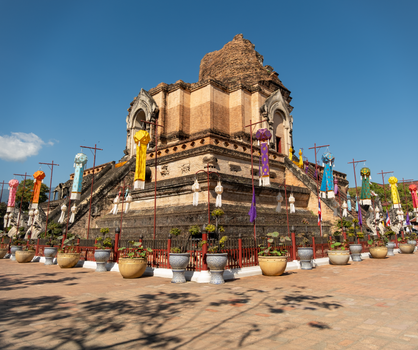
Begin your 4 days in Chiang Mai itinerary by exploring the heart of the Old City. Start at Wat Phra Singh, one of Chiang Mai's most revered temples, known for its exquisite Lanna architecture and a revered Buddha image. Spend approx. 1-1.5 hours here, observing the intricate details and serene atmosphere. From Wat Phra Singh, take an approx. 10-15 minute walk east to Wat Chedi Luang, home to a massive ruined chedi that once housed the Emerald Buddha. Explore the grounds, including the city pillar shrine and smaller surrounding temples. Allow approx. 1.5-2 hours.
Pro tip: When visiting temples, remember to dress respectfully. Shoulders and knees should be covered. Many temples offer sarongs for rent or loan if you are not appropriately dressed.
Afternoon: Cultural Monuments and Local Markets
After your temple visits, walk north from Wat Chedi Luang for approx. 5-7 minutes to the Three Kings Monument, a significant historical landmark commemorating Chiang Mai's founders. This is a good spot for a quick photo and to learn about the city's origins. For lunch, seek out local street food stalls or a casual eatery within the Old City, trying dishes like Khao Soi (Northern Thai curry noodle soup) or Pad Thai. Expect to pay approx. £1.50-£3 per dish.
In the late afternoon, head towards the eastern edge of the Old City to Tha Phae Gate. This iconic gate is a popular meeting point and often hosts local events. From here, you can walk east towards Warorot Market (Kad Luang), Chiang Mai's oldest and largest local market. Immerse yourself in the sights, sounds, and smells, browsing fresh produce, local snacks, and traditional goods. Allow approx. 1-1.5 hours.
Evening: Night Bazaar Experience
As evening approaches, the Chiang Mai Night Bazaar comes alive. Located just east of the Old City, this bustling market stretches along Chang Klan Road. It's an excellent place for souvenir shopping, finding local crafts, and enjoying a wide array of street food. There are numerous food courts offering everything from classic Thai dishes to international cuisine. Enjoy dinner here, sampling various dishes. Allow approx. 2-3 hours for browsing and dining. A typical dinner might cost approx. £3-£7.
Day 2: Doi Suthep and Culinary Delights
Morning: Sacred Mountain Views
Start your day with a trip to Wat Phra That Doi Suthep, one of Thailand's most sacred temples, perched high on Doi Suthep mountain. The temple offers panoramic views of Chiang Mai city. Take a songthaew from the Old City (often found near Wat Phra Singh or the North Gate) directly to the temple. The ride takes approx. 30-45 minutes and costs approx. £1.50-£2.50 per person for a shared ride. Once there, you can climb the Naga-lined staircase or take a funicular to the temple grounds. Allow approx. 2-3 hours for the visit, including travel time.
Afternoon: Nimman Exploration and Cooking Class
Descend from Doi Suthep and head to the trendy Nimmanhaemin Road area (often shortened to "Nimman"). This neighbourhood is famous for its chic cafes, art galleries, and modern boutiques. Enjoy lunch at one of the many stylish restaurants or cafes, offering a range of Thai and international options. A typical lunch might cost approx. £4-£8.
In the afternoon, immerse yourself in Thai cuisine with a cooking class. Chiang Mai is renowned for its cooking schools, many of which include a market visit to learn about ingredients. This is a hands-on experience where you'll learn to prepare several traditional Thai dishes. Classes typically run for approx. 3-4 hours and cost approx. £25-£40. Booking in advance is recommended.
Evening: Relaxed Dinner
After your cooking class, you might enjoy the fruits of your labour for dinner. Alternatively, explore Nimman further for a relaxed dinner at one of its many eateries, or head back to the Old City for more street food options. Consider trying a local Northern Thai sausage (Sai Oua) or a rich Gaeng Hung Lay curry.
Day 3: Ethical Elephant Encounter
Full Day: Responsible Elephant Sanctuary Visit
Dedicate an entire day of your 4 days in Chiang Mai itinerary to an ethical elephant sanctuary. This is a truly memorable experience and a highlight for many visitors. Several reputable sanctuaries operate outside Chiang Mai, focusing on the rescue and rehabilitation of elephants, allowing visitors to observe and interact with them in a responsible manner. Activities typically include feeding, walking with, and bathing the elephants. It's crucial to choose a sanctuary that explicitly prohibits riding.
Most sanctuaries offer full-day packages that include round-trip transport from your accommodation, lunch, and all activities. The day usually starts with a morning pickup (approx. 7:00-8:00 AM) and returns in the late afternoon (approx. 4:00-5:00 PM). Prices for a full-day experience are typically approx. £50-£90. Booking well in advance is essential, especially during peak season.
Pro tip: Research sanctuaries carefully to ensure they adhere to ethical practices. Look for facilities that prioritise elephant welfare, do not offer riding, and educate visitors on conservation.
Day 4: Culture, Crafts, and Departure
Morning: Traditional Crafts or Relaxation
On your final day, choose between further cultural exploration or a relaxed morning. You could visit one of Chiang Mai's traditional craft villages, such as those along the Sankamphaeng Road area, known for silk, silverware, and celadon pottery. Many workshops allow you to observe artisans at work. Getting there typically requires a songthaew or Grab (approx. 20-30 minutes, £3-£6 one way).
Alternatively, indulge in a traditional Thai massage. Many reputable massage parlours are available throughout the city, offering a relaxing experience for approx. £6-£12 per hour. This is a perfect way to unwind before your journey home or to your next destination.
Afternoon: Last-Minute Souvenirs and Local Flavours
Enjoy a final Thai lunch. If you haven't tried it yet, seek out a local spot for Mango Sticky Rice (Khao Niao Mamuang) for dessert. Spend your last afternoon picking up any forgotten souvenirs or exploring a neighbourhood you haven't fully experienced, such as the area around Wat Suan Dok, which offers a more local feel away from the main tourist hubs.
Evening: Departure
Depending on your flight or onward travel plans, head to Chiang Mai International Airport (CNX). A Grab or songthaew from the Old City to the airport takes approx. 15-25 minutes, costing approx. £2.50-£5.
Common mistakes to avoid
- Not dressing appropriately for temples: Always cover shoulders and knees.
- Not negotiating fares: For songthaews and tuk-tuks, always agree on a price before starting your journey.
- Choosing unethical elephant experiences: Avoid any sanctuary that offers elephant riding.
- Drinking tap water: Stick to bottled water to avoid stomach issues.
- Underestimating the heat: Especially outside the cool season, stay hydrated and plan outdoor activities for mornings and evenings.
- Not carrying small change: Many street vendors and small shops prefer exact change.
Plan your trip
This 4 days in Chiang Mai itinerary offers a solid foundation for your adventure. To tailor it further and build a personalised day-by-day itinerary based on your interests and travel style, explore the tools available on TripBuilder.
Frequently asked questions
Is 4 days enough for Chiang Mai?
Four days provides a good balance to experience Chiang Mai's main highlights, including temples, markets, a cooking class, and an ethical elephant sanctuary visit. For deeper exploration or to include day trips to nearby provinces, a longer stay might be preferred.
What is the best month to visit Chiang Mai?
The best time to visit Chiang Mai is during the cool and dry season, from November to February. Temperatures are milder, humidity is lower, and rainfall is minimal, making it ideal for sightseeing and outdoor activities.
How do I get from Chiang Mai airport to the city?
From Chiang Mai International Airport (CNX), you can take a Grab taxi, an airport taxi, or a songthaew (red truck) to your accommodation in the city. The journey typically takes 15-25 minutes, depending on traffic and your destination.
What should I wear when visiting temples in Chiang Mai?
When visiting temples, it's essential to dress respectfully. This means covering your shoulders and knees. Loose-fitting clothing is recommended, and some temples may require you to remove your shoes before entering certain areas.
Is it safe to travel alone in Chiang Mai?
Chiang Mai is generally considered very safe for solo travellers, including women. Locals are friendly, and crime rates are low. However, it's always wise to take standard precautions like being aware of your surroundings and avoiding walking alone in poorly lit areas at night.